Drilling Defect
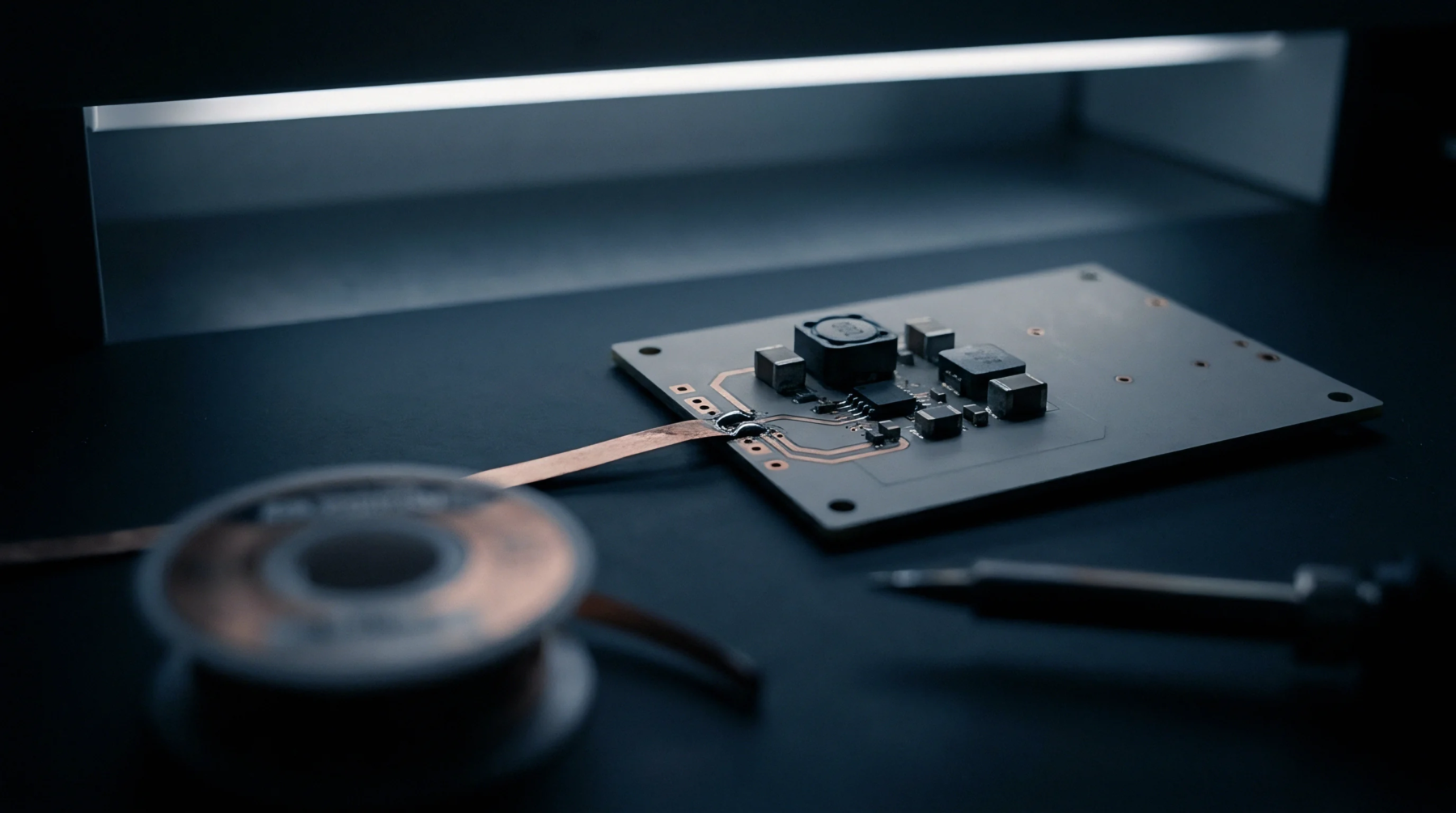
Deviation of a mechanical drill bit from its intended coordinate path during board fabrication results in misaligned plated through-holes. This physical offset, termed drill wander, occurs when the drill bit flexes or slips upon entering the composite laminate material. The issue is especially pronounced in thick boards with high-aspect-ratio holes or those using dense glass-reinforced resin systems.
Plating Vulnerability
Reduction of the copper annular ring around the finished hole diminishes the electrical and mechanical strength of the interconnect. When drill wander causes the hole to break out of the internal copper pad, it creates a serious plating vulnerability and leads to broken circuit traces. This defect is a frequent cause of electrical opens or high-resistance junctions in complex multilayer printed circuit boards.
Spindle Optimization
Controlling the entry material hardness, adjusting the chip load, and limiting the drill bit life represent the primary methods to prevent this defect. To minimize drill wander, fabricators use rigid aluminum entry foils to stabilize the drill tip before it contacts the fiberglass substrate. Regular spindle maintenance and the use of shorter, more rigid drill bits further reduce the risk of lateral deviation during high-speed production runs.
This is critical when drilling sub-one-millimeter holes, where even minor deviations can compromise the trace clearance rules of the design.