Resin Reinforcement
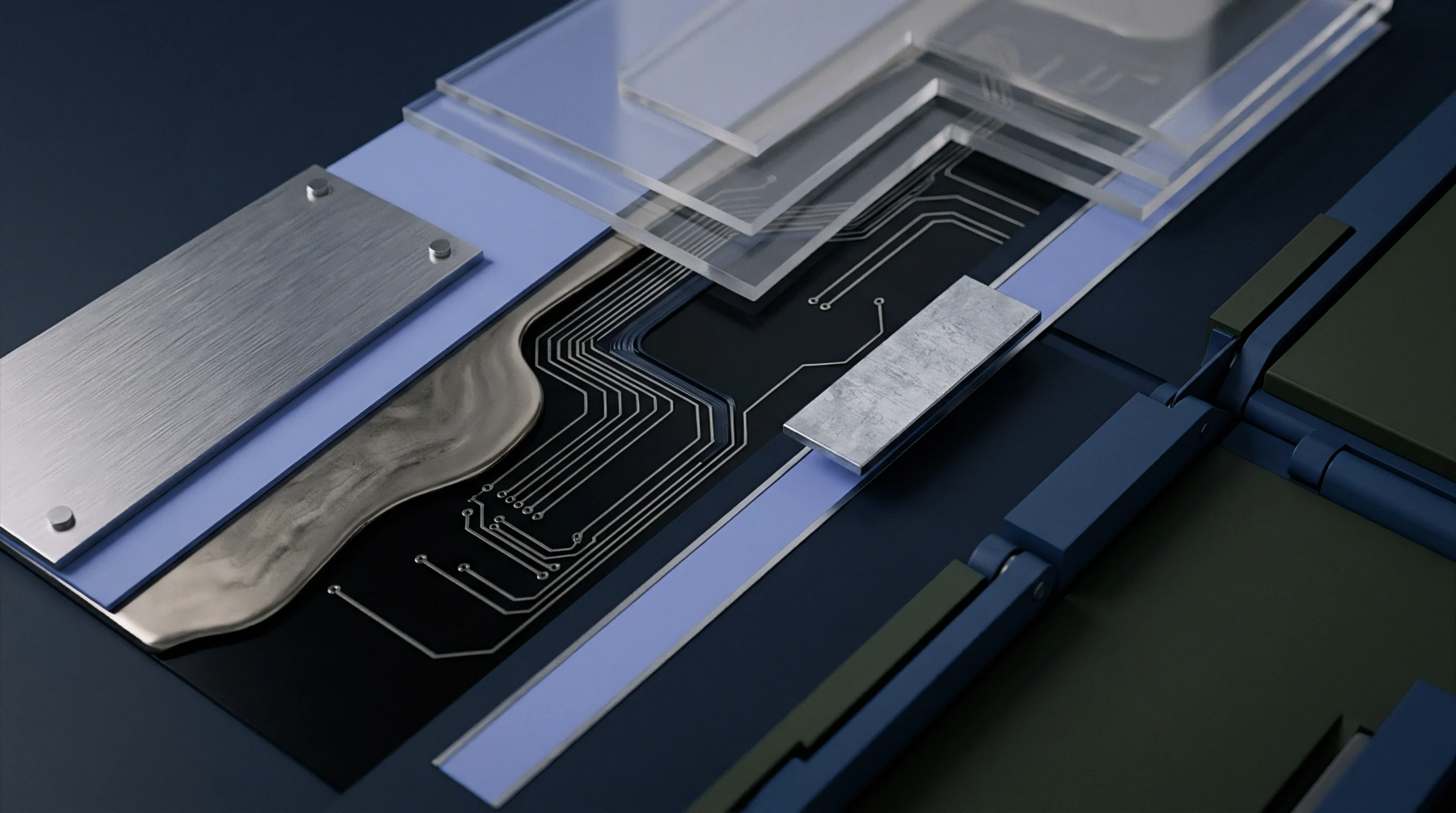
Reinforcement fabrics impregnated with a partially cured B-stage thermosetting polymer function as the structural building blocks for multilayer printed circuit boards. Epoxy prepreg facilitates the bonding of copper foil to inner layer cores through heat and pressure application within a vacuum lamination press. The polymer component stops flowing when it reaches its glass transition temperature and undergoes crosslinking, transforming into a solid dielectric material.
Thickness and resin content tolerances dictate the impedance characteristics of the final signal trace stackup.
Lamination Chemistry
Controlled heating cycles inside the press drive the viscosity of the epoxy prepreg resin to a minimum before the chemical reaction triggers permanent hardening. High temperatures induce polymerization which locks the reinforcement glass fibres into a rigid insulating matrix. Voids or air pockets caught between layers during this window of fluidity result in dielectric failure or delamination under thermal stress.
Technicians monitor the gel time and flow characteristics to ensure the material satisfies the requirements for multi-layer registration.
Inspection Acceptance
Incoming material verification centres on the volatile content and the degree of cure remaining in the resin system. Inspectors check the physical dimensions of the sheets and look for foreign material embedded within the fibre weave to prevent shorts or insulation gaps. Any deviation in the reactive state of the uncured resin alters the lamination window and compromises the mechanical integrity of the finished circuit board.
A stable B-stage condition guarantees the dimensional consistency of the finished laminate.