Resonant Cavity
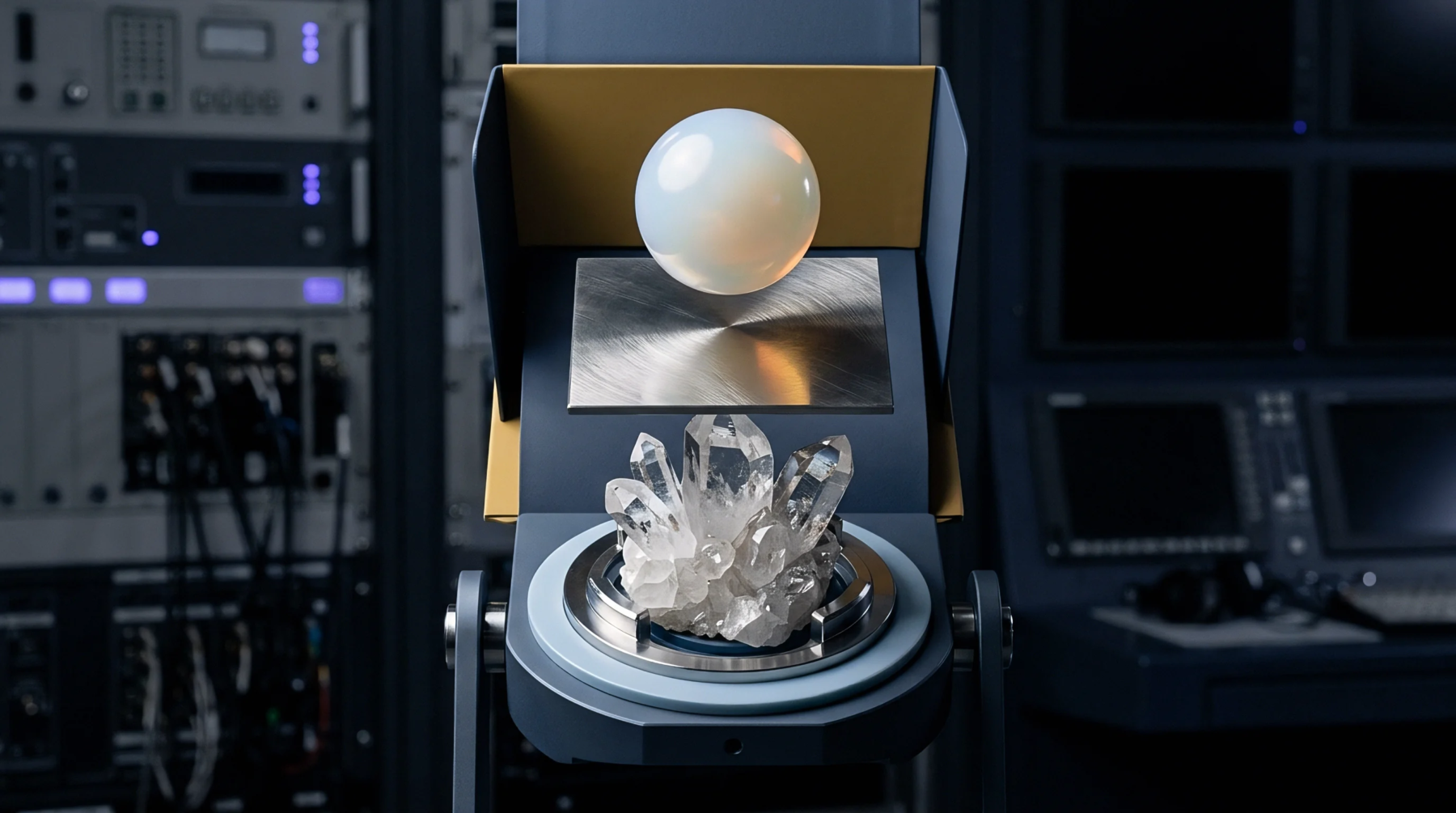
High-frequency optical and millimeter-wave characterization systems rely on paired parallel reflective surfaces to construct a standing-wave cavity for material dielectric property extraction. A fabry-perot resonator utilizes two opposing mirrors or semi-reflective dielectric plates spaced at precise integer multiples of half the target wavelength. Electromagnetic waves entering the cavity undergo multiple internal reflections, generating sharp resonance peaks whose center frequency and quality factor depend on the dielectric constant and loss tangent of the substrate placed inside the gap.
Fabry-Perot resonator fixtures eliminate direct electrical contact during high-frequency laminate inspection, preventing surface damage to delicate unclad substrates.
Dielectric Evaluation
Electromagnetic fields within the resonant structure interact with inserted printed circuit board substrates, altering both the resonant peak position and the half-power bandwidth. Resonant frequency shifts reveal the real permittivity of the dielectric layer, while Q-factor degradation isolates dielectric loss without introducing conductor roughness error into the calculation. Operating at frequencies from 20 GHz to well above 100 GHz, this non-destructive method provides high-accuracy permittivity data required for high-speed material qualification.
Fabrication facilities employ these measurements to screen high-frequency laminates prior to panel processing, verifying batch consistency before committing fluoropolymer or hydrocarbon materials to photolithography and etching lines.
Tolerance Margin
Thermal expansion of the cavity frame changes the physical mirror distance, introducing measurement offset if the fixture is not ambiently regulated. Fixture alignment tolerances must maintain parallelism within micro-radian limits to avoid degrading peak sharpness. Substrate thickness variations across a panel alter the fill factor within the cavity, requiring accurate thickness gauge inputs to preserve permittivity calculation accuracy.