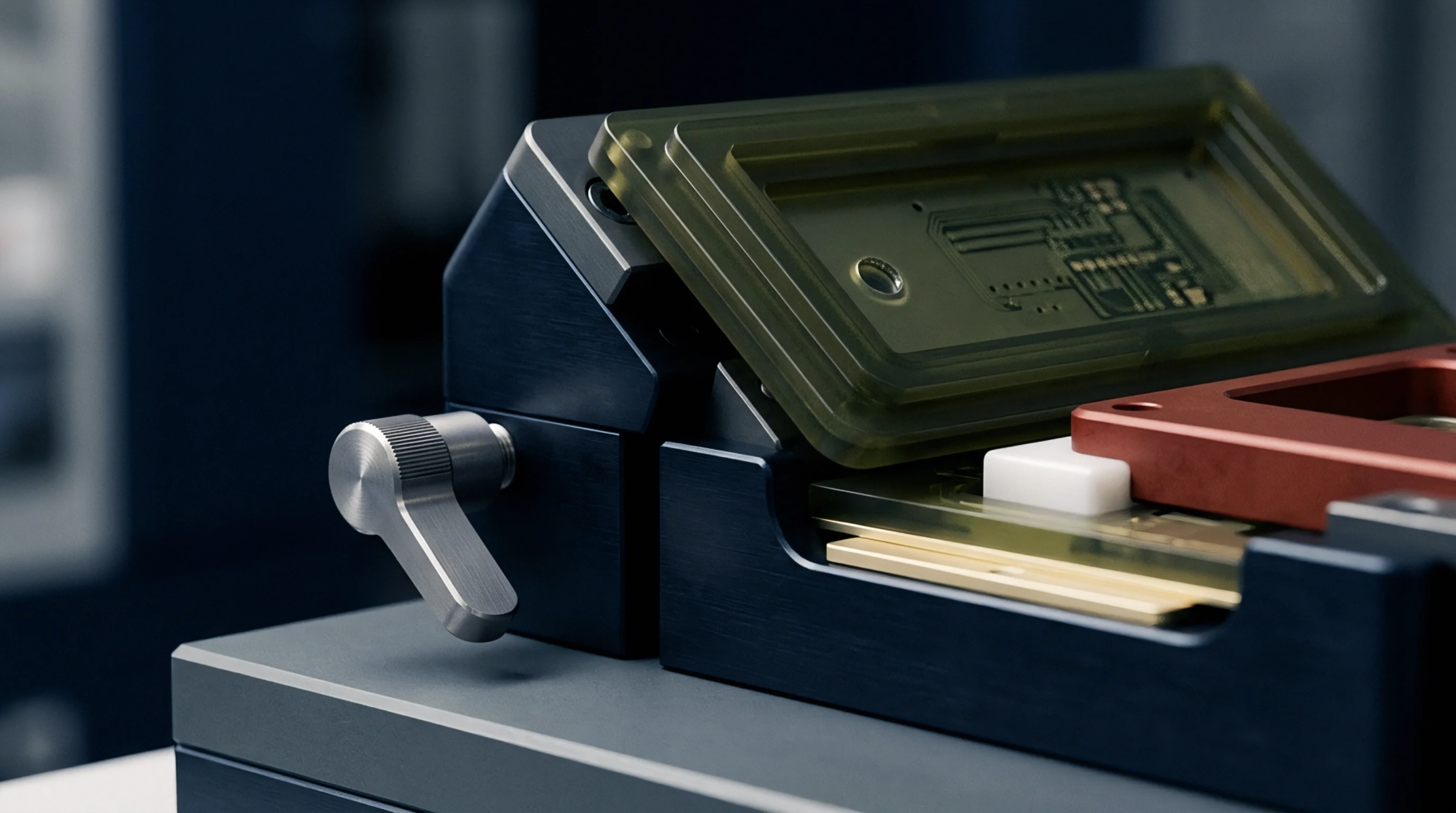
Support Structure
Rigid glass-reinforced epoxy plates serve as the stable mounting base for large arrays of test probes in a fixture. The use of a g10 probe plate ensures that thousands of contact pins remain precisely aligned with the target locations on a printed circuit assembly. This material maintains its dimensions despite changes in ambient humidity or temperature during long production shifts.
It offers the high dielectric strength needed to prevent electrical leakage between adjacent test channels when applying high voltages.
Machining Precision
Computerized drilling equipment creates patterns of tiny through-holes to house the receptacles that hold the moving probes. Because the g10 probe plate resists deformation, the center-to-center distances between these holes remain constant under mechanical stress. The thickness of the plate typically ranges from 6 millimeters to 12 millimeters depending on the total spring force applied by the fully populated fixture.
This depth provides the vertical support required to prevent individual probes from tilting, which would otherwise result in misaligned contacts and test failures. Receptacles are press-fitted into these holes to create a secure anchor that withstands hundreds of thousands of cycles.
Mechanical Stress
Maintaining flatness is the primary requirement for plates subjected to the high downward force of a pneumatic press during functional testing. If the plate bows under pressure, the probes at the center may not achieve full compression, resulting in open circuits.