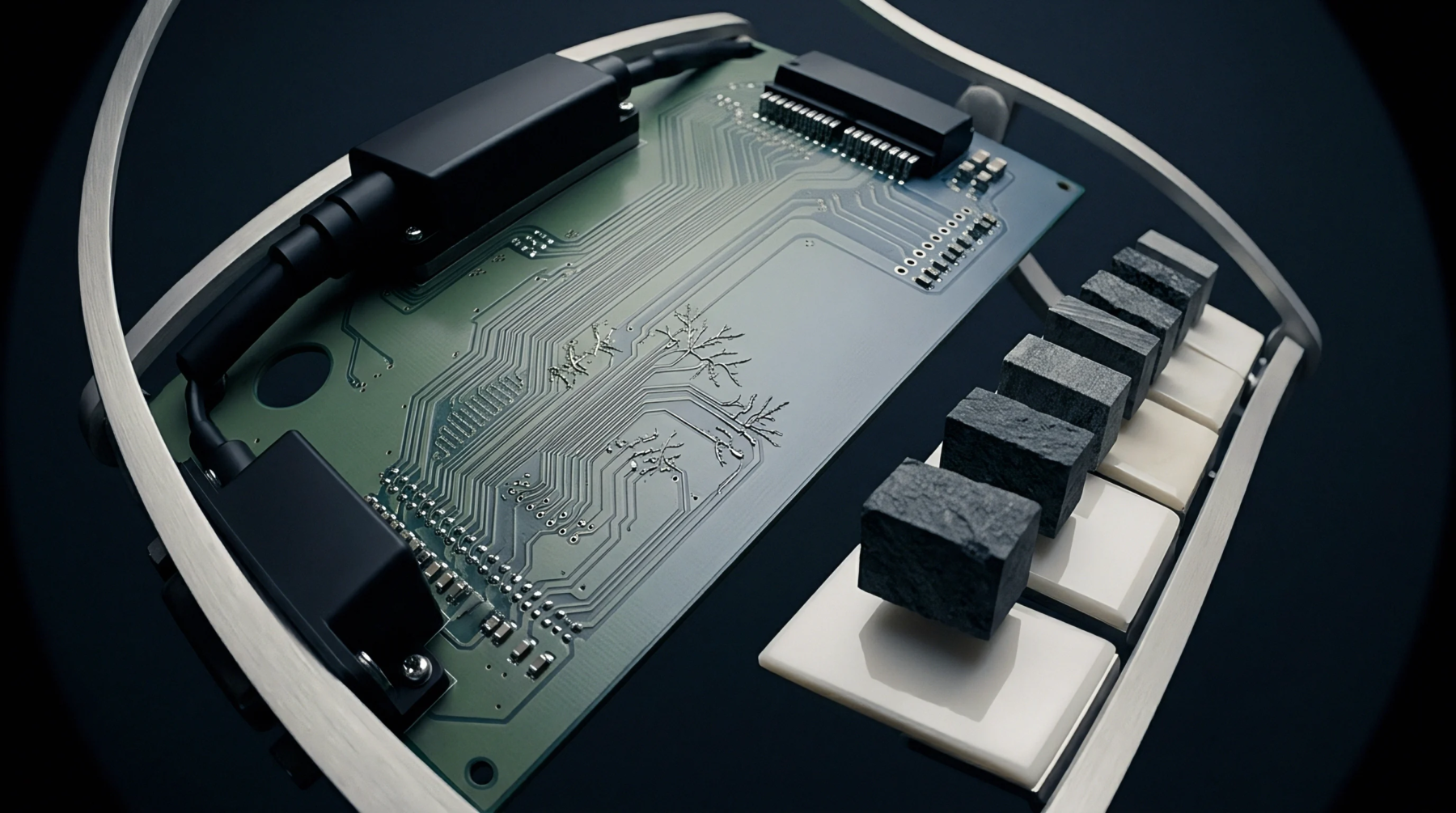
Glass Weave Anisotropy Mitigation for 112g PAM4 Printed Circuit Boards
Mitigating 112G PAM4 weave skew requires mechanically spread low-Dk glass or zig-zag trace routing to keep intra-pair delay variation below 0.3 picoseconds.
Mitigating 112G PAM4 weave skew requires mechanically spread low-Dk glass or zig-zag trace routing to keep intra-pair delay variation below 0.3 picoseconds.
Standardizing microstrip impedance on anisotropic substrates demands tensor permittivity inputs or Schneider equivalence transformations in field solvers.
Anisotropic inner layer shrink requires asymmetric artwork scaling factors matching prepreg warp and fill glass weave thermal coefficients.
Aligning glass yarn warp directions parallel across every stackup layer prevents asymmetric dimensional shrinkage and eliminates structural panel twist during lamination.
Modelling resin squeeze flow shear kinetics during multilayer pressing prevents inner-layer trace swim and guarantees reliable dielectric clearance.
Expertise is a utility, not a secret. sentiention™ publishes its working knowledge as open reference: intelligence layer covering the materials it sources, the markets it enters, and the reference that serves both.