Testing Protocol
A laboratory procedure designed to measure the thermal expansion and glass transition temperature of printed board materials utilizes a precision thermomechanical analyzer. The ipc-tm-650 method 2.4.22 establishes the guidelines for preparing laminate specimens, applying a constant mechanical force, and heating them at a controlled rate of five degrees Celsius per minute. This test determines both the rate of dimensional change before the glass transition and the point at which the polymer matrix undergoes its transition.
It is the baseline test used to certify that the thermal properties of raw laminate shipments meet specified assembly requirements.
Procedural Execution
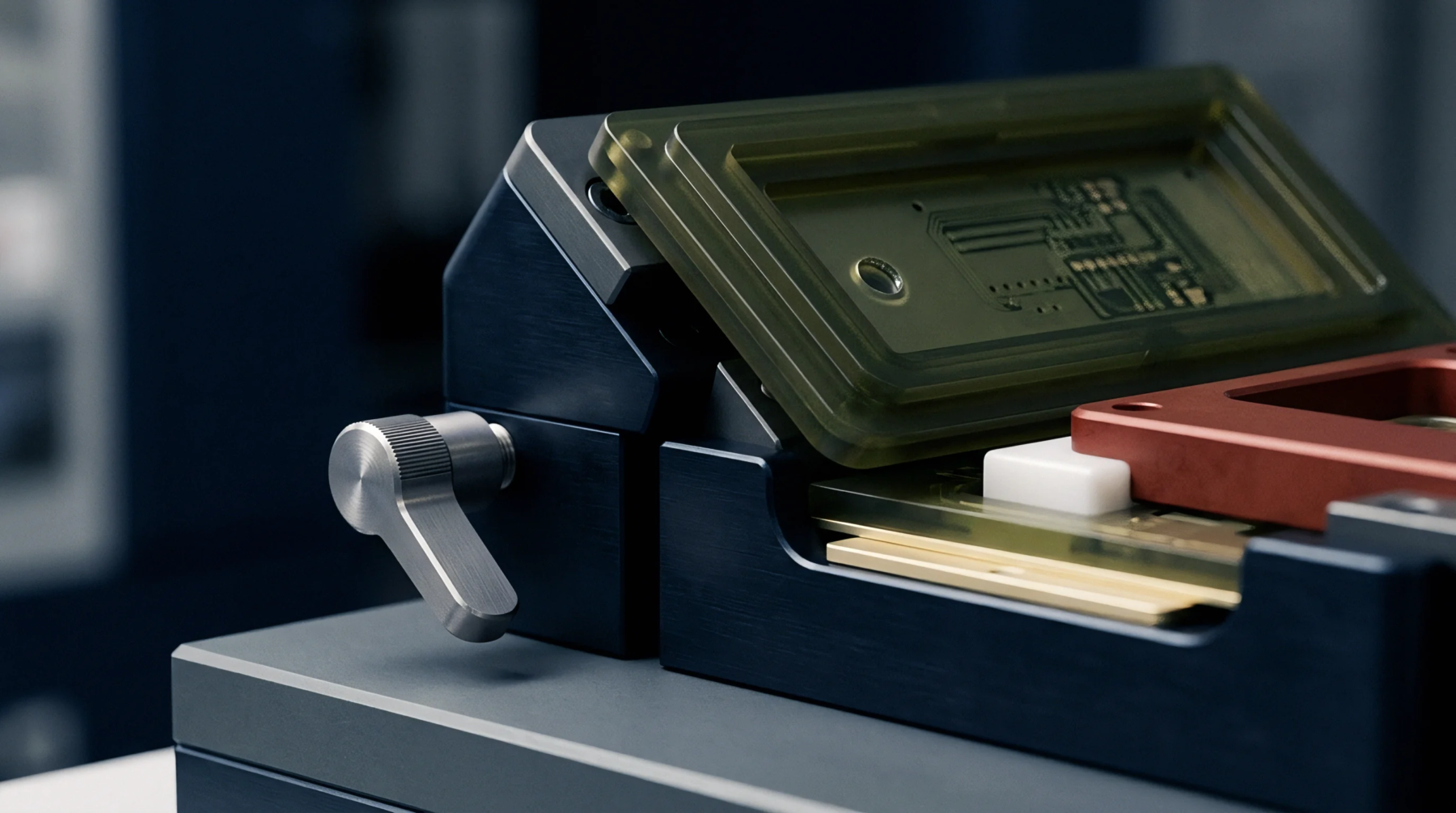
A specialized probe rests on the surface of the specimen to track the vertical displacement as the temperature rises. The ipc-tm-650 method 2.4.22 requires calibration of the instrument using reference materials like aluminum to ensure displacement measurements are accurate. As the sample is heated, the changes in expansion rate are plotted against temperature to locate the inflection point.
This curve identifies the transition temperature and calculates the expansion coefficients.
Data Application
Thermal performance data derived from this procedure help engineers evaluate whether a laminate is suitable for sequential lamination or lead-free reflow. Compliance with ipc-tm-650 method 2.4.22 provides an objective basis for accepting or rejecting incoming material batches from laminate vendors. This testing prevents the use of out-of-specification resins that might delaminate or cause copper cracking in later processing steps.