Structural Architecture
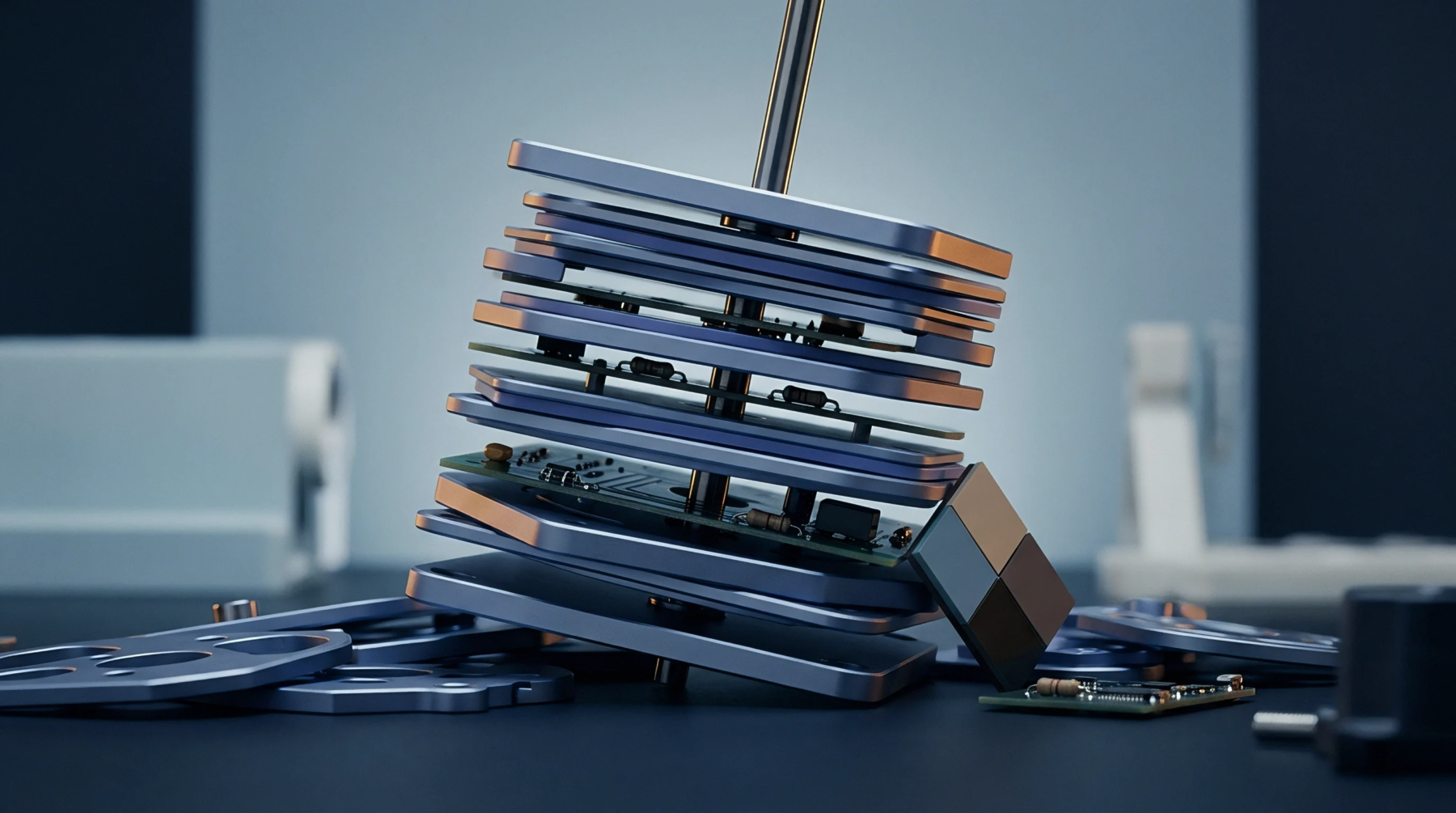
Copper weight distributions and dielectric core thicknesses combine inside a multilayer printed circuit board fabrication sequence to form a layer stackup. This geometric arrangement dictates impedance values and signal return paths while managing thermal dissipation across alternating conductive foils and insulating prepregs. Etching tolerances and press cycle pressures determine whether the finished physical laminate matches the engineered cross section.
Microsectioning analysis reveals resin fill percentages and dielectric spacing violations after lamination presses cure the board under high temperature. Dielectric constant consistency across every resin sheet prevents signal propagation velocity variations during high frequency operation. Impedance control equations rely on precise copper thickness measurements taken before inner layer routing begins.
Impedance Governance
Differential pairs require strict dielectric thickness regulation to maintain target resistance values during automated SMT assembly and operational testing. High speed signal integrity depends entirely on how accurately the copper reference planes bound each routing layer. Capacitance calculations change when glass weave styles shift within the prepreg material matrix during pressing operations.
Vector network analyzers measure insertion loss parameters to verify that production panels match the original simulation models. High frequency performance degrades rapidly if resin starvation occurs between heavy copper planes during the lamination cycle.
Thermal Management
Copper plane distribution balances mechanical warpage forces during thermal excursions experienced throughout wave soldering and infrared reflow processes. Z axis expansion mismatch between glass epoxy substrates and copper barrels generates barrel cracking during thermal shock testing. Sequential lamination cycles prevent internal layer shifting when high layer count designs undergo multiple high temperature pressings.
Automated optical inspection equipment detects inner layer alignment errors before copper oxidation compromises interplane adhesion. Residual stress accumulation within thick laminates determines long term reliability under harsh operational environments.