Detection Principle
Electromagnetic field sensing hardware provides a localized flux density measurement by converting variations in intensity into proportional voltage shifts at the output terminals. A magnetic field probe relies on Faraday induction to register changes in current pathways or external interference on high density printed circuit boards. It captures signals via a miniature coil architecture that produces a quantifiable electromotive force when lines of force cut across internal conductive loops.
The apparatus detects localized noise sources during electromagnetic compatibility validation by mapping field strengths across sensitive trace segments. Precision alignment ensures that the sensor output remains proportional to the intensity of the incident field without saturating the signal processing hardware.
Assembly Verification
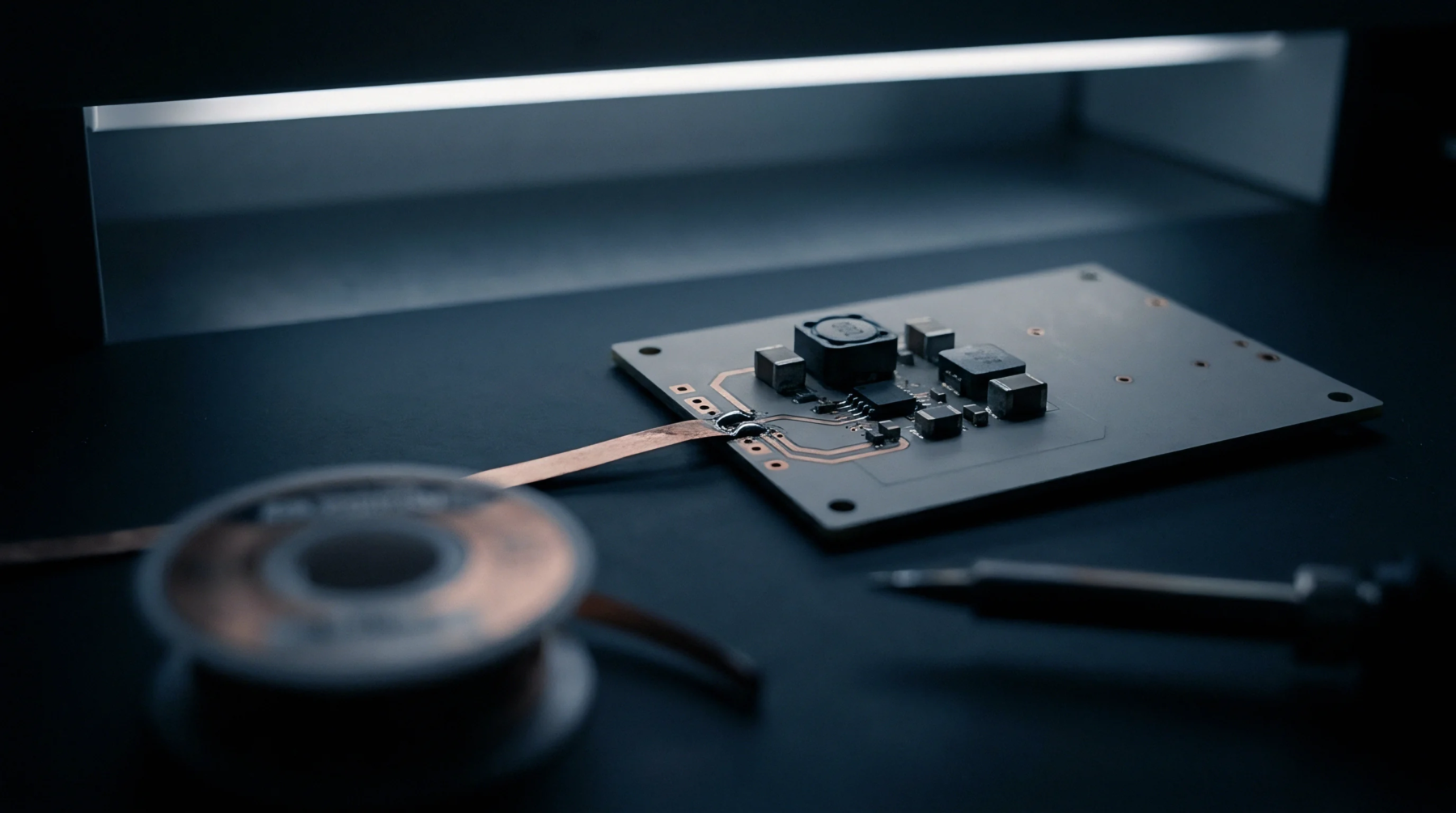
Quality technicians install the magnetic field probe during late stage production checks to identify shorts or improper ground return paths beneath surface mount components. Automated test systems rotate the sensor over specified regions of the board to establish a baseline for acceptable field radiation. Deviation from this baseline points to poor solder joint integrity or incorrect passive component placement near high frequency oscillators.
The instrument isolates these faults by quantifying local inductance fluctuations that standard visual inspection systems miss because those tools focus on geometry instead of current flow. Because the probe captures data while the board under test is powered, the system identifies operational defects that only appear during active switching. Consistent results require the probe tip to remain at a fixed distance above the substrate throughout every measurement cycle to eliminate geometrical variations in the captured signal.
Sensitivity Limits
Calibration parameters dictate the effective range and frequency response of the magnetic field probe as it identifies interference from nearby power converters. Smaller coil geometries increase spatial resolution at the expense of absolute signal amplitude for low power circuits. Increasing the turns of the coil improves output magnitude but reduces the frequency bandwidth of the unit.
These physical constraints force a compromise between detection accuracy and the size of the target area during board analysis. Metal shielding surrounding the sensor tip prevents capacitive coupling from altering the results, ensuring that the sensor responds only to inductive influences. The probe maintains integrity only when the incident field remains uniform across the aperture of the internal sensing coil.