Structural Boundary
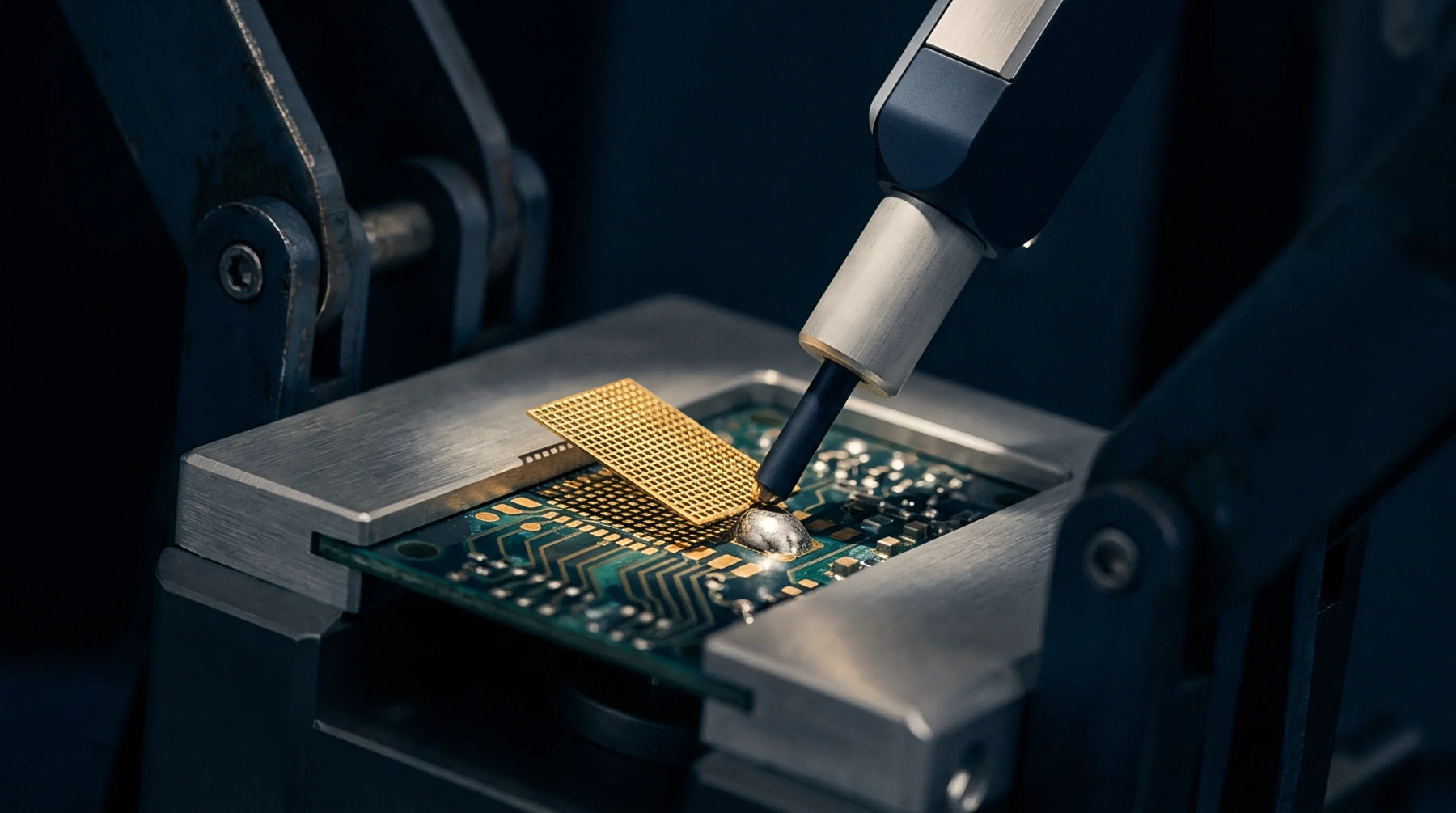
Physical restraint is the application of localized force to hold a printed circuit board securely in a fixed spatial orientation during processing. Implementing a proper mechanical fixture constraint prevents the board from flexing or shifting under the pressure of routing, depaneling, or component placement. This positioning ensures that the board remains flat during automated assembly steps.
Process Control
Securing the board during high-speed manufacturing protects the integrity of solder joints and prevents component misalignment. When a mechanical fixture constraint is improperly applied, the circuit board can bow or twist, which leads to inaccurate solder paste printing or uneven component mounting. Support pins and edge clamps must be distributed evenly to balance the forces generated by assembly heads.
Inadequate support allows the substrate to vibrate during routing operations, causing micro-cracks in ceramic capacitors and solder connections. Process engineers analyze the force distribution across the board surface to design customized nest plates for fragile assemblies.
Precision Requirement
Deflection measurements verify that the board stays within the specified flatness limits during all mechanical procedures. Automated height sensors scan the board surface to detect any displacement caused by uneven clamping forces. Correct fixture setup ensures high-yield production and reduces mechanical stress during handling.