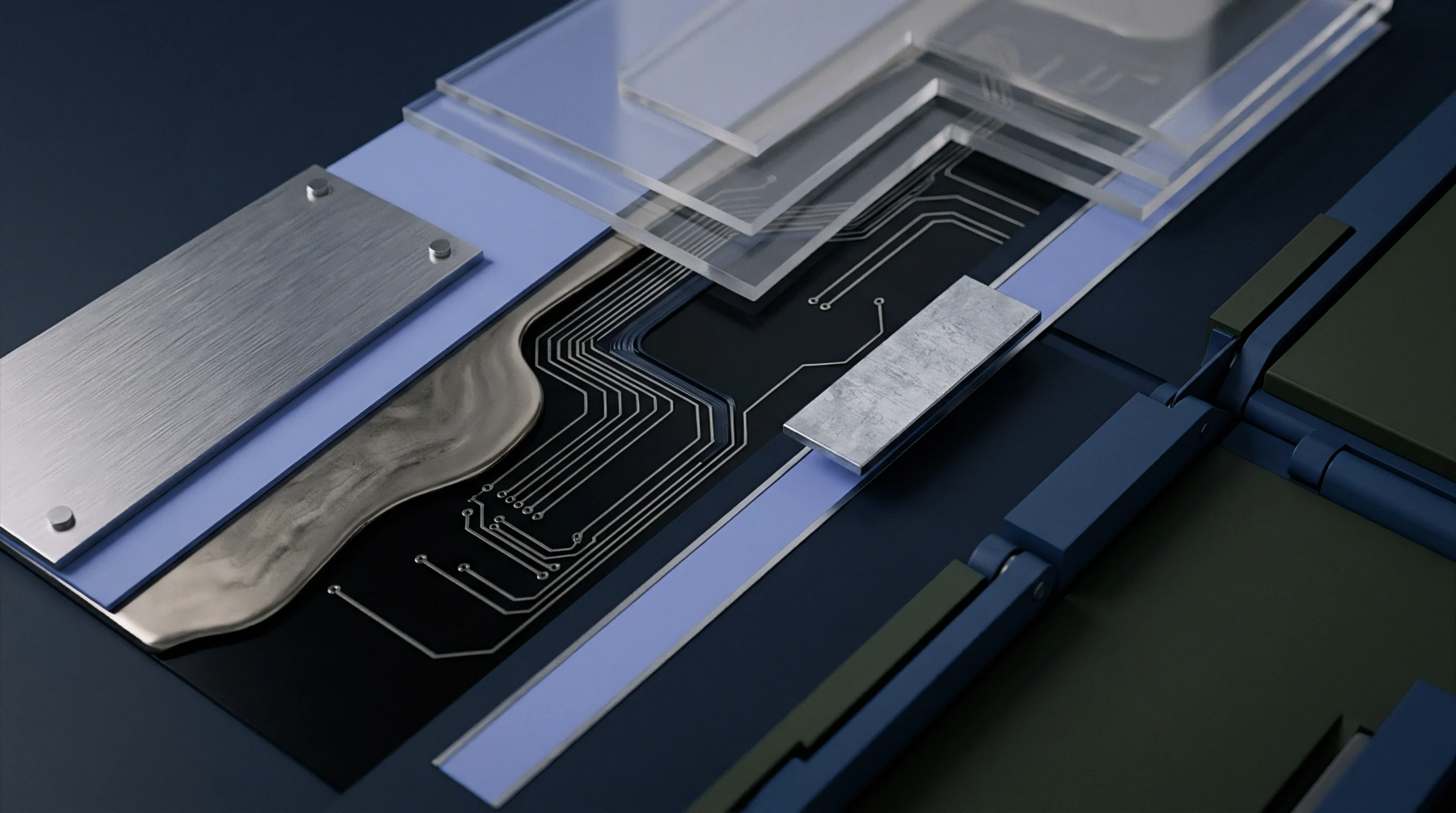
Thermal Management
Controlled reheating cycles represent a specialized process parameter for double-sided assembly in printed circuit board manufacturing. A secondary reflow profile governs the peak temperature and dwell time experienced by components on the first side of the board during the soldering of the second side. This procedure protects pre-soldered joints from excessive thermal fatigue or remelting.
The intensity of heat exposure determines whether solder integrity remains within production limits.
Process Requirement
Double-sided surface mount construction necessitates this adjustment to account for heat sink effects across the circuit board substrate. Engineers verify that the bottom side components withstand the second thermal event without reaching the liquidus state of the original solder alloy. The furnace settings shift to accommodate the reduced thermal mass of the populated side compared to the bare side.
Specific zones adjust power levels to maintain a strictly defined gradient across the assembly. Precise calibration prevents the occurrence of cold joints or component misalignment on the side facing the conveyor belt.
Joint Stability
Mechanical integrity of early solder connections depends upon maintaining these parameters within a rigid thermal window during the final passage through the convection oven. Excessive heat exposure here risks the degradation of intermetallic layers at the interface between the lead or termination and the pad. Stable furnace control ensures that the total thermal budget remains below the threshold for metallurgical failure.
Consistent regulation of this secondary reflow profile provides the necessary margin for repeatable long-term interconnection reliability.