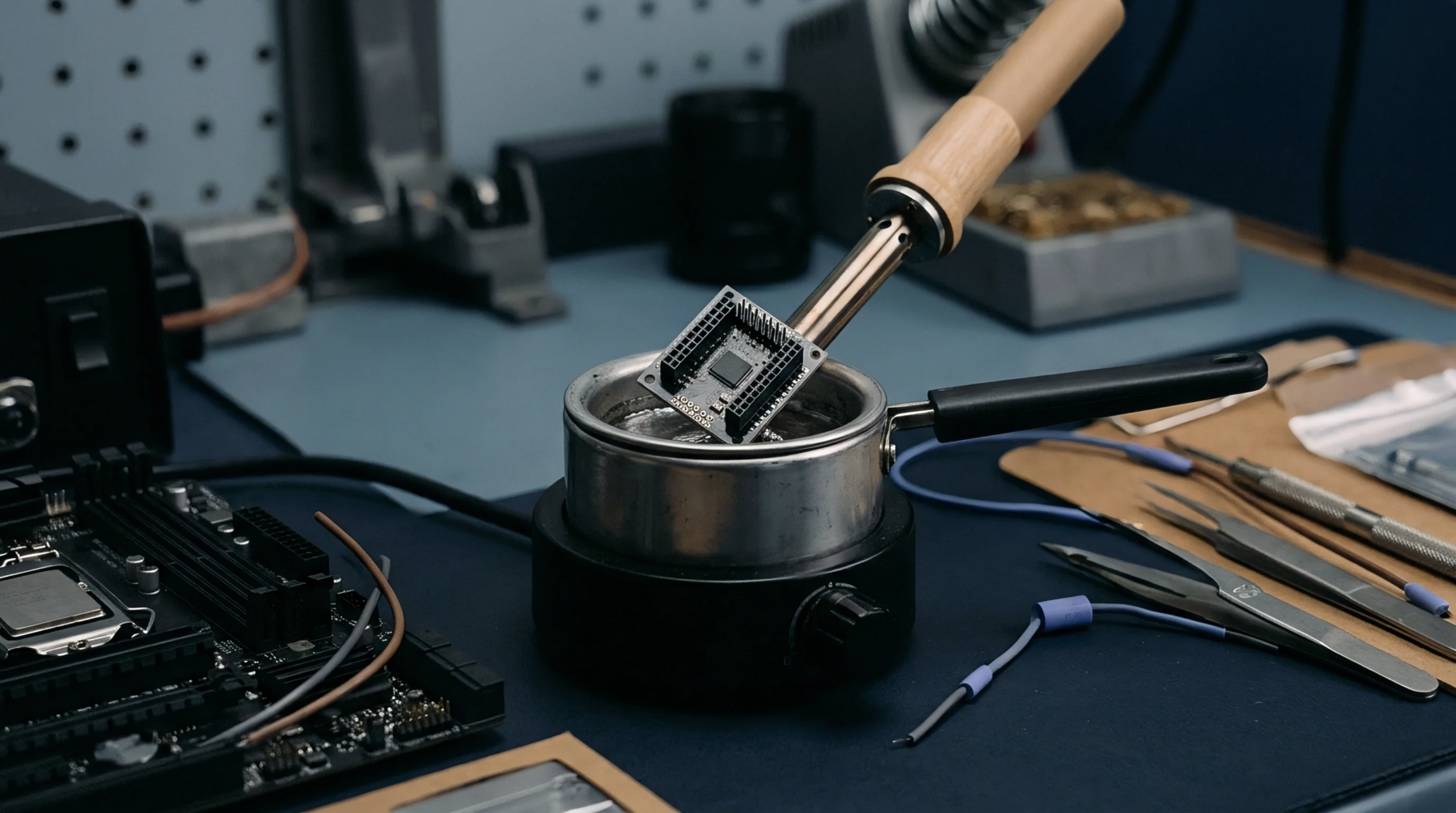
Fixture Deterioration
The mechanical erosion that occurs on the surface of a selective soldering fixture after repeated exposure to flux and molten solder is a common maintenance issue. This selective pallet wear is concentrated on the edges of the apertures and the base material that directly contacts the circuit board assembly. As the material degrades, the tolerances of the pallet shift, which can lead to solder bypassing the pocket.
Wear Mechanism
The combination of abrasive composite fibers, chemical attack from aggressive organic fluxes, and thermal stress from the solder wave degrades the composite material over time. This continuous deterioration is particularly severe in high-volume production lines where pallets are cycled repeatedly through preheat and wave soldering zones. Standard composite materials like Durostone or Ricocel eventually experience resin erosion, which exposes the underlying glass fibers and causes the pallet to lose its dimensional stability, making the fixture unable to maintain a tight seal against the board surface.
Regular maintenance and the application of surface sealants can help slow down this abrasive process.
Operational Consequence
Worn pockets on the fixture allow molten solder to leak onto the top side of the printed circuit board, which leads to defects like solder bridging and unintended component connections. Monitoring selective pallet wear through regular dimensional checks prevents these assembly defects by identifying fixtures that require refurbishment or replacement. When the depth of the pocket changes by more than the specified tolerance, the fixture must be removed from the production line to maintain process yield.