Residue Extraction
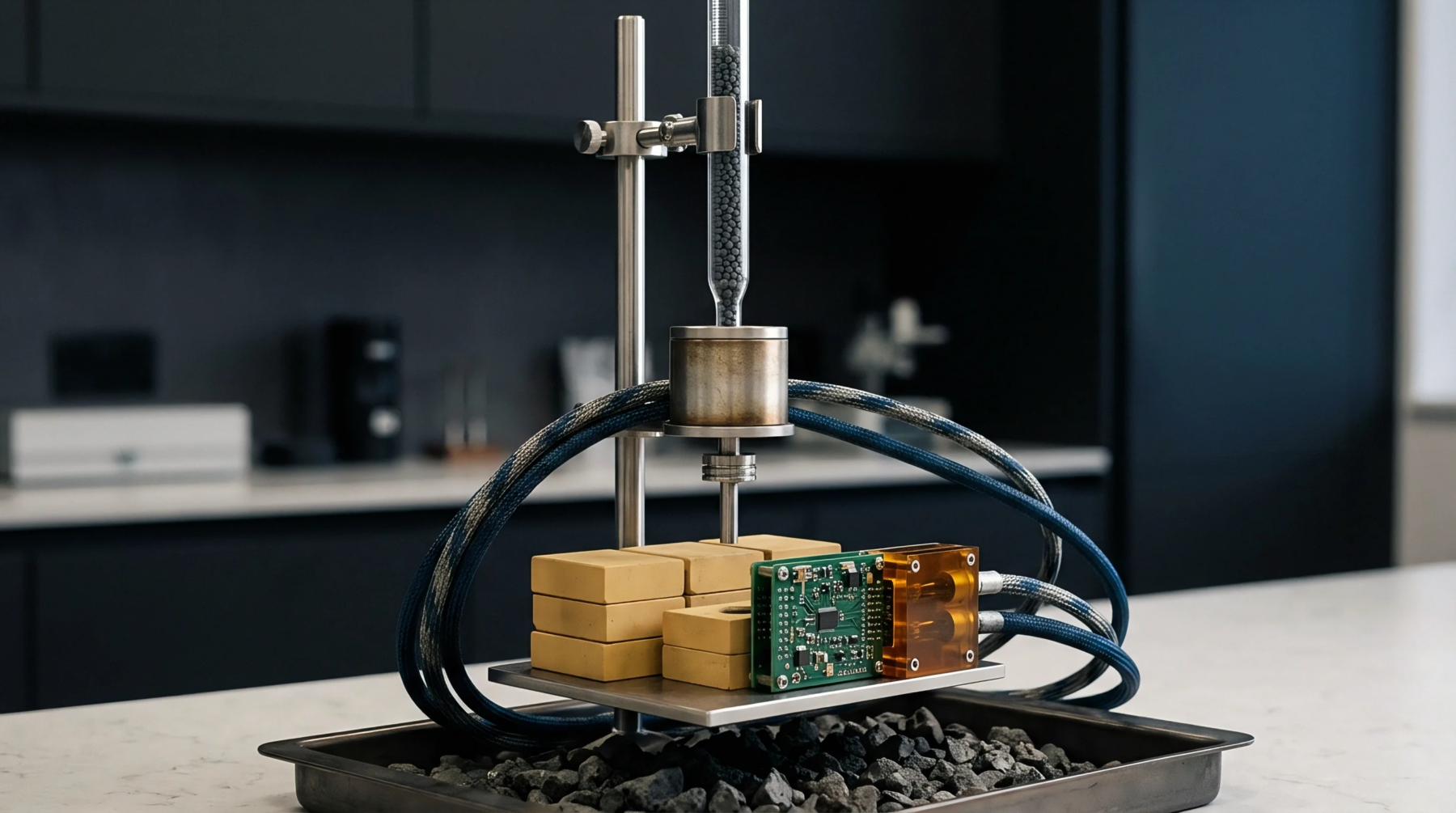
Solvent cleaning relies heavily on soxhlet extraction when stubborn surface contaminants remain trapped beneath low standoff components after reflow soldering. Continuous cyclic washing allows condensed liquid to pool inside a small chamber until siphoning forces the saturated fluid back down into the boiling flask. This repeated immersion prevents saturation stagnation by constantly introducing fresh solvent to the contaminated assembly.
Thermal cycling during the reflux period accelerates the removal of high melting point flux residues without subjecting sensitive laminate materials to prolonged immersion.
Resin Validation
Analytical laboratories employ soxhlet extraction to isolate non volatile organic compounds from cured printed circuit board laminates prior to infrared spectroscopy. Prolonged solvent exposure breaks down cross linked polymer networks until unreacted monomers and plasticizers migrate completely out of the solid matrix. Quantitative yield calculations derived from mass loss measurements determine the exact amount of uncured resin present in the bulk material.
Solvent selection dictates which specific polymer fractions dissolve during the reflux cycle, allowing technicians to verify resin stoichiometry against procurement specifications.
Process Verification
Quality control protocols mandate soxhlet extraction for quantifying ionic contamination extracted from finished circuit card assemblies before conformal coating application. Residual activator salts left behind by aggressive no clean fluxes migrate toward conductive traces and cause electrochemical migration if left unchecked. Automated cleaning validation standards rely on this exhaustive recovery method because standard aqueous wash tests frequently fail to reach residues trapped inside tight component gaps.
The resulting extract undergoes titration or chromatography to confirm that ionic cleanliness levels comply with military reliability mandates.