Internal Configuration
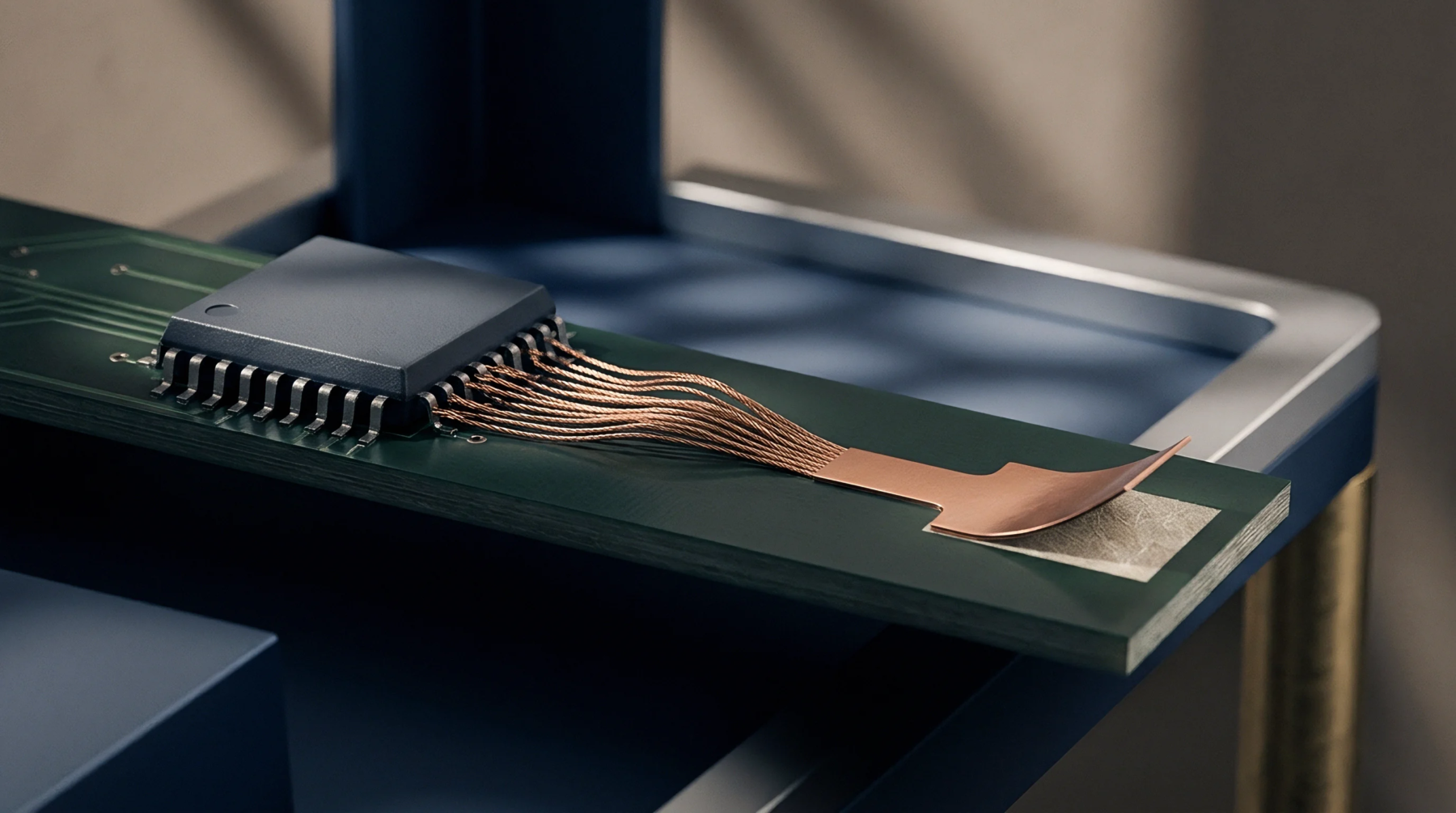
Embedded signal routing utilizes a conductive trace sandwiched between two parallel ground planes to control electromagnetic emissions. Stripline topology provides superior isolation for high speed signals by completely enclosing the electric and magnetic fields within the dielectric material.
Signal Protection
Internal routing in this format offers a more consistent electrical environment compared to surface microstrip lines. Since the fields are contained, the stripline topology allows for higher routing density without the risk of crosstalk between adjacent layers. It is particularly effective for sensitive analog signals or high speed digital clocks that require a quiet environment.
The use of two ground planes also provides a robust return path for the high frequency currents, which improves the overall power integrity of the system.
Manufacturing Tradeoff
Fabrication of these structures requires a higher layer count and precise control of the lamination thickness. Because the signals are buried, any errors in the etching or alignment of the inner layers cannot be repaired after the board is bonded. The cooling of the internal traces is also more difficult because the heat must pass through the dielectric to reach the surface.
Stripline topology is limited by the dielectric loss of the core material, which can become significant at very high frequencies or long trace lengths.