Expansion Characterization
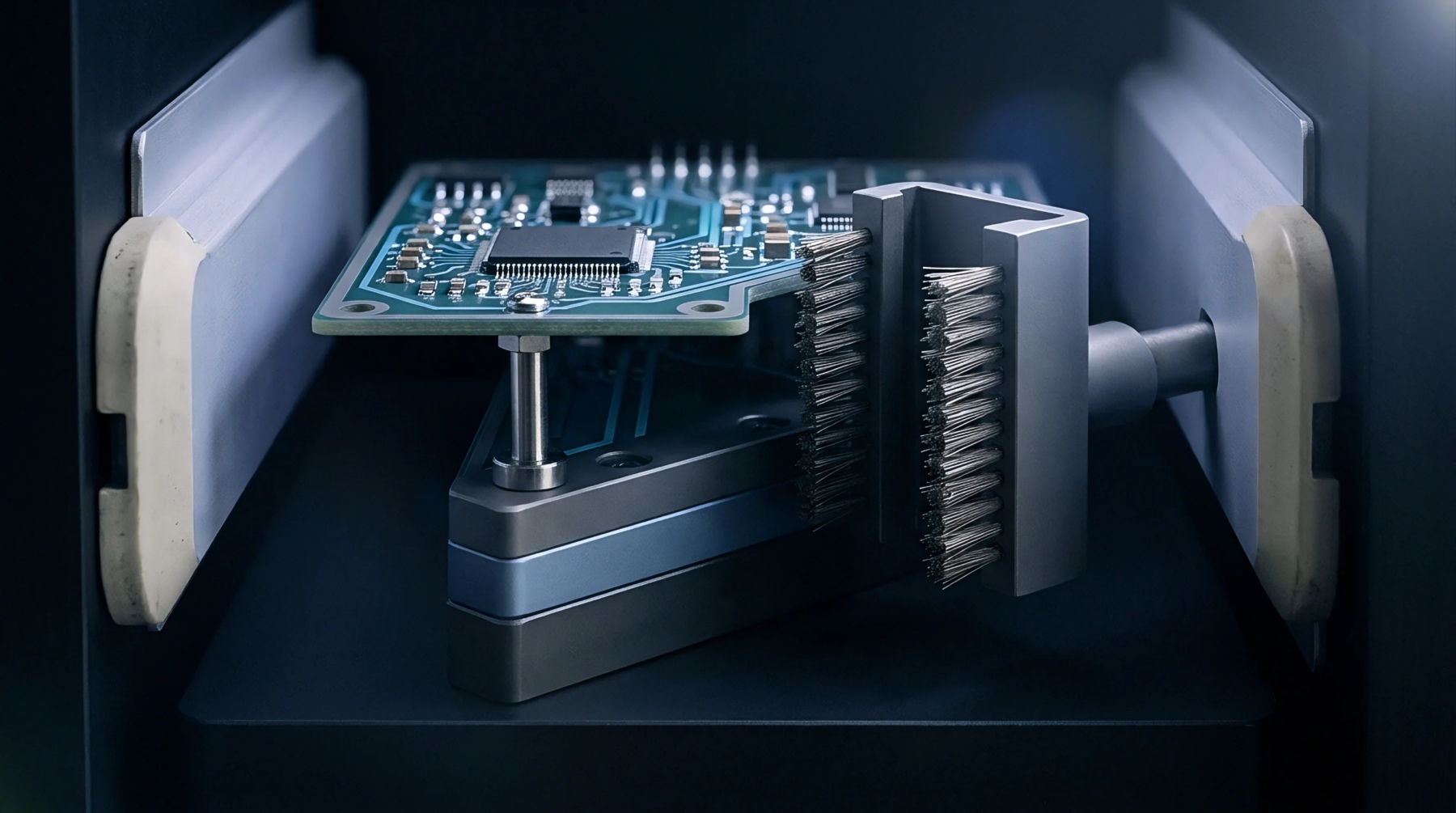
Analytical dilatometry measuring dimensional displacement of a dielectric sample under controlled temperature sweeps isolates thermodynamic transitions and expansion behaviors. In printed circuit board materials characterization, thermal mechanical analysis extracts the glass transition temperature, linear coefficient of thermal expansion, and delamination resistance times under z-axis stress. The testing protocol mounts a solid specimen beneath a sensitive quartz displacement probe inside a programmatically heated furnace cell.
Standard IPC-TM-650 Method 2.4.24 governs this procedure, tracking physical sample thickness variations across temperatures ranging from ambient to over three hundred degrees Celsius. As the resin matrix transitions from an amorphous glassy state to a flexible rubbery phase, the slope of the dimensional expansion curve shifts noticeably. The analytical method applies to base laminates, cured prepregs, and unclad PCB segments, but it does not characterize dynamic assembly mechanical vibration or tensile foil pull strength.
Thermal Transitions
Continuous heating of a circuit board substrate forces the polymer resin system to expand at progressive rates depending on cross-link density. Applying thermal mechanical analysis generates a displacement trace that identifies the exact glass transition temperature where the coefficient of thermal expansion experiences an abrupt upward inflection. The test quantifies alpha-one expansion below the transition point and alpha-two expansion above it, revealing how violently the material will swell along its out-of-plane axis during soldering.
Excessive alpha-two expansion concentrates mechanical shear on plated through-hole barrels, accelerating early fatigue fractures during lead-free assembly. Isothermal modes within the test apparatus hold samples at elevated temperatures, such as two hundred sixty or two hundred eighty-eight degrees Celsius, to record the exact time to delamination. Rapid dimensional jumps during isothermal exposure mark internal adhesive failure, resin breakdown, or internal blistering within the woven dielectric core.
Acceptance Testing
Quality assurance laboratories use dilatometric data to qualify raw laminates and confirm the cure state of pressed multilayer panels. Material acceptance requires that thermal mechanical analysis confirms the measured glass transition temperature equals or exceeds the baseline value stated on the procurement drawing. Substrates showing depressed transition temperatures or premature delamination times undergo lot rejection, protecting fabrication lines from resin uncure defects.
Technicians prepare rectangular test specimens with polished, parallel faces to ensure the sensitive quartz sensor avoids geometric artifacts during heating runs. Solder float cross-sections validate the dilatometry findings, proving whether the laminate can withstand real thermal shocks without internal layer separation. Routine execution of this thermal verification safeguards dense interconnect boards against pad detachment and via failure under demanding operational temperatures.
Consistent dimensional stability profiles remain a baseline mandate for high-reliability circuit certification.