Solder Distribution
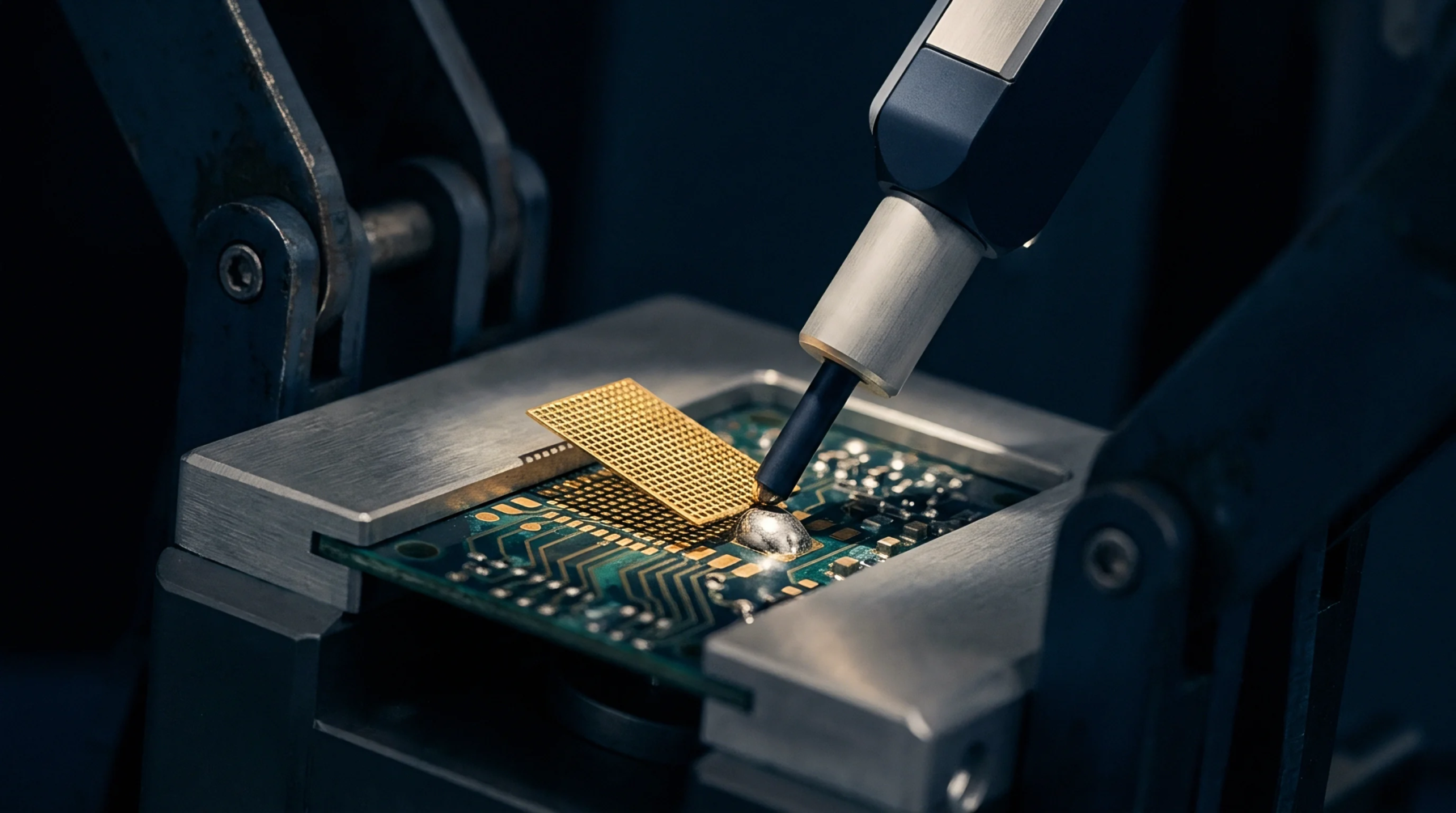
Deviation in liquid metal deposit during the reflow phase identifies the inconsistency of paste application across pads of varying geometry. Volume variation occurs when the quantity of solder alloy deposited deviates from the target stencil aperture calculation or when paste transfer efficiency fluctuates during screen printing. This condition creates imbalances in joint geometry and compromises the mechanical integrity of connections under thermal stress.
Insufficient paste results in open circuits, while excess paste creates bridges between adjacent conductors.
Stencil Performance
Print capability depends on the ratio of aperture area to side wall surface area and the release properties of the stencil material. Aperture clogging prevents a consistent volume transfer across multiple boards in a production run. Factors including squeegee pressure, snap-off distance, and paste viscosity influence the consistency of deposits.
A change in ambient humidity or temperature alters the rheological behavior of the flux carrier, which produces intermittent shortages on smaller pads. Fine pitch components undergo greater sensitivity to these changes because the required deposit mass demands absolute precision during the wipe.
Inspection Control
Automated optical systems detect these inconsistencies by measuring the height, area, and total displacement of solder paste deposits before component placement occurs. Software algorithms calculate the standard deviation of deposit data to identify whether the process remains within acceptable statistical limits. If the recorded quantity falls below the threshold defined by the bill of materials, the system triggers an alert for manual intervention or line stoppage.
Effective control minimizes the probability of joint fractures and short circuits in high density interconnect circuits. Post-reflow inspection correlates these initial volume measurements with final joint quality to confirm the stability of the assembly process.