Structural Metric
Polymer network integrity depends on the number of covalent junction points per unit volume within a cured thermoset resin. When epoxy matrices undergo thermal curing in PCB laminate manufacturing or underfill dispensing, crosslink density governs the final glass transition temperature and moisture absorption rate. Elevated junction concentration restricts polymer chain mobility at reflow temperatures.
Dynamic mechanical analysis measures this parameter through the rubbery plateau modulus above the glass transition point. Under-cured laminates display reduced junction numbers, leading to matrix softening during subsequent lead-free thermal cycles.
Mechanical Influence
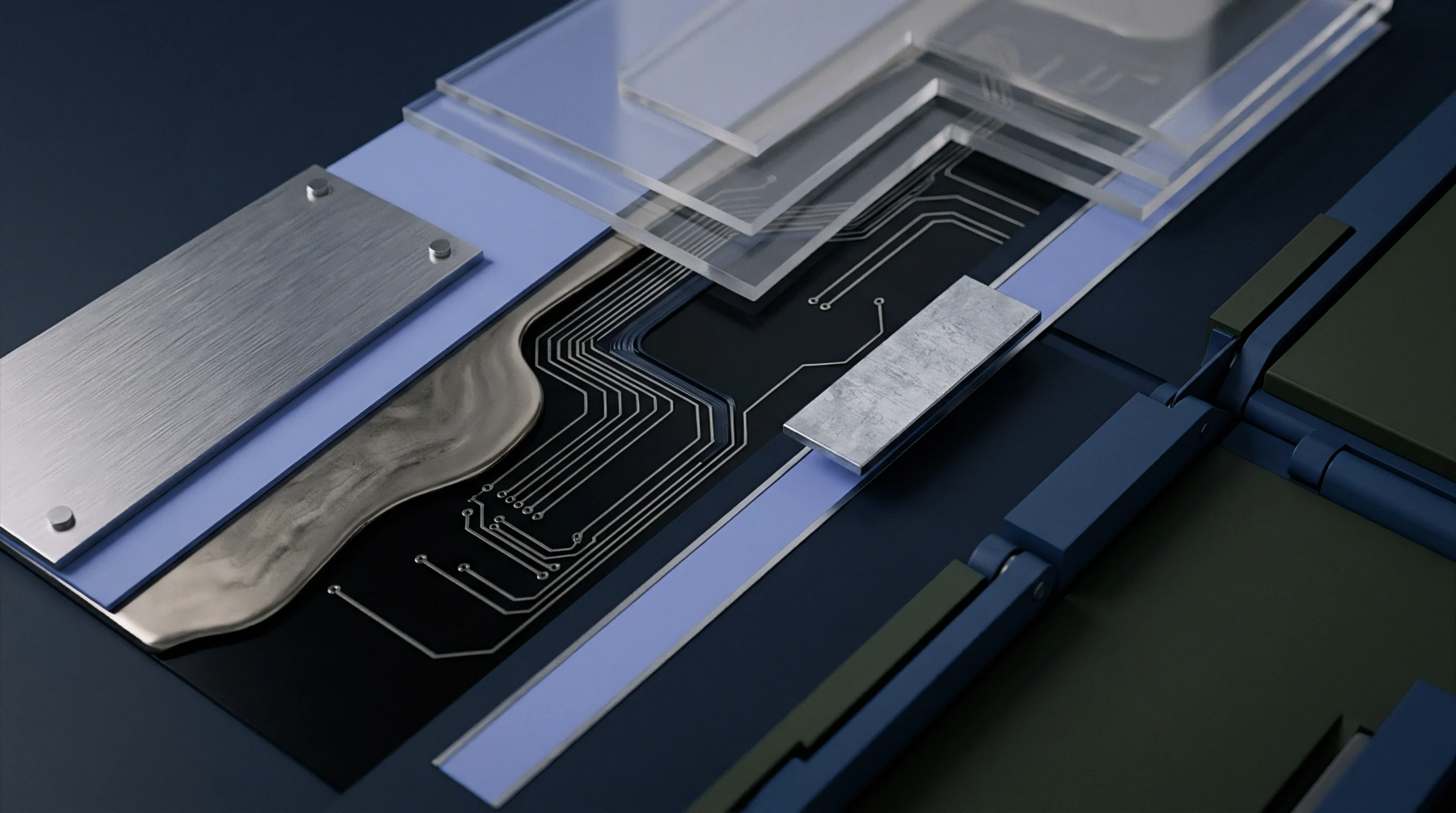
Glass transition temperature shifts upward as molecular network junctions multiply. Resin formulations with high crosslink density demonstrate low coefficient of thermal expansion in the glassy state, protecting copper plated through-holes from excessive z-axis strain. Excessive junction formation, however, increases brittleness and internal shrinkage stresses within solder mask coatings and potting compounds.
Microcracking develops along laminate boundaries under intense thermal cycling when rigid networks cannot dissipate localized mechanical stress. Assembly lines monitor cure kinetics with differential scanning calorimetry to verify complete network formation.
Reliability Consequence
Resistance to solvent ingress and moisture swelling improves dramatically with denser chemical networks. Underfill materials with optimal crosslink density shield solder interconnects from corrosive flux residues and cyclic moisture degradation. Solder mask flaking during wave soldering directly correlates with incomplete curing and loose polymer architecture.