Interface Geometry
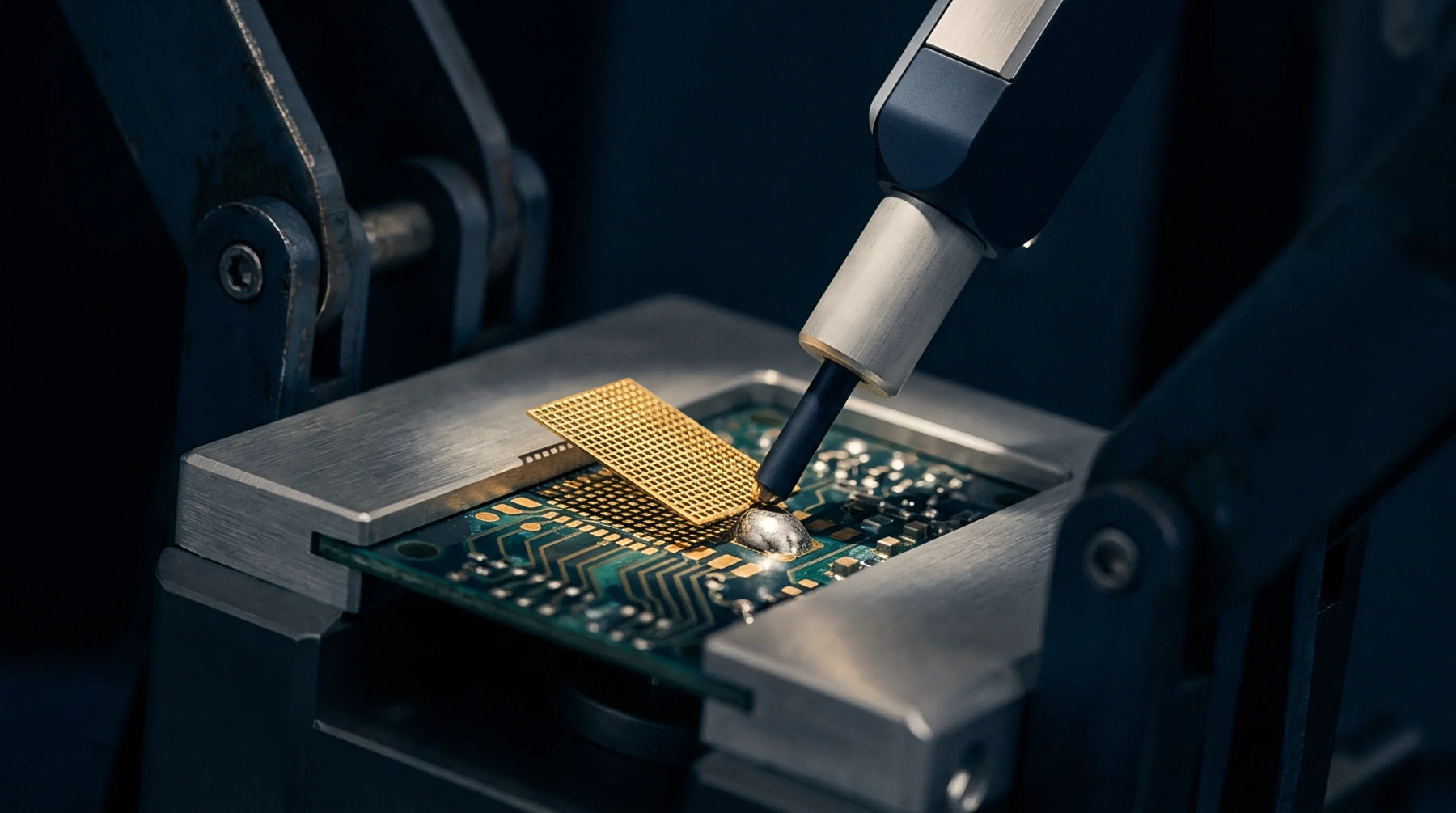
Vacuum pressure during bed-of-nails inspection depends upon fixture seal compression. This physical deformation of a perimeter gasket ensures that the test chamber reaches the required negative pressure levels for accurate probe engagement. Tight control over the Z-axis displacement prevents air leaks that undermine vacuum stability.
Gasket materials lose elasticity over repeated cycles and eventually fail to provide the interface force necessary for consistent contact.
Deformation Limits
Excessive force on the seal risks structural damage to the test hardware and the mounted circuit board. Operators calculate the optimal travel distance based on the material hardness and the thickness of the frame spacer. Mechanical stops prevent the top plate from crushing the seal beyond its operational range.
Proper calibration of these stops guards against premature gasket fatigue and prevents localized board warpage under the clamping load.
Vacuum Reliability
Consistent sealing action governs the throughput of automated testing lines by reducing cycle interruptions caused by pressure drop alarms. Every transition from atmospheric to internal vacuum state places specific stress on the seal surface. Sustained integrity of this seal protects the internal probe wiring from environmental debris and particulate matter.
Stable environmental conditions inside the fixture housing increase the working life of the pin electronics.