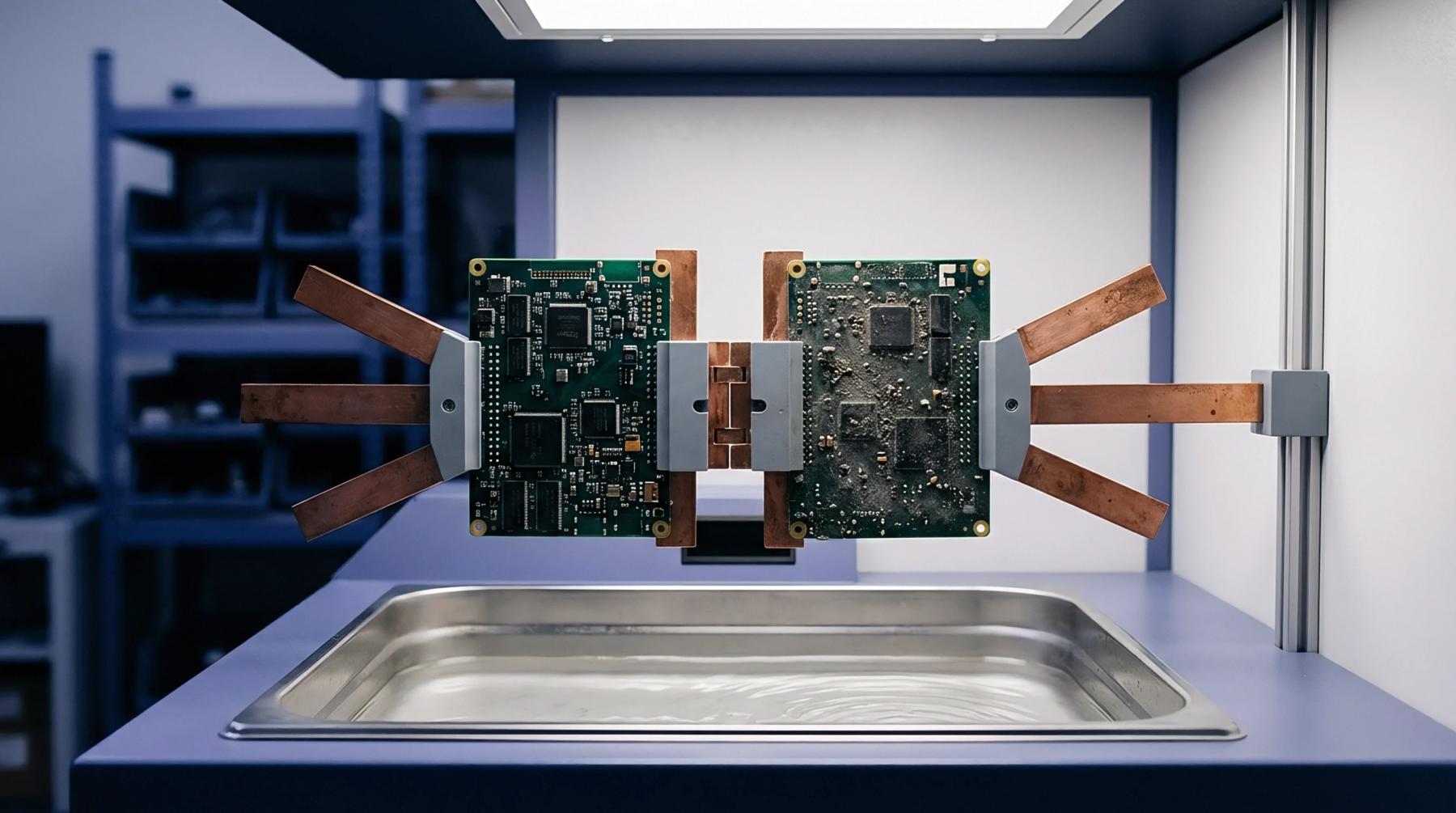
Mechanical Loading
The spring compression force generated by a hardware fastener represents the load required to seat a heatsink onto a printed circuit board while maintaining consistent contact pressure across the thermal interface. A push-pin reaction force determines the adequacy of the mounting system by quantifying how effectively the assembly compresses the interface material without damaging sensitive copper traces or solder balls. Correct calibration of this magnitude ensures that the thermal dissipation path remains stable under vibration or thermal cycling conditions.
Variations in the modulus of the board material or the flatness of the heat spreader alter the resistance experienced during the insertion cycle. High values indicate excessive stress on the component housing that leads to cracking or warpage of the substrate. Precise control of this parameter guards against assembly failures where the fastener fails to provide enough preload to overcome the stiffness of the thermal pad.
Assembly Verification
Technicians utilize calibrated gauges to confirm the pressure profile applied by the mounting hardware during the final integration phase. Measuring the load helps detect binding in the pin mechanism or obstructions within the mounting holes that prevent complete seating. A properly seated fastener produces a uniform reaction that confirms the assembly achieves the intended height and thermal contact density.
If the recorded load falls outside the specification, the hardware fails the inspection sequence and requires immediate troubleshooting to identify mechanical interference. Excess force during installation causes immediate damage to the silicon die or the interconnect points, whereas insufficient force results in poor heat transfer and premature component shutdown during heavy operation.
Design Tolerance
Engineers define the allowable range for the mounting force based on the load capacity of the board material and the compression limits of the thermal interface. Setting these limits involves calculating the stiffness of the board in the region near the mounting holes while considering the maximum allowed deflection of the laminate. Designers ensure that the calculated reaction force provides the necessary interface pressure while staying below the threshold where mechanical fatigue occurs.
Failure to account for the stiffness of the solder joints leads to long term degradation of the electrical connection. Consistent mounting pressure provides the reliability required for the operation of high power electronics over long durations.