Drilling Defect
Friction during hole generation heats the interface between cutting drill flutes and hole walls above the glass transition temperature of surrounding laminate resin. Mechanical shear forces produce resin smear by scraping molten thermoset polymers across the exposed conductive copper edges of internal circuit layers. The displaced plastic forms an insulating dielectric barrier over innerlayer trace faces inside the drilled barrel.
Hole wall microsections identify this defect as a continuous film covering the boundary where internal copper connects to plated hole walls. Smear thickness varies with spindle rotation speed, drill feed rates, tool bit retraction velocity, and drill hit count. Plating deposited directly over uncleaned smear fails to form an ohmic metallic bond, causing open circuits during electrical testing.
Desmear Chemistry
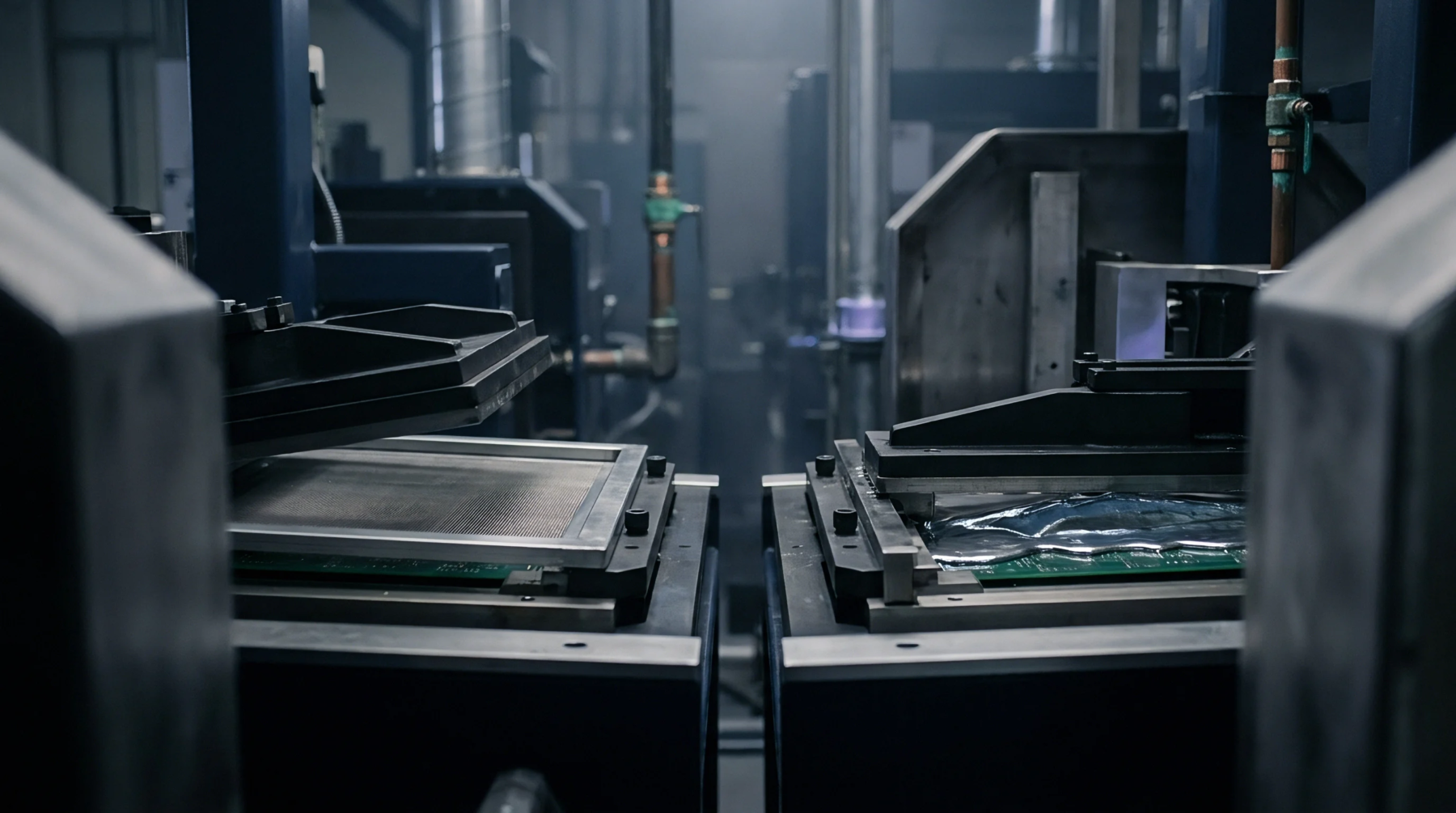
Chemical removal processes dissolve smeared resin films before panels proceed to electroless copper deposition lines. Following drilling, printed circuit panels enter permanganate or plasma desmear baths engineered to remove resin smear without attacking exposed metallic copper surfaces. Alkaline permanganate solutions oxidize and dissolve resin residues, leaving a textured topography that promotes mechanical interlocking with subsequent electroless copper deposits.
Plasma processing uses energetic oxygen and carbon tetrafluoride gases to volatilize smear residues within high-aspect-ratio holes where liquid chemistry circulation proves difficult. Precise process timing prevents excessive resin loss that causes negative etchback and weakens mechanical support behind through-hole copper barrels.
Interconnect Consequence
Unresolved smear deposits between internal trace ends and plated barrel walls create latent electrical opens that escape bare-board electrical verification. Mechanical stress from thermal cycles during component soldering causes fractured barrel interfaces if resin smear prevents copper-to-copper metallurgical bonding. High current densities passing through partially smeared junctions generate localized hot spots that accelerate interconnect degradation.
IPC-A-600 workmanship standards classify uncleaned smear covering more than twenty percent of an internal land thickness as an absolute defect for high-reliability classes. Cross-sectional inspection of vertical coupon barrels under high optical magnification confirms that desmear operations have restored clean innerlayer connection zones. Post-soldering thermal shock tests identify smear-induced barrel separations through sudden increases in micro-ohm interconnect resistance.