
Calculating Microvia Partial Inductance in High Speed Printed Circuit Board Escapes
PEEC formulation extracts microvia partial self-inductance from barrel aspect ratio and capture pad geometry, confirmed by de-embedded coupon S-parameters.
PEEC formulation extracts microvia partial self-inductance from barrel aspect ratio and capture pad geometry, confirmed by de-embedded coupon S-parameters.
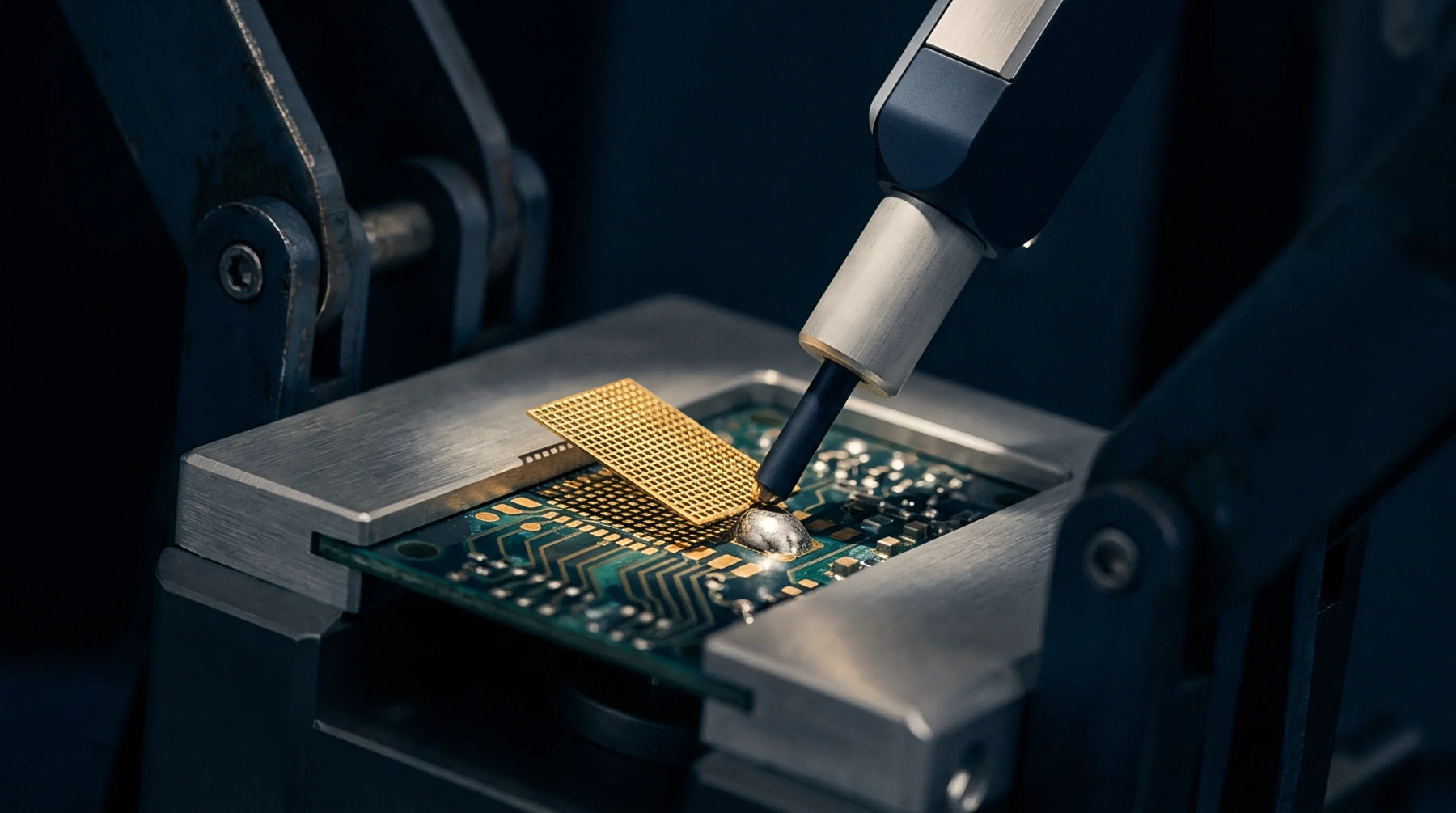
Partitioning boundary scan registers into parallel sub-chains cuts test vector execution time while maintaining high fault coverage on dense boards.

Resolving intermittent high speed signal integrity escapes requires pairing static boundary scan with embedded IJTAG at speed stress testing to catch dynamic physical layer failures.
Return path inductance across microvia fields drops when ground vias sit within two pitch distances of signal transitions, stabilizing loop impedance up to 50 GHz.

Combining IEEE 1149.1 boundary scan with targeted flying probe access closes logic cluster fault gaps while protecting net integrity and lowering unit test time.
Expertise is a utility, not a secret. sentiention™ publishes its working knowledge as open reference: intelligence layer covering the materials it sources, the markets it enters, and the reference that serves both.