Surface Hydrophobicity
Interfacial surface energy barriers prevent molten solder alloys from spreading smoothly across metallic terminal pads. Encountering solder wetting resistance indicates that surface contamination or heavy oxidation impedes liquid metal adhesion. Poor wetting results in high contact angles and incomplete solder coverage.
Assembly standards require pad surfaces to exhibit high surface energy to ensure rapid tinning during reflow.
Flux Interactions
Organic contaminants and thick oxide scales increase surface tension between liquid solder and base metal substrates. High solder wetting resistance hinders liquid alloy spreading, resulting in non-wetting or dewetting defects where molten solder pulls back into isolated beads. Reactive fluxes clean pad surfaces by dissolving oxides and reducing interfacial tension.
Inadequate flux activity fails to overcome surface barriers, causing soldering failures on aged board finishes.
Wetting Balance Evaluation
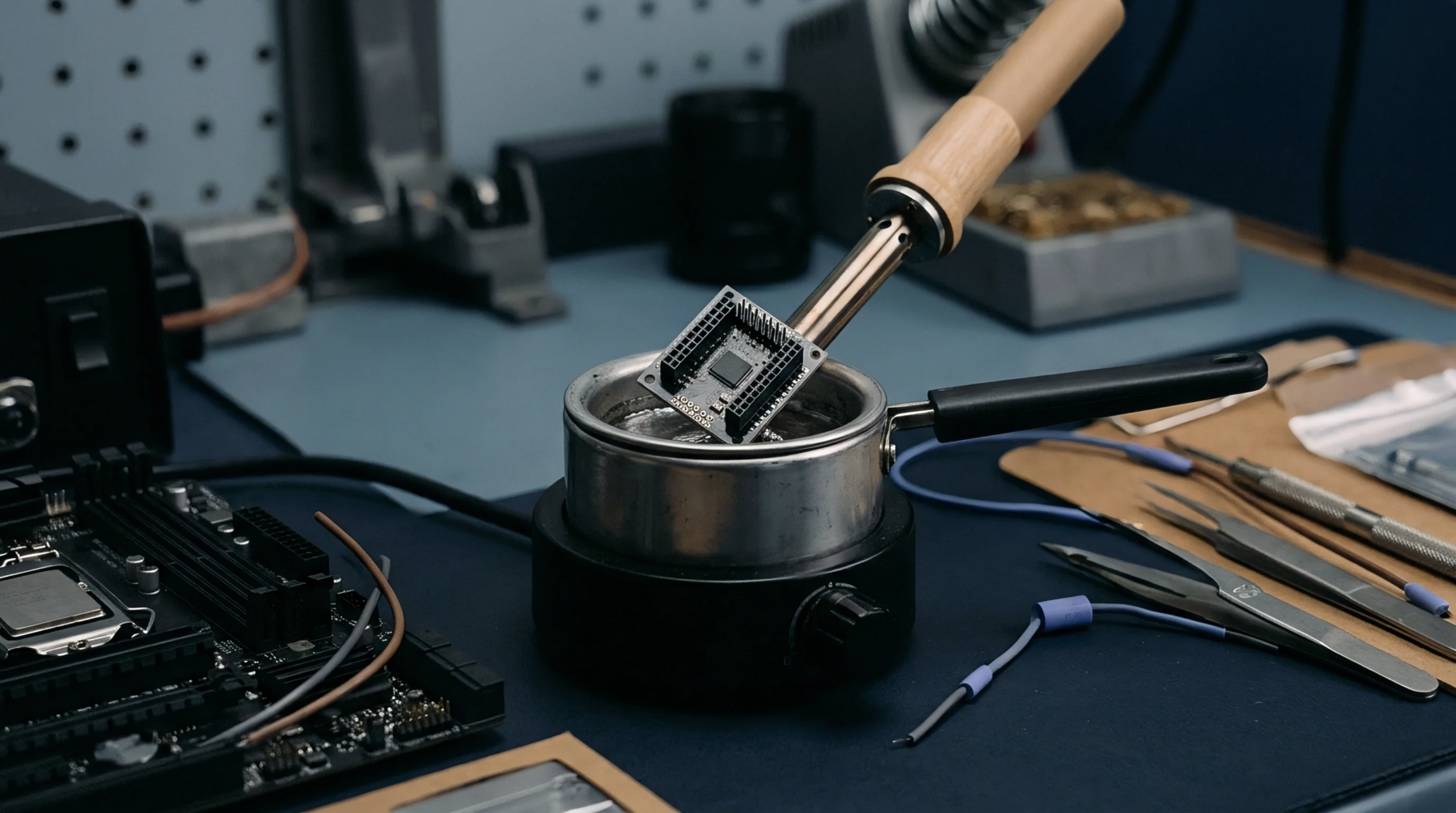
Quantitative testing using a wetting balance instrument measures dynamic forces during component lead immersion into molten solder. The instrument plots force against time to evaluate how rapidly solder overcomes solder wetting resistance and achieves positive wetting forces. Contact angle measurements complement wetting balance curves by quantifying equilibrium spreading behavior.
Pass criteria require rapid force transition into positive buoyancy regimes within specified wetting time limits. Failure to achieve threshold wetting force within two seconds indicates severe surface degradation. Component lots exhibiting poor wetting performance are rejected or subjected to chemical re-tinning prior to production assembly.