Expansion Measurement
Analytical characterization methods track dimensional changes in solid substrate materials under controlled temperature ramps and mechanical loads. In printed circuit board fabrication, thermomechanical analysis measures glass transition temperature and coefficient of thermal expansion for dielectric laminates. Precision quartz probes resting on laminate samples register micro-inch dimensional shifts as heating elements increase temperature at controlled rates.
Abrupt changes in material thermal expansion rates mark the transition from rigid glassy states to softer rubidium states. Characterizing z-axis expansion prevents barrel cracking in plated through-holes during high-temperature reflow soldering operations.
Thermal Deformation
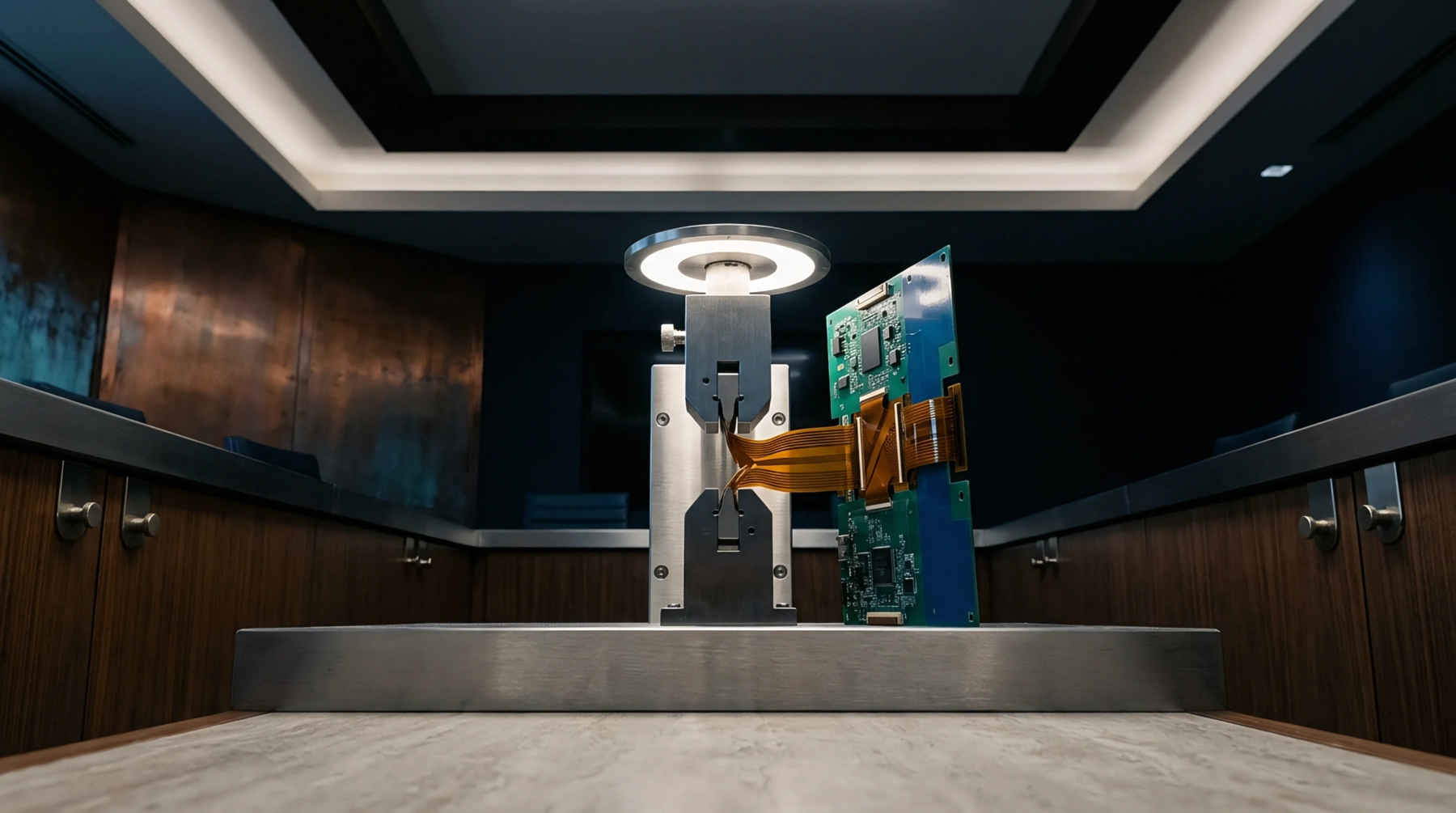
Testing apparatus positions a quartz expansion probe onto a flat laminate sample under a constant static force of five millinewtons. Temperature rises inside an argon-purged furnace chamber at a steady rate of ten degrees Celsius per second from ambient up to three hundred degrees. Dimensional expansion curves plotted against temperature show a linear slope below glass transition, followed by a sharp slope increase once polymer chains gain mobility.
Mathematical slope calculations below glass transition determine alpha-one thermal expansion, while slopes above transition yield alpha-two expansion values. Delamination onset temperature displays as a sudden drop in probe position when internal resin gas pressure separates plies. Fabricators use expansion data to match laminate mechanical properties with copper foil characteristics, minimizing bow and twist in finished multi-layer assemblies.
Sample Boundary
Small sample sizes tested in laboratory analyzers fail to reflect full printed circuit panel structural non-uniformities. Localized resin-rich pockets and uneven glass weave density produce variable expansion readings across different panel locations. Probe contact pressure deforms soft polymer substrates at high temperatures, distorting post-transition expansion measurements.
Test results cannot predict solder joint fatigue caused by dynamic assembly warpage.