Structural Deformation
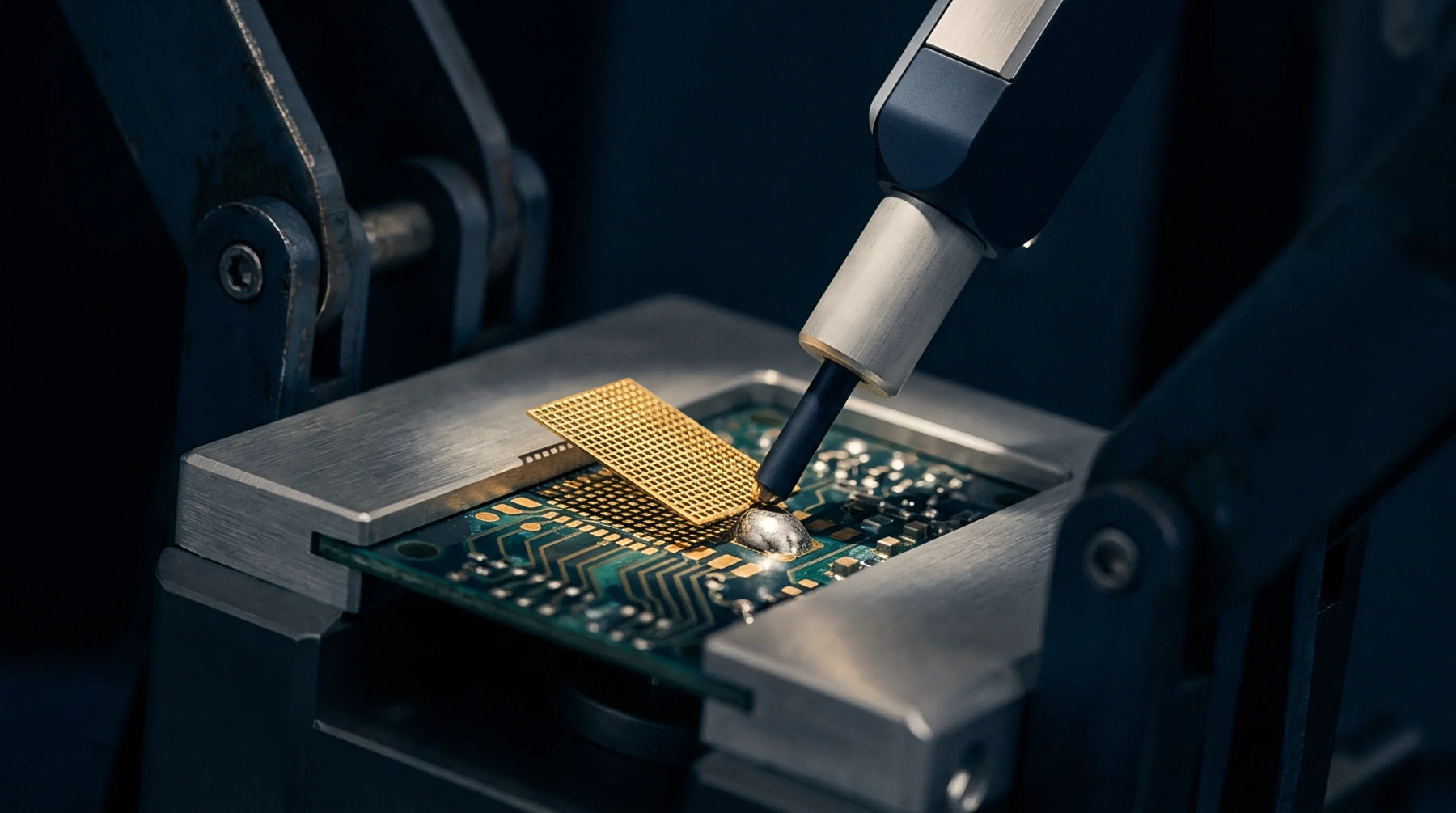
Surface strain represents the physical displacement of the uppermost laminate area relative to a horizontal reference plane when thermal gradients or mechanical loads exert pressure upon the circuit board. Top plate deflection identifies a localized warping event occurring during the reflow process as copper planes expand at rates distinct from the underlying fiberglass resin. This condition remains constant across high layer count assemblies where thermal mass varies dramatically between internal signal layers and external power planes.
Technicians monitor the geometric distortion to prevent solder joint fractures and component misalignment. Precision fixtures constrain the board edges, yet the center often bows under intense heat exposure.
Assembly Tolerance
Rigid standards define acceptable limits for board flatness during automated component placement to avoid mounting errors. Excessive top plate deflection creates a non-planar surface which prevents vacuum nozzles from forming a seal against component bodies. Pick and place machines struggle when the substrate loses its required parallel orientation relative to the nozzle head.
Verification occurs through laser profilometry systems that map the vertical deviation across the entire board surface. Deviations exceeding the specific threshold defined by the assembly specification force a rejection of the entire panel. Small boards typically sustain less vertical movement than large formats because the shorter spans resist bending moments more effectively than extended copper surfaces.
Designers mitigate these risks by balancing copper distribution on opposite sides of the core to equalize the mechanical stresses introduced by heat cycles.
Measurement Protocol
Optical shadow moire analysis provides an accurate record of topography shifts without contacting the delicate surface during the heating phase. Engineers track the movement of a projected grating pattern as the board transitions through the conveyor oven. Each measurement quantifies the peak to valley distance to establish the magnitude of the substrate curvature.
Real time data logs confirm that high intensity heat waves correlate with increased vertical movement in panels lacking uniform metal thickness. Effective control of top plate deflection ensures the integrity of electrical connections under demanding thermal operation conditions.