Establishing Clear Title to In-Circuit Test Hardware
Clear title to in-circuit test hardware requires milestone vesting clauses, perfected public bailment filings, and uncompiled vector source deliverables.

Vesting
Production contracts routinely disperse test hardware across contract manufacturing plants while legal possession remains ambiguous on commercial ledgers. An unpopulated bed-of-nails fixture built for a multi-layer board costs upwards of thirty thousand dollars in direct non-recurring engineering fees, yet buyers regularly treat the hardware as an operating line item rather than a capitalized tangible asset. When payment structures fail to specify the exact juncture where title passes from the fixture fabricator through the contract manufacturer to the original equipment manufacturer, the equipment sits in legal limbo.

Title Transfer Triggers across Milestone Payments
Legal conveyance requires an explicit statutory event rather than an informal expectation of customer rights. Standard purchase orders split development into three progress disbursements: design approval, un-wired mechanical assembly verification, and final first-article inspection sign-off. If the contract states that ownership conveys upon final invoice settlement, the buyer possesses zero legal claim during fabrication delays, plant reorganizations, or intermediate dispute cycles.
A dedicated in-circuit test fixture for an eight-layer telecommunications board represents forty-five thousand dollars in mechanical tooling, wiring, and bespoke interface boards before test execution begins.
A buyer secures enforceable title by pegging legal transfer directly to physical completion milestones:
- Initial mechanical fabrication assigns absolute property rights to drilled probe plates, moving top plates, and vacuum seals the moment raw materials undergo custom machining.
- Wiring harness termination attaches ownership to point-to-point receptacle wiring, personality pins, and multiplexer routing before backplane insertion.
- Golden board validation transfers title of test vectors, node translation tables, and debugged test program binaries upon successful continuity confirmation across ten consecutive panels.
- Final buyoff acceptance confirms full legal conveyance of documentation packages, calibration check fixtures, and storage crates prior to volume production release.
Each milestone generates an explicit partial bill of sale. Without incremental transfer language, partial payments function merely as unsecured advances against the manufacturer’s operational balance sheet.

Capital Tooling Schedules in Supply Agreements
Master manufacturing contracts separate piece-part purchase orders from capital asset acquisitions. The tooling schedule lists every dedicated item by custom serial identifier, assembly drawing reference, and designated equipment bay location. This schedule classifies the fixture cassette, probe plates, and matching transfer software as bailment property held temporarily in the supplier’s custody.
Inserting an express title vesting clause tied to component sign-off prevents the manufacturer from treating the assembly as company property during debt reorganizations.
Plate
Bed-of-nails fixtures contain discrete tiers of generic test system hardware and customized, product-specific mechanics. Disputes over fixture ownership frequently arise because the lower cassette interfaces with plant-owned automatic test equipment. Establishing clear title requires dividing the overall apparatus into distinct physical subsystems.

Physical Boundaries of Dedicated Cassettes
A production test assembly combines shared base infrastructure with dedicated interface components. The test receiver, vacuum pumps, pneumatic actuators, and base electronics belong to the assembly plant. The dedicated fixture cassette, top pressure plate, spring-loaded probes, wire-wrapped subplates, and custom interface printed circuit boards belong to the product buyer.
Factory floor operators routinely cannibalize unguarded test cassettes for spring probes and personality pins during sudden production line stoppages.
Demarcating physical property lines prevents cross-contamination of capital assets:
- Dedicated personality plate contains board-specific drill holes, alignment guide pins, and high-density probe sockets mapped exclusively to the client printed circuit board assembly.
- Spring-loaded test probes remain client property, including standard 100-mil pointed tips, 50-mil spear tips, and 39-mil chisel heads pressed into custom receptacles.
- Bespoke interface printed circuit board translates system receiver pins into custom routed test nets using internal traces and isolation switches.
- Top-side vacuum clamp enclosure houses specific pusher rods, board hold-down fingers, and pneumatic seals shaped directly to component height profiles.
Stamping the buyer corporate entity name, asset number, and part revision directly into the anodized aluminum cassette frame secures visual evidence of outside ownership and prevents co-mingling on site.
| Subassembly Component | Physical Demarcation | Ownership Allocation | Estimated Value Band | Portability Status |
|---|---|---|---|---|
| System Receiver Frame | Fixed to base tester chassis | Contract Manufacturer | $40,000 to $90,000 | Non-portable fixture asset |
| Drilled Probe Plate | Machined G10 or FR4 glass-epoxy plate | Equipment Buyer (OEM) | $6,000 to $14,000 | Directly removable |
| Spring Contact Probes | Loaded inside copper receptacles | Equipment Buyer (OEM) | $2,000 to $8,000 | Retained in plate |
| Personality Wire Harness | Point-to-point Kynar wire wraps | Equipment Buyer (OEM) | $4,500 to $12,000 | Integrated in cassette |
| Switching Transfer Cards | Multiplexing cards inside fixture well | Negotiated / Buyer Tooling | $5,000 to $15,000 | Modular plug-in |
| Vacuum Actuation Hood | Machined polycarbonate top hood | Equipment Buyer (OEM) | $3,500 to $7,500 | Directly removable |
Probe Densities and Actuation Strain
High-density surface mount layouts push probe spacing down to 39-mil centers, escalating fixture fabrication complexity. Point-to-point mechanical tolerances determine test reliability across thermal cycling runs. When a fixture accommodates 2,400 individual probes, the closing force under vacuum or pneumatic clamp exceeds 350 kilograms.
This sustained load bends weak plates, alters contact resistance, and damages thin surface-mount pads on unpopulated test panels.
Consider a dual-well bed-of-nails fixture for a 1,200-node automotive body controller running on an industry-standard test system at a tier-one assembly plant. Initial fabrication costs run 38,000 dollars across an eight-week machining and wiring window, alongside 160 engineering hours of test program validation at 175 dollars per hour. If a commercial dispute locks this fixture at an overseas plant, the buyer faces 66,000 dollars in direct replacement tooling and an eight-week vehicle production delay costing 120,000 dollars in weekly line-down penalties.
Securing clear title from day one avoids this exposure.
Mechanical Wear Limits in Tooling Passports
Every test fixture experiences finite physical durability dictated by mechanical actuation cycles. Beryllium copper spring probes degrade after 250,000 cycles due to spring fatigue, tip contamination, and plating erosion. Guide pins suffer bore-hole enlargement in softer G10 composite plates after 100,000 insertions, creating physical misalignments that cause false opens and board gouging while wire wrap faults escape visual inspection.
Tracking tool consumption reveals whether an unreturned fixture retains marketable production value. Tooling passports document cumulative stroke counts, probe replacement logs, and baseplate strain-gauge certifications per IPC-9704 guidelines. A supplier who fails to update cycle counts obscures asset degradation.
Failure to separate the dedicated cassette from the shared tester frame leaves the buyer paying replacement costs for an entire interface system following a contractor default.
Encumbrance
Securing a contract clause stating ownership fails to protect hardware if third parties obtain superior statutory liens over factory floor inventory. When contract manufacturers finance factory operations, commercial banks execute blanket liens encompassing all equipment, tools, and inventory located within the physical facility. Possession creates presumptive ownership under local codes.

Can Bailment Clauses Override Local Tooling Liens?
Contractual bailment provisions define the buyer as bailor and the manufacturing vendor as bailee for hire. Under common law jurisdictions, the bailee acquires physical possession without acquiring title. In civil law territories, third-party creditors rely on physical possession as conclusive evidence of corporate assets unless formal public filings state otherwise.
Article 9 filings under the Uniform Commercial Code record buyer ownership on the public ledger and strip contract manufacturers of the legal capacity to pledge production fixtures as loan collateral.
Landlords enforce statutory distraint against on-site machinery when factory tenants default on facility leases, and tax authorities seize floor assets during fiscal audits. A simple contract covenant stating customer ownership fails to block these statutory seizures without public perfection.
Perfecting Security Interests in Offsite Tooling
Protecting offsite manufacturing hardware requires establishing public legal notice within the jurisdiction where the production line physically operates. Buyers complete four formal actions:
- File a blanket equipment financing statement with the designated commercial registrar prior to delivering fixture hardware across state or national borders.
- Issue an itemized bailment certificate specifying serial numbers, physical weights, and replacement valuations simultaneously with each tool delivery.
- Conduct quarterly physical audits that photograph asset plates and verify serial stamps directly on the factory floor.
- Demand written lien waivers from secondary machine shops and fixture finishing vendors before releasing final engineering disbursements.
In cross-border deployments across Asia and Latin America, registering bailment property with customs authorities establishes clean tax boundaries. If import declarations classify custom test tooling under temporary admission bonds, local tax collectors cannot seize the hardware for the contract manufacturer’s domestic tax defaults.
Local plant rules frequently prohibit unbolting customer hardware until past inventory variances clear commercial reconciliation.
Deliverable
Physical possession of a bed-of-nails cassette provides little functional value if the engineering files remain locked in proprietary compilers. An in-circuit test station requires board design netlists, wiring schematics, fixture drill coordinates, uncompiled source code, and analog component tolerance thresholds to execute production screening.
Where Does Ownership of Custom Microcode Terminate?
Digital test vectors and debugging scripts are frequently categorized as proprietary factory intellectual property rather than project tooling. While automated test generation software creates raw test routines, engineers spend dozens of hours tuning guard traces, settling times, and bus cycle delays to eliminate false passes and component stress. This custom microcode forms the core of the test asset.
Bespoke test programs without raw circuit netlists and uncompiled source code keep the buyer captive to the assembly line holding the original compilation environment.
If a supplier provides only compiled object code or encrypted test binaries, moving the physical cassette to another manufacturing partner proves impossible. Compilers lock binaries to specific software versions, operating system releases, and tester hardware options. The contract must declare all source files, translation scripts, and debugged test programs as customer work-for-hire deliverables.
| Deliverable Artifact | File Format / Standard | Technical Function | Operational Risk Level If Missing | |
|---|---|---|---|---|
| CAD Board Netlist | IPC-D-356A / ODB++ | Defines physical node locations and probe coordinates | Critical: Prevents fixture re-wiring or probe relocation | |
| Fixture Wiring Map | ASCII / Native Wirelist | Maps probe pins to system interface pins | High: Forces manual pin tracing with multimeter | |
| Uncompiled Source Code | Native Test Language (.act, pin) | Contains functional test vectors, guard setups, and delays | Critical: Prevents program modification and re-hosting | |
| Debug Limit Logs | Tab-delimited log / CSV | Records analog guard limits and test settle times | Moderate: Increases false failure rates during re-commissioning | |
| Strain Gauge Report | IPC-9704 Strain Profile | Documents microstrain values on critical solder joints | High: Risks board cracking under altered vacuum levels | |
| Golden Board Master | Known-good serialized PCBA | Provides physical baseline for continuity check | Moderate: Lengthens secondary site acceptance times | |
| Methods note: Portability requires complete artifact sets verified against golden unit continuity before releasing final non-recurring engineering disbursements. | ||||
Board Cad Netlists and Uncompiled Vectors
Recovering complete engineering packages ensures test continuity. An operational handoff file contains the raw IPC-D-356A electrical test netlist generated from the original printed circuit layout, confirming every test pad, via, and connector pin coordinate targeted by the fixture probes. Missing vector source code otherwise forces a full rebuild.
Without the uncompiled board files, modifying test routines to account for component obsolescence or minor revision respins demands complete reverse engineering. The buyer who owns the physical fiberglass and wire wrap without the digital design vectors holds a hollow asset.
Whether proprietary test vector algorithms developed on commercial automated test equipment compilers can legally transfer without licensing the underlying software compiler remains open across cross-border manufacturing disputes.
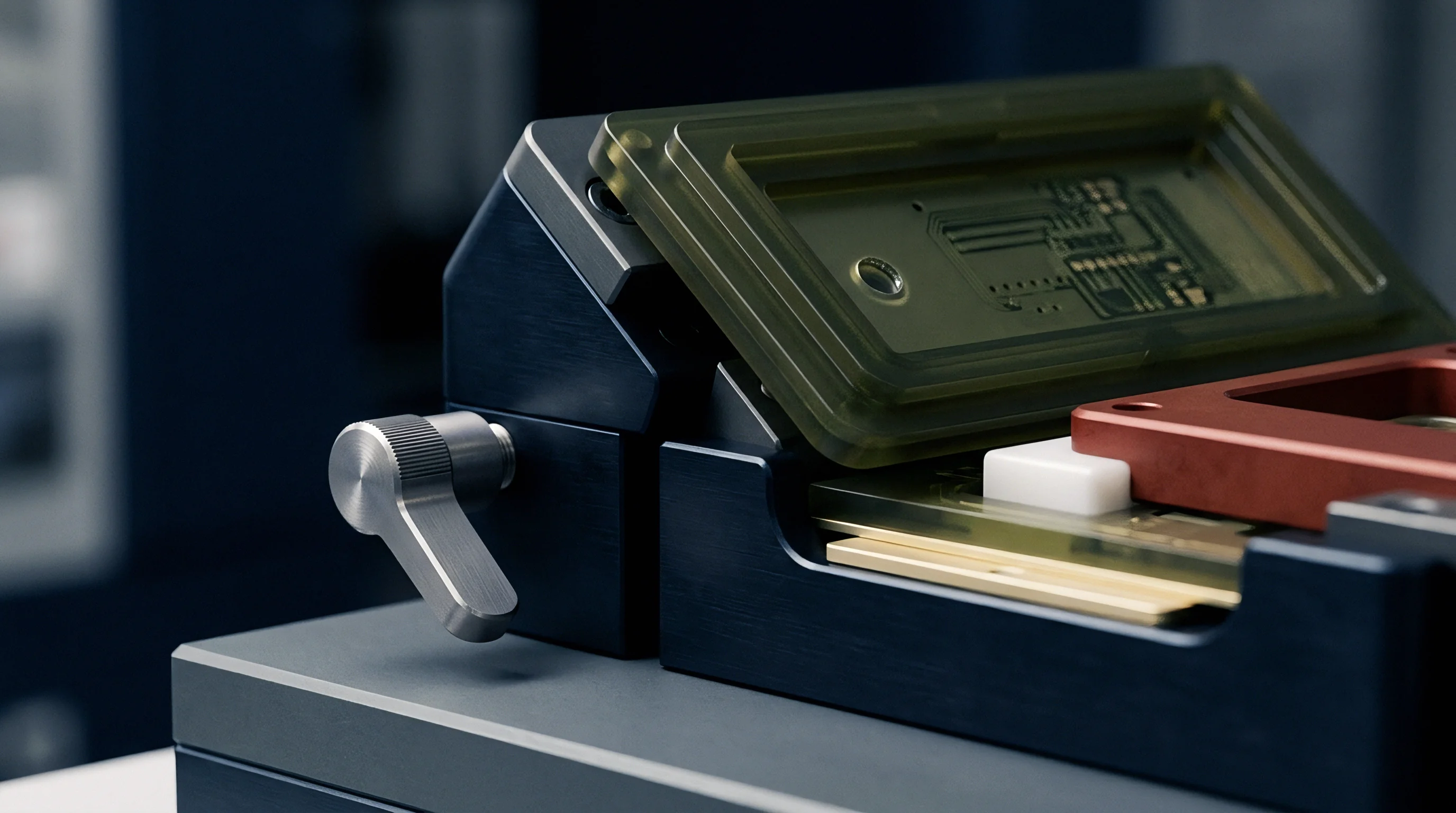

Handover
Physically extricating capital test fixtures from an incumbent manufacturing facility requires structured sign-off protocols. When an original equipment manufacturer decides to reallocate production, relations with the outgoing factory often turn adversarial. Equipment extraction protocols enforce chain-of-custody documentation and verify component health before freight handlers take custody.
Factory Acceptance Audits and Physical Extraction
De-installation begins with an on-site joint inspection. The buyer’s representative conducts a static audit of the fixture cassette, cross-checking the physical asset tag against the original master equipment registry. The outgoing supplier runs ten consecutive cycles using a serialized golden verification board to prove that all spring contact pins, pneumatic hold-downs, and wiring channels operate within specification, ensuring static discharge does not damage ungrounded cassettes.
Once technicians use calibration coupons to confirm pin alignment tolerances and log functional integrity on the formal release certificate, they pack the cassette into custom shipping containers fitted with internal shock mounts, desiccant packs, and moisture-barrier bags. Riggers secure the top-plate actuation hood to eliminate lateral movement during transport. Missing calibration coupons or damaged guide pins invalidate receiving acceptances at the new assembly plant.
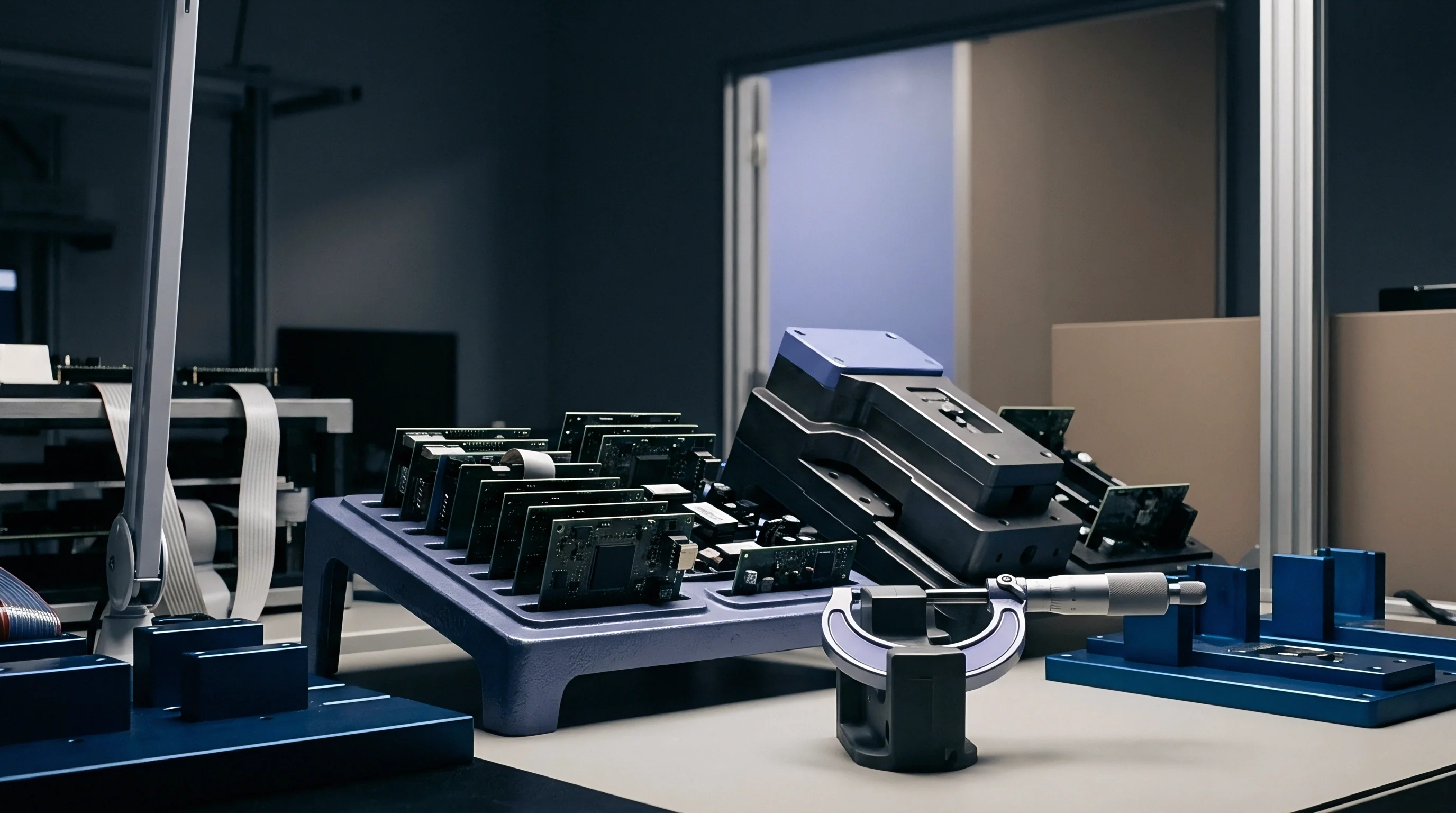
Receiving Verification on Foreign Tester Chassis
Re-commissioning hardware on a secondary production line uncovers subtle interface differences. System receiver pin alignments vary by several thousandths of an inch between test frames, causing intermittent opens on dense 39-mil probe grids. Vacuum pull levels fluctuate between facility air systems, shifting board deflection profiles and altering microstrain stresses on sensitive ceramic capacitors.
Engineers at the receiving facility run complete self-test diagnostics across the interface cassette before mounting live production panels. These tests measure loop resistance, isolation leakage, and driver-sensor switching performance across every multiplexed channel. Once the receiver confirms that all contact resistances fall below the 0.5-ohm limit and strain gauges demonstrate compliance with IPC-9704 thresholds, the recipient signs the transfer passport, closing the chain of title.
A fixture that cannot run passing production coupons on a second tester within one working shift belongs to the factory floor that built it.