Thermodynamic Equilibrium Models for Solvent Induced Delamination in Flexible High Density Interconnect Substrates
Solvent-induced flex circuit delamination occurs when processing chemicals depresses polymer transition temperatures and degrades interfacial work of adhesion.
Sorption
Thermodynamic Solvation and Polymer Matrix Penetration
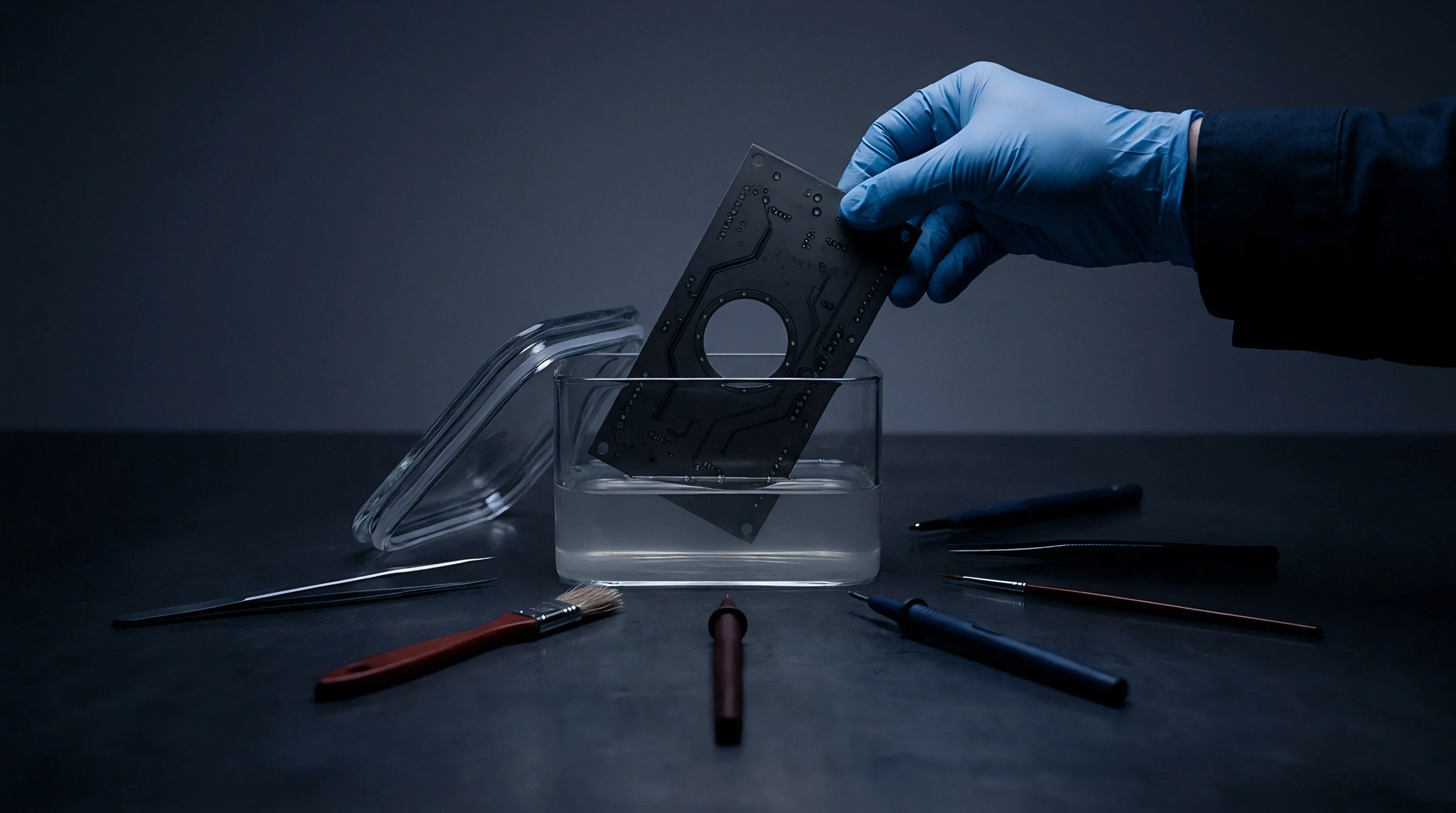
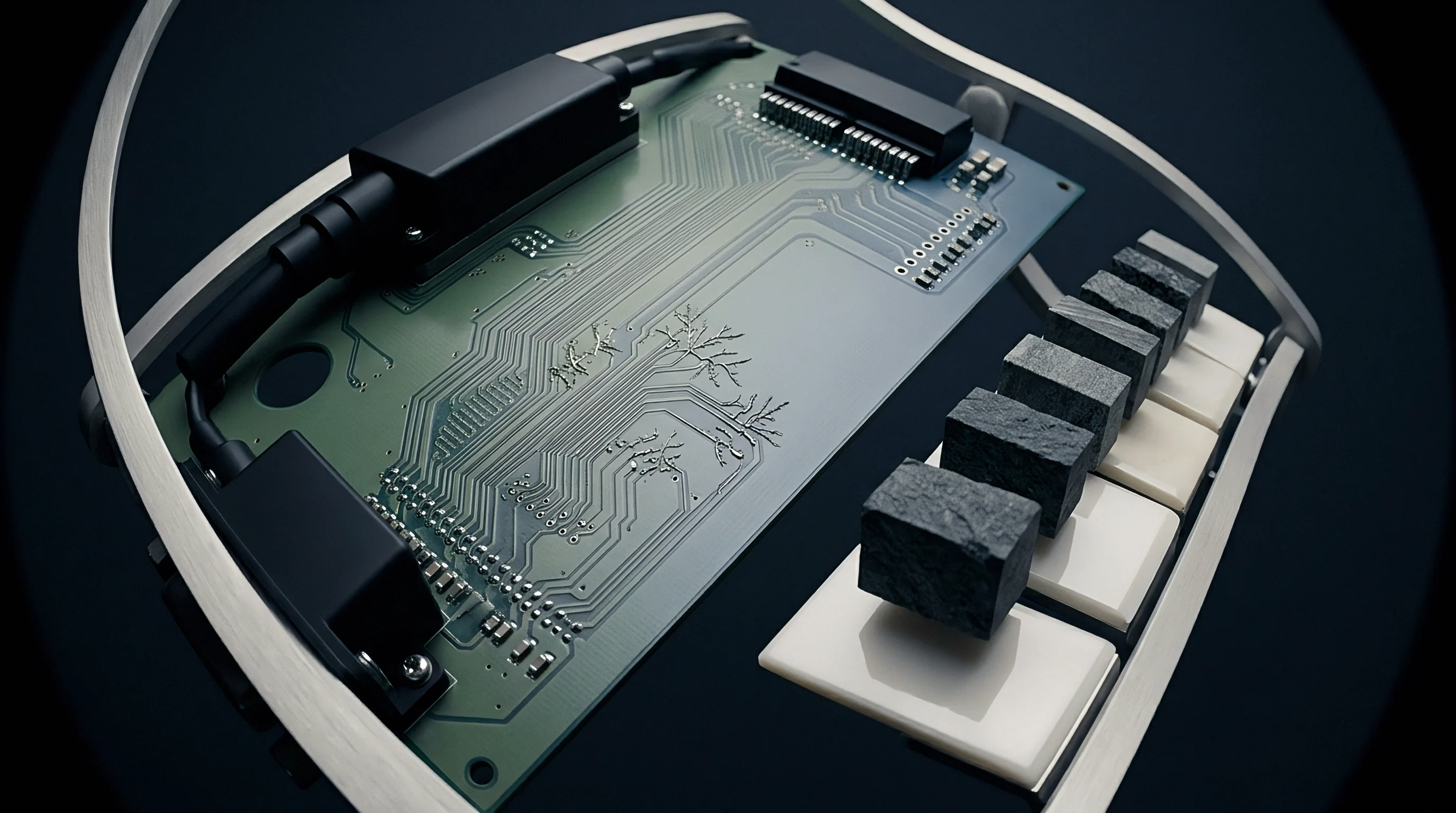
Chemical exposure during micro-etching, automated flux removal, and conformal washing forces solvent molecules straight into the flexible polymer matrix. High-Density Interconnect (HDI) flex designs rely on thin polyimide or liquid crystal polymer (LCP) films, frequently bonded with acrylic or epoxy adhesives. When organic solvents hit these dielectrics, mass transport follows chemical potential gradients, absorbing solvent until internal chemical potential balances that of the external fluid phase.
Hansen Solubility Parameters provide the thermodynamic framework for modeling solvent uptake in HDI dielectrics. The overall parameter combines dispersion forces, dipole-dipole interactions, and hydrogen bonding components, with thermodynamic affinity rising as the solubility distance between solvent and substrate shrinks. Isopropyl alcohol causes minimal swelling in aromatic polyimide because of its large solubility distance, whereas aggressive fluids like cyclohexanone or N-methyl-2-pyrrolidone (NMP) align closely with polyimide polar and hydrogen bonding coordinates, driving uptake that shifts local dielectric constants.
Polymer swelling alters the dielectric’s internal free volume. Standard Fickian models scale initial absorption with the square root of time, but anomalous Non-Fickian or Case II transport takes over when diffusion outpaces polymer chain relaxation. In HDI layers as thin as 12 micrometers, Case II transport drives a sharp solvent front through the substrate at a constant velocity, building up localized stress along the advancing dry-wet interface.
| Solvent System | Dispersion (dD) | Polar (dP) | Hydrogen (dH) | Polyimide Distance Ra | LCP Distance Ra |
|---|---|---|---|---|---|
| Isopropanol (IPA) | 15.8 | 6.1 | 16.4 | 11.2 | 14.8 |
| Cyclohexanone | 17.8 | 6.3 | 5.1 | 4.1 | 9.3 |
| N-Methyl-2-pyrrolidone (NMP) | 18.0 | 12.3 | 7.2 | 2.3 | 8.1 |
| Methylene Chloride | 18.2 | 6.3 | 6.1 | 3.8 | 7.6 |
| Deionized Water | 15.5 | 16.0 | 42.3 | 28.4 | 31.7 |
Flory-Huggins lattice theory describes the free energy of mixing as solvent enters the cross-linked or semi-crystalline dielectric. The dimensionless interaction parameter determines whether that solvent functions as a mild plasticizer or a strong swelling agent. Values below 0.5 reflect full thermodynamic compatibility, expanding polymer chains until restrained by mechanical cross-links or crystalline domains, while values above 0.5 constrain swelling to a predictable saturation limit.
Uncured resin pockets retain trace solvents, leaving localized substrate bubbling frequently misattributed to basic thermal shock when residual processing fluids in the adhesive layers are overlooked.
Phase
Glass Transition Depression and Swelling Stress Profiles
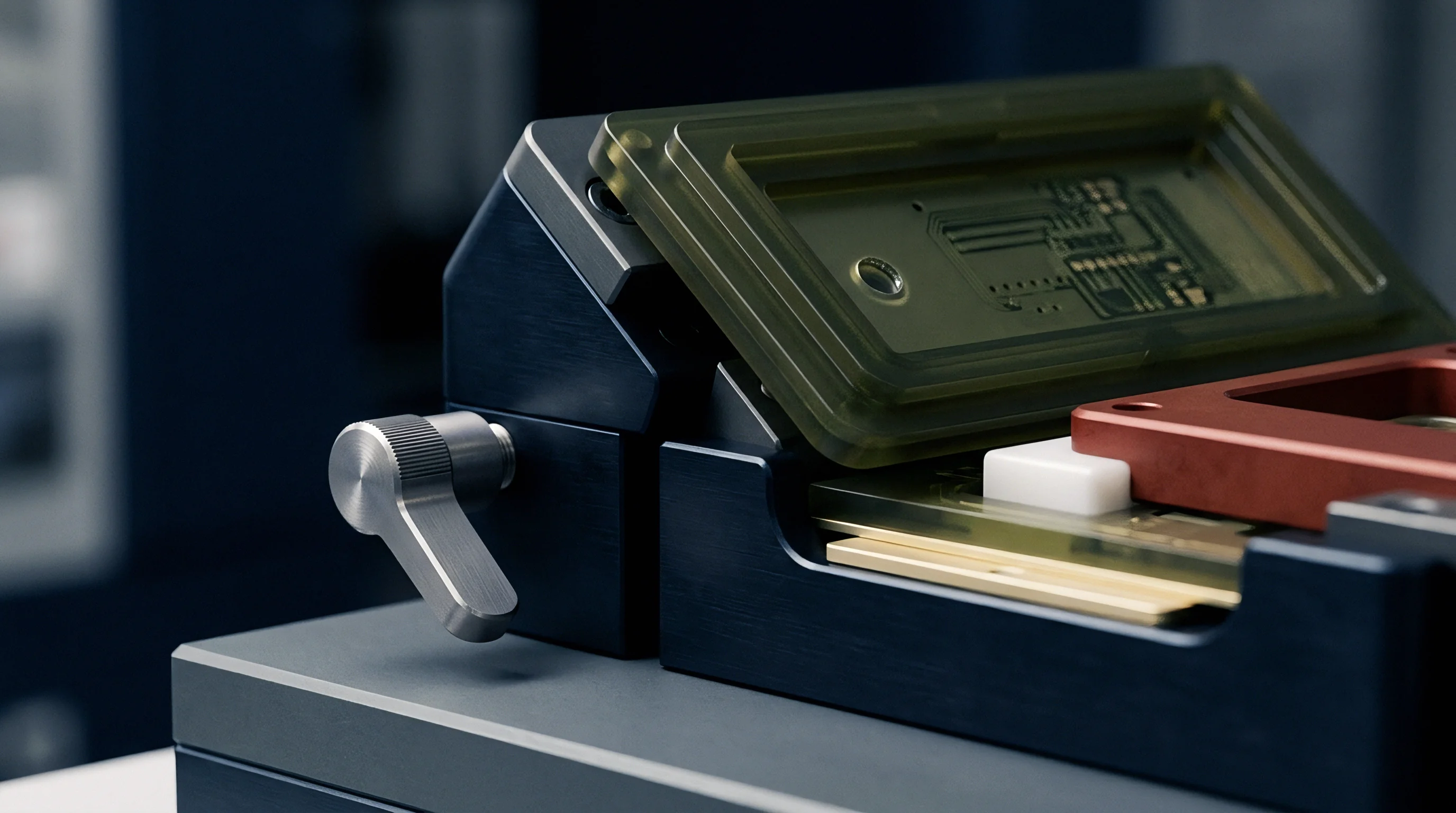
Dissolved organic species within a cross-linked or semi-crystalline polymer shift the mechanical rigidity of dielectric layers. Absorbed solvent molecules occupy interstitial volumes, increasing chain mobility and lowering the glass transition temperature ~ a shift accurately estimated by the Fox equation using the mass fractions and transition temperatures of the dry polymer and pure solvent.
This glass transition drop converts rigid polyimide or modified epoxy into a rubbery state at reflow temperatures. When an HDI flex circuit hits 260 degrees Celsius during surface-mount assembly, a saturated interlayer operating above its depressed transition point suffers an elastic modulus drop of up to two orders of magnitude, undermining the anchor holding electrodeposited or rolled-annealed copper traces to the substrate.
Swelling stress exceeding interfacial shear strength initiates delamination long before visible blisters appear on the outer flex layer.
Solvent-driven volumetric expansion generates internal hydrostatic pressure fields. Because high-modulus copper ground planes and microvia arrays constrain HDI substrates in the X-Y plane, this swelling forces z-axis dilation almost exclusively, concentrating shear stress along the copper-dielectric margin where thermal cycling later accelerates micro-crack growth.
Flory-Rehner Mechanical Equilibrium in Flex Substrates
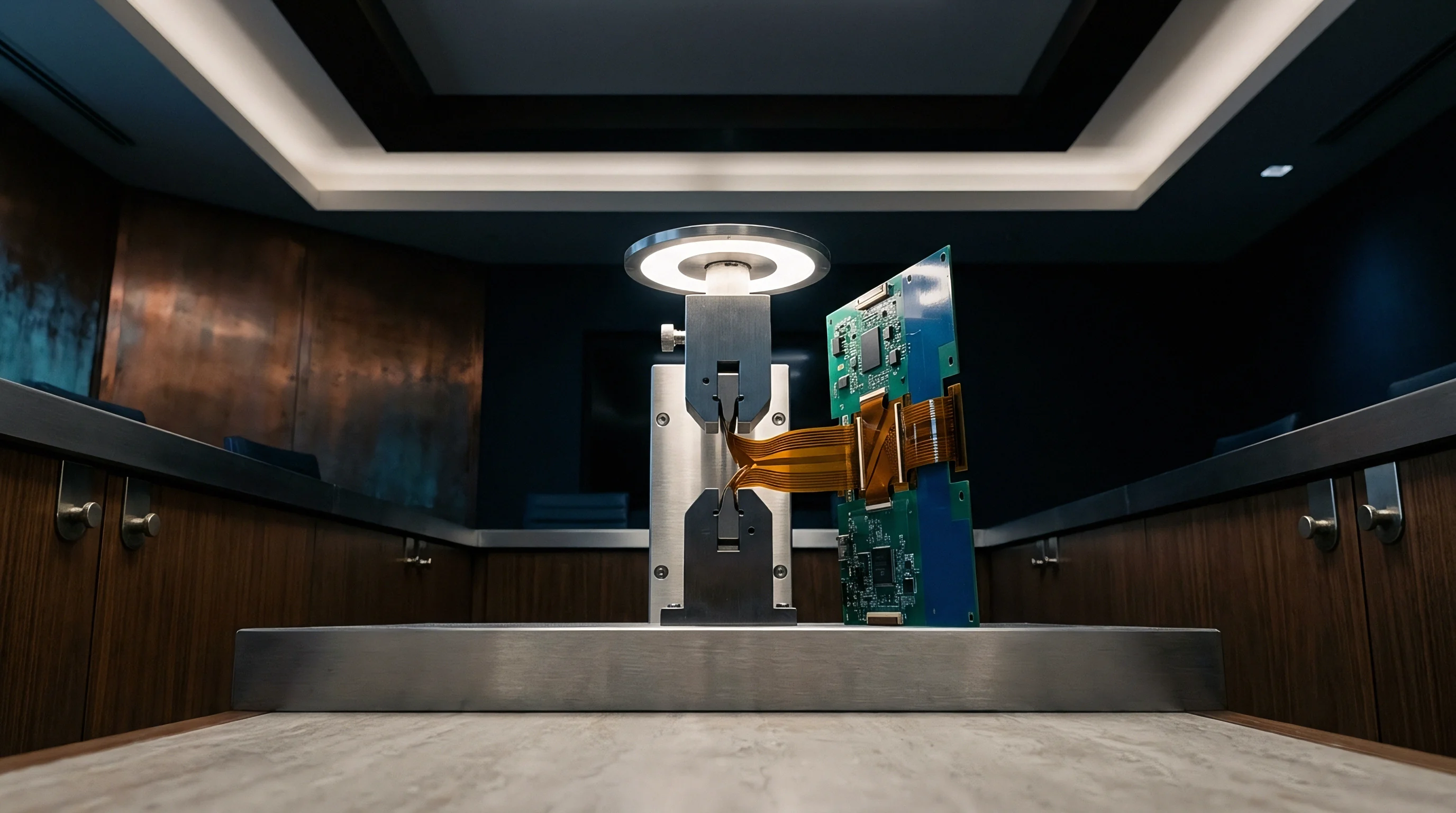
The Flory-Rehner equation describes the equilibrium between the osmotic force drawing solvent into the flex dielectric and the retractive force exerted by the stretched polymer network. Equilibrium is reached when elastic strain energy offsets the chemical potential drop from matrix mixing, a balance that explains why Liquid Crystal Polymer resists swelling far better than conventional dielectrics.
Microvias in flexible HDI layers act as rigid anchors. As solvent swells the surrounding dielectric matrix, the local strain field generates triaxial stress concentration at the base of blind microvias. In fully saturated acrylic bonding films, Flory-Rehner equilibrium calculations show swelling pressures exceeding 15 MPa ~ enough to overcome the peel strength of electrodeposited copper on un-primed polyimide.
Internal swelling stress relaxes slowly, leaving residual stress fields even after solvent evaporates. Vacuum baking outside designated temperature windows risks forming a dense skin layer via rapid surface desolvation, locking volatile molecules deep within interlayer blind vias.
Drying the dielectric too quickly hardens this outer skin prematurely, sealing volatile fluids inside internal microvia walls.
Interphase
Work of Adhesion and Interfacial Thermodynamics
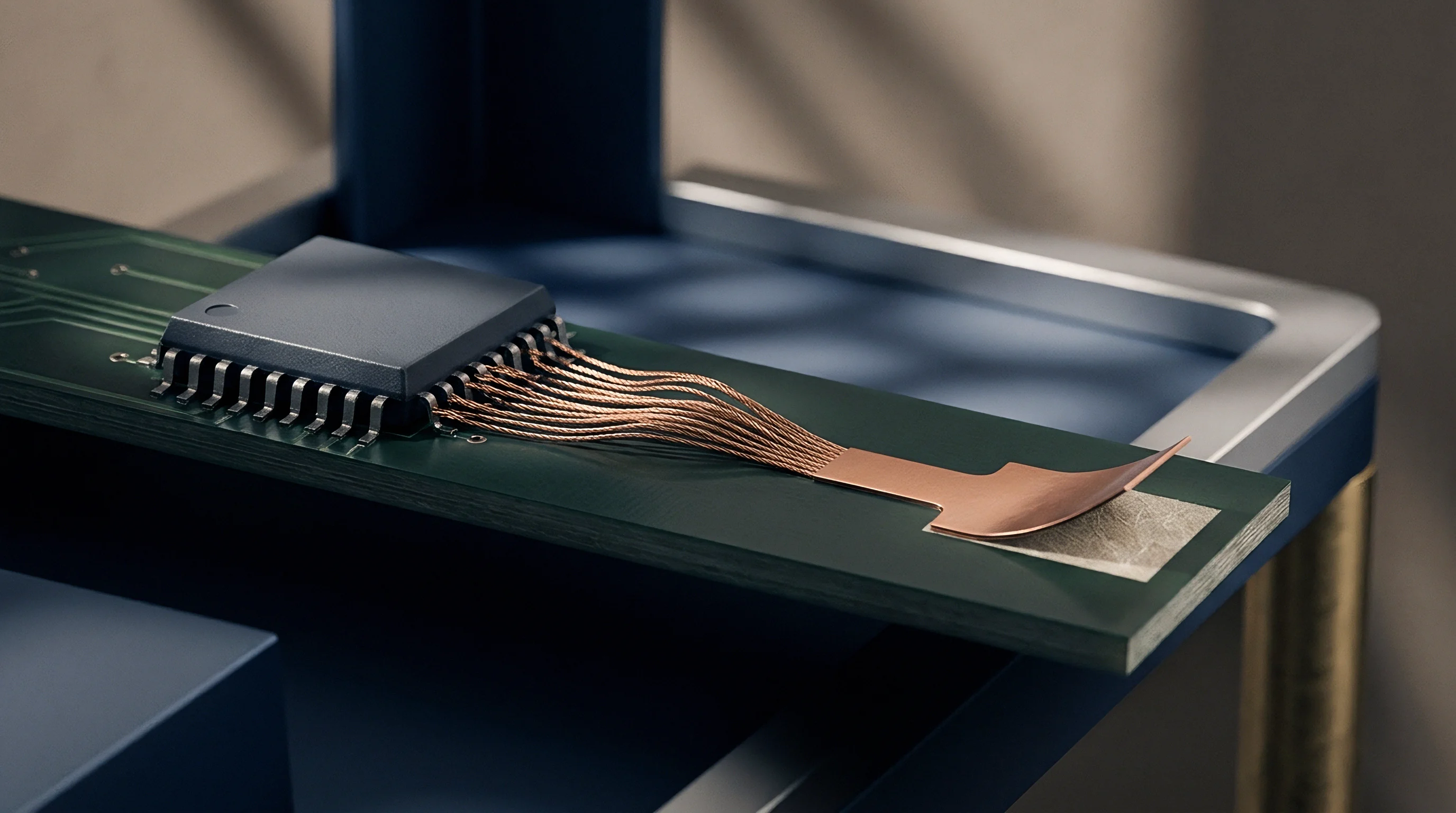
Bond integrity between electrodeposited copper foils and polyimide dielectrics depends on atomic-scale forces across the interface. In dry conditions, thermodynamic work of adhesion equals the combined surface free energies of the copper trace and polyimide minus their mutual interfacial energy, split into Lifshitz-van der Waals dispersive forces and Lewis acid-base polar interactions.
Introducing liquid solvent alters this balance. As fluid infiltrates the copper-polymer interphase, the work of adhesion under immersion drops by the sum of the solid-liquid interfacial energies. A positive dry adhesion value can even turn negative if the solvent shows strong polar affinity for both the copper oxide layer and the polyimide surface, while absorbed water simultaneously degrades high-frequency signal impedance.
A solvent activity of 0.85 reduces the thermodynamic work of adhesion at the polyimide-copper interface by 62 percent compared to the dry baseline state.

Could Interfacial Free Energy Predict Peel Strength Decay?
Peel tests per IPC-TM-650 Method 2.4.9 measure macro-scale fracture energy, combining true thermodynamic adhesion with plastic deformation losses in the copper foil and dielectric. While plastic dissipation accounts for most of the peel force under dry conditions, solvent ingress suppresses the underlying thermodynamic work of adhesion. If that value approaches zero, macro-scale peel strength collapses as the barrier to crack propagation disappears.
Silane coupling agents and metallic tie coats (like chromium or nickel-vanadium) alter interfacial thermodynamics by forming covalent bonds across the metal-dielectric boundary. Simple solvation cannot displace direct metal-oxygen-silicon covalent bonds; instead, solvents degrade adhesion by attacking non-covalently bonded zones, hydrolyzing weak oxides, or swelling the soft polymer boundary adjacent to the metal interface.
| Substrate Interface | Dry Work of Adhesion | In-Water Work of Adhesion | In-IPA Work of Adhesion | Critical Solvent Activity Limit |
|---|---|---|---|---|
| Cast Polyimide / Cr Seed | 142.5 | 38.2 | 88.1 | 0.72 |
| Adhesiveless LCP / Cu Direct | 98.1 | 54.6 | 76.3 | 0.88 |
| Acrylic Adhesive / Cu Foil | 76.4 | -12.3 | 14.2 | 0.35 |
| Modified Epoxy / ED Cu Foil | 115.0 | 18.5 | 45.0 | 0.58 |
Co-absorption of moisture and solvent establishes complex quaternary phase equilibria, as water disrupts hydrogen bonds between polyimide chains while organic solvents swell adjacent amorphous regions ~ shifts that standard peel tests often fail to detect.
Do thermodynamic models account for the localized stress concentrations created by rough copper foil profiles under dynamic solvent exposure?

Screening

Non-Destructive and Destructive Verification Techniques
Detecting sub-surface fluid accumulation requires high-frequency ultrasonic inspection alongside micro-yield strain verification. Acoustic microscopy applies high-frequency sound waves, typically between 100 MHz and 230 MHz, to resolve acoustic impedance mismatches at buried interfaces within HDI flex circuits where standard cleanliness testing reveals nothing.
When solvent-driven delamination begins, a microscopic fluid- or gas-filled gap opens between the copper trace and dielectric matrix. The sharp impedance mismatch between solid copper and liquid generates a phase-inverted acoustic reflection, allowing C-mode Scanning Acoustic Microscopy (C-SAM) to map delamination zones down to 5 micrometers resolution in thin-film HDI builds.
Verification protocols must distinguish chemical degradation from mechanical damage. When solvent-contaminated HDI substrates face thermal and mechanical stress, several primary failure mechanisms emerge:
- Interfacial Micro-Voiding tiny solvent pockets coalesce along copper trace edges, forming continuous planar micro-cracks during reflow.
- Blistering at Stiffener Transitions localized swelling stress concentrates where flexible polyimide joins rigid FR-4 stiffeners, shearing low-cost adhesive layers.
- Barrel Separation in Blind Vias Z-axis swelling pulls plated microvia walls away from internal capture pads, breaking high-density signal paths.
- Conductive Anodic Filamentation trapped solvent establishes ionic mobility pathways, accelerating copper migration along wet polyimide fibers under electrical bias.
Quantitative Qualification Procedure for Solvent Resistance
Demonstrating compliance with long-term reliability standards requires systematic solvent exposure paired with mechanical and electrical stress testing. The test sequence measures physical swelling, mass gain, adhesion loss, and insulation resistance degradation across sample batches.
- Bake test coupons at 105 degrees Celsius for two hours to establish dry baseline mass and dimensional parameters.
- Measure baseline capacitance and insulation resistance across fine-pitch comb patterns per IPC-TM-650 Method 2.6.3.7.
- Immerse test coupons in target processing solvents at specified operating temperatures for defined immersion cycles.
- Extract samples, remove surface liquid with lint-free wipes, and immediately re-weigh to determine mass uptake percentages.
- Perform C-SAM inspection within thirty minutes to capture transient fluid accumulation prior to room-temperature desolvation.
- Subject exposed coupons to three reflow thermal cycles peaking at 260 degrees Celsius per IPC-TM-650 Method 2.4.13.
- Microsection selected samples across microvia arrays and copper margins to verify structural bond integrity per IPC-6013 Class 3 standards.
Per IPC-6013 Class 3 requirements, any interlayer delamination or microvia wall separation exceeding 8 micrometers invalidates batch acceptance regardless of electrical continuity.
Fixture design dictates fault coverage during screening. Microsectioning reveals structural bond failures that boundary-scan and flying probe tests miss, since partial delamination often maintains DC continuity until thermal cycling in the field. Test protocols that skip solvent pre-conditioning risk letting latent defects reach high-reliability assemblies.
Under IPC-2223 Section 5.3.2, flex circuitry for high-reliability environments must show zero interface separation following solvent immersion and six thermal shock cycles from negative 55 to positive 125 degrees Celsius.
Penalty

Financial Risk, Technical Files, and Conformity Economics
Commercial exposure from solvent-induced circuit failure climbs quickly once assemblies reach the field. Unnoticed micro-delamination lets moisture and ionic contaminants penetrate the substrate, leading to short circuits across tight HDI trace gaps that drive up replacement costs, labor expenses, and warranty liability.
Demonstrating conformity depends on thorough technical documentation. EN IEC 63000 requires technical files to include material assessments verifying chemical stability under expected operating conditions, and relying solely on supplier safety data sheets without board-level testing will fail market surveillance audits.
| Screening Severity Level | Test Regime Cost per Batch | Delamination Escape Rate | Predicted Field Warranty Claim Risk | Net Landed Cost Impact per 10k Units |
|---|---|---|---|---|
| Visual Inspection Only | 150 | 4.80 | High Risk (Severe Failure Rate) | Base Cost + $68,000 Risk |
| Flying Probe + Standard ICT | 850 | 2.10 | Moderate Risk (Intermittent Defects) | Base Cost + $31,000 Risk |
| Solvent Pre-Soak + Reflow + C-SAM | 3,400 | 0.05 | Negligible Risk (Verified Integrity) | Base Cost + $4,100 Risk |
| Destructive Microsection Sampling | 1,800 | 0.40 | Low Risk (Statistical Guardband) | Base Cost + $9,200 Risk |
The landed-cost impact of weak screening is straightforward. For a 10,000-unit batch of 8-layer flex-rigid HDI assemblies priced at $85 per unit, an undetected delamination escape rate of 2.1 percent results in 210 field failures. In medical or aerospace applications, warranty repairs average eight times the landed unit price, wiping out $142,800 from warranty reserves on a single production lot.
Regulators require documented proof of chemical safety and durability. The technical file must show that fabrication and assembly solvents leave no residues capable of triggering mechanical degradation over the product’s operating life.
These dossiers require explicit evidence that solvent exposure during assembly preserves the interfacial adhesion limits set out in IPC-6013 Class 3 design rules.
- Process Chemical Audits documentation tracing every solvent, micro-etchant, and flux cleaner used across sub-tier manufacturing lines.
- Solvent Exposure Test Reports certified test data demonstrating post-immersion peel strength above 0.8 N/mm per IPC-TM-650 2.4.9.
- Thermal Strain Qualification microsection reports confirming zero interlayer separation after thermal stress testing per IPC-TM-650 2.4.13.
- Substance Conformity Declarations verified REACH Candidate List compliance files accounting for trace residual solvents like NMP or DMF below the 0.1 percent mass threshold.
Ignoring thermodynamic solvent equilibrium in flex substrate qualification leaves board builds vulnerable to unquantified warranty exposure whenever process chemistry changes.