Material Composition
Borosilicate glass containing low alkali metal oxide levels provides the structural stability required for printed circuit board substrates. e-glass reinforcement utilizes this specific chemistry to achieve high electrical resistivity and moisture resistance. Strands of continuous filament glass undergo a silane coupling agent treatment to facilitate chemical bonding with epoxy resin matrices. This interface dictates the dielectric constant and loss tangent of the finished laminate.
Consistent fiber diameter control determines the thickness precision of the dielectric layers.
Fabrication Geometry
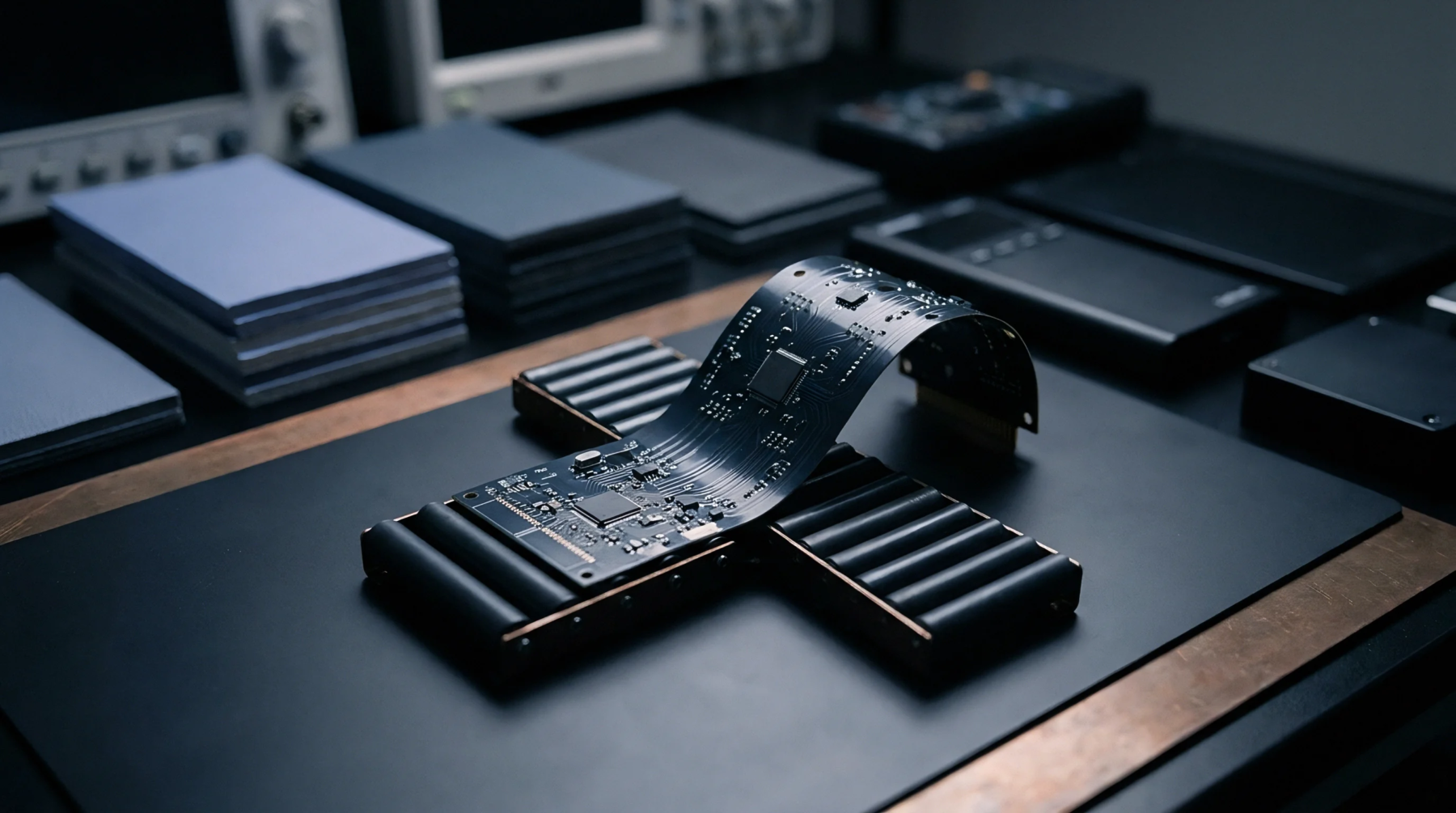
Weave patterns define the mechanical anisotropy within the base material during the lamination process. e-glass reinforcement distributes stress across the board area to counteract thermal expansion mismatch between copper foil and resin. A tight weave minimizes localized resin-rich zones that otherwise lead to inconsistent drilling results or plating voids. Balancing the warp and fill directions reduces twist and bow in high layer count assemblies.
Smaller fiber bundles offer better conformance to fine line features during photoresist imaging.
Performance Constraint
Dielectric breakdown voltage depends on the purity of the glass fibers and the uniformity of the resin impregnation. e-glass reinforcement maintains insulation integrity under high humidity conditions by preventing conductive path formation along the fiber-matrix boundary. Signal propagation delay remains stable because the permittivity of the material stays locked within tight tolerances regardless of ambient temperature changes. Higher frequency applications demand a reduction in the relative permittivity that standard glass variants offer to minimize signal distortion.
The physical properties of the inorganic fibers define the absolute upper limit for the thermal processing temperature of the assembled circuit board.