Contact Force
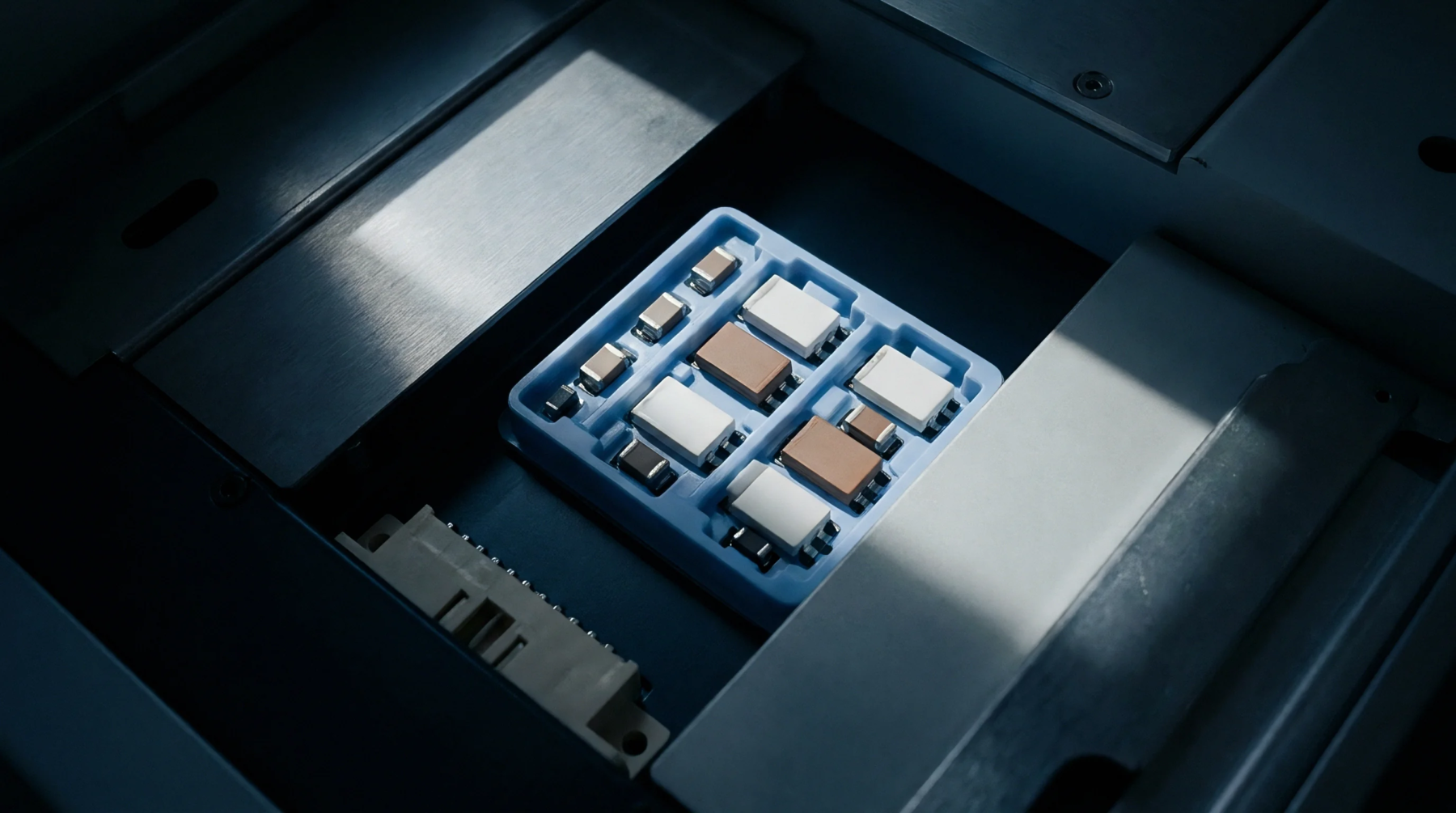
Surface contact density defines the mechanical load applied at the interface of a component pick head and a surface mounted device. Kiss pressure describes the calibrated downward force exerted during the placement cycle to ensure the solder paste makes consistent contact with the device termination. Excessive levels damage fragile ceramic capacitors or warp thin printed circuit boards.
Proper calibration prevents these failures.
Placement Accuracy
Dimensional tolerances govern the depth of travel for the placement nozzle during the assembly of electronic components. The kiss pressure measurement relies on load cells or pneumatic feedback systems to detect the exact moment the component touches the substrate. Machines translate this signal into a command that halts the downward stroke to minimize mechanical shock.
Deviations from the setpoint trigger placement errors or lead to skewed components. Correct settings maintain the integrity of the solder joint formation.
Process Stability
Thermal expansion coefficients of the substrate impact the effective landing position when multiple layers reach high temperatures. High kiss pressure variations introduce microscopic fractures in the solder mask or crush the underlying copper traces near the landing pad. Technicians monitor these values to establish a baseline for repeatable assembly cycles across long production runs.
Precise force management reduces the frequency of rework operations. Stable downward load application correlates with higher yields in fine pitch assembly applications.