Surface Deviation
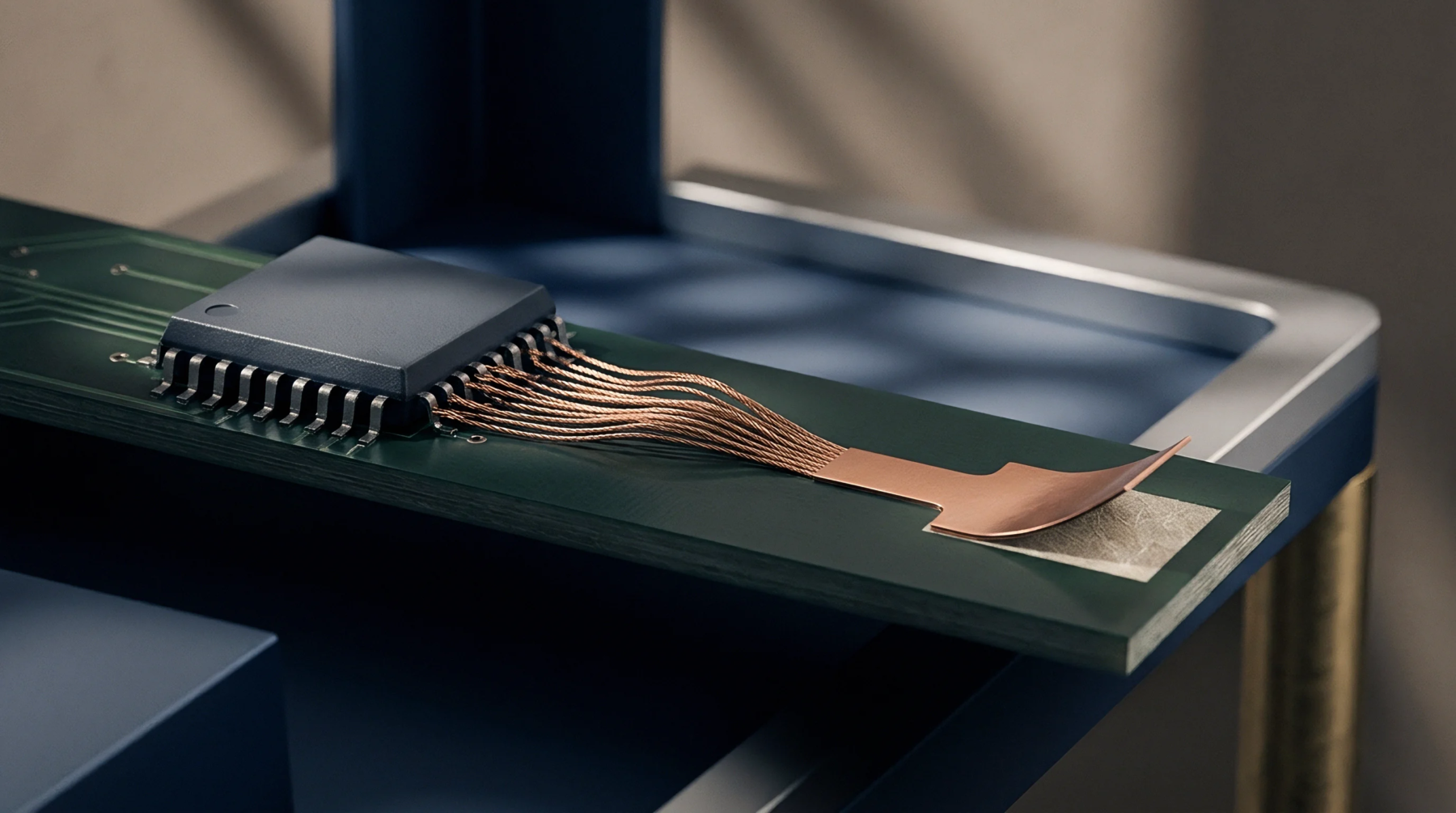
Deformation of a base layer occurs when thermal processing induces unequal internal stress distributions across a planar material during high temperature cycles. Such substrate warpage prevents uniform contact between individual solder spheres and the underlying circuit land patterns. Manufacturers quantify this physical displacement by measuring the vertical distance between the highest and lowest points on a surface relative to a flat reference plane.
Deviation remains acceptable only until the magnitude exceeds the established clearance capacity of the reflow process equipment. Excessive bending creates an immediate barrier to electrical continuity because the pads no longer sit within the optimal solder paste window.
Thermal Mechanism
Heat exposure during soldering cycles drives expansion rates that differ between individual layers in a stack. Laminated resins and copper traces possess distinct coefficients of expansion, causing the aggregate material to curl when cooling rates vary across the panel. Bimetallic effects dominate this phenomenon.
Thin boards or dense copper routing layers experience high internal tension as temperatures drop from peak reflow levels. Mechanical fixtures must hold the board flat during the cooling phase to mitigate permanent set. Stiffening ribs or material balancing reduces the differential pressure that forces this distortion.
Consistent cooling rates prevent localized gradients that drive the board out of the necessary planarity tolerance.
Assembly Consequence
Interconnect joints fail when gaps open between the component and the board surface during solidification. This condition leads to open circuits or intermittent signal paths that escape standard optical inspections. Automated x-ray systems detect these voids or bridges by visualizing the bridge formation across nonaligned pads.
Higher mass components exert gravitational pull on softened materials, which exacerbates the displacement of the board surface. Boards failing to maintain flatness standards during assembly reject at higher rates than planar panels. Strict control of reflow profiles minimizes the time a board remains in the softened state, which limits the window where uncontrolled movement occurs.
Maintaining precise temperature control across the heating zone prevents the sudden shifts that result in latent fatigue. Finished assemblies with excessive distortion suffer from accelerated mechanical failure under vibration.