Market Surveillance Audits for Passive Component Dielectric Substitutions
Market surveillance audits detect unauthorized ceramic dielectric swaps through DC bias capacitance sweeps, thermal sweeps, and material cross-sectioning.
Shift
Automated optical inspection flags physical dimensions while electrical impedance meters measure circuit parameters at room temperature. Unauthorized component changes pass basic automated screening when subassemblies enter cross-border customs checks without powered functional testing. Sourcing practices encounter silent component swaps when contract manufacturers replace Class 1 dielectric ceramics with Class 2 formulations to lower component procurement costs.
The circuit operates during unpowered automated boundary scan testing. Performance degrades as soon as operating voltages, ambient thermal stress, or signal frequencies reach operational limits. Subassemblies fail field operational checks because dielectric substitutions alter capacitive filtering and power supply decoupling behavior under load.
Market surveillance audits executed under international compliance frameworks pull fielded subassemblies directly from distribution channels or customs checkpoints. Surveillance inspectors verify component specifications against technical documentation files. When an unapproved material substitution occurs, multilayer ceramic capacitors lose capacitance rapidly under applied direct-current voltage stress.
Barium titanate crystal matrices in Class 2 and Class 3 ceramic components exhibit ferroelectric polarization drops under electric field strength. Capacitance drops sharply. A ten-microfarad capacitor rated for twenty-five volts can drop to two microfarads when biased at twelve volts.
Power delivery networks experience severe ripple voltage increases as a result.
Class 2 ceramic capacitors exhibit severe capacitance drops under direct-current bias that ruin power supply ripple attenuation.
Filter networks suffer severe frequency response shifts when Class 1 stable materials undergo substitution. An NP0 or C0G dielectric maintains stable capacitance across temperature ranges from minus fifty-five degrees Celsius to plus one hundred twenty-five degrees Celsius. Substituting an X7R or Y5V dielectric into a resonant filter or precision timing circuit introduces severe thermal drift and piezoelectric distortion.
Surveillance testing detects these unauthorized material variations through automated LCR meter sweeps across temperature chambers. Non-compliant dielectric substitutions invalidate electromagnetic compatibility compliance test reports and create product safety vulnerabilities in high-voltage decoupling applications.
Audit authorities log non-compliance findings into regional safety alerting databases, triggering mandatory product recalls across importing jurisdictions. Importers face inventory seizures, mandatory field corrective action costs, and formal administrative penalties when audited hardware contains unapproved dielectric substitutions.


Chemistry
Barium titanate crystal structures define the voltage and temperature behavior of ceramic capacitors. Material formulations rely on precise doping with rare earth oxides such as neodymium, samarium, or dysprosium to achieve specific dielectric constants and temperature coefficient ratings. Class 1 formulations utilize titanium dioxide modified with zinc or zirconium to maintain near-zero temperature coefficients and negligible voltage dependence.
Class 2 formulations shift to ferroelectric barium titanate matrices that yield dielectric constants exceeding three thousand, enabling high volumetric efficiency inside small surface-mount packages. Substitutions alter filter response.
Ceramic Formulations and Crystal Lattice Behavior
Perovskite crystal grains align under electrical fields to store charge in multi-layer architectures. In Class 1 C0G materials, the relative permittivity remains between fifteen and one hundred, yielding absolute stability against frequency, bias voltage, and operational aging. Class 2 materials like X7R leverage domain wall movements within grain boundaries to raise relative permittivity to five thousand.
Direct-current electric fields pin these domain walls, suppressing dipole movement and reducing effective capacitance. Class 3 and Class 4 materials like Y5V increase grain sizes to achieve permittivity values up to twenty thousand at room temperature. High dielectric absorption increases noise.
| Dielectric Designation | Typical Dielectric Constant (k) | Temperature Stability Range | Capacitance Change Over Temperature | Typical DC Bias Loss at Rated Voltage |
|---|---|---|---|---|
| C0G / NP0 (Class 1) | 15 to 100 | -55°C to +125°C | ±30 ppm/°C | 0% |
| X7R (Class 2) | 2000 to 4000 | -55°C to +125°C | ±15% | -30% to -70% |
| X5R (Class 2) | 2500 to 4500 | -55°C to +85°C | ±15% | -40% to -80% |
| Y5V (Class 3) | 8000 to 20000 | -30°C to +85°C | +22% / -82% | -70% to -90% |
Substitutions of Y5V dielectrics in place of X7R components represent a severe quality escape. A subassembly designed with X7R capacitors maintains sufficient decoupling margin down to minus forty degrees Celsius. If a contract manufacturer substitutes Y5V components, capacitance drops over eighty percent when ambient temperatures fall to freezing levels.
Barium titanate expands physically. Mechanical stress on printed circuit boards further amplifies microphonic acoustic noise due to inverse piezoelectric action in Class 2 and Class 3 ceramics.
Multilayer ceramic capacitors with Y5V dielectrics lose up to eighty-two percent of their nominal capacitance when operating near thermal limits.
Audit laboratories identify unauthorized ceramic formulations by combining scanning electron microscopy with energy-dispersive X-ray spectroscopy. Cross-sectioned components reveal internal layer counts, dielectric layer thickness, and elemental doping profiles. Comparing elemental signatures against baseline manufacturer datasheet declarations confirms structural material deviations without destruction of statistical evidence packages.
Contract manufacturers often explain unapproved dielectric swaps by claiming equivalent nominal capacitance values on component procurement receipts.
Bench
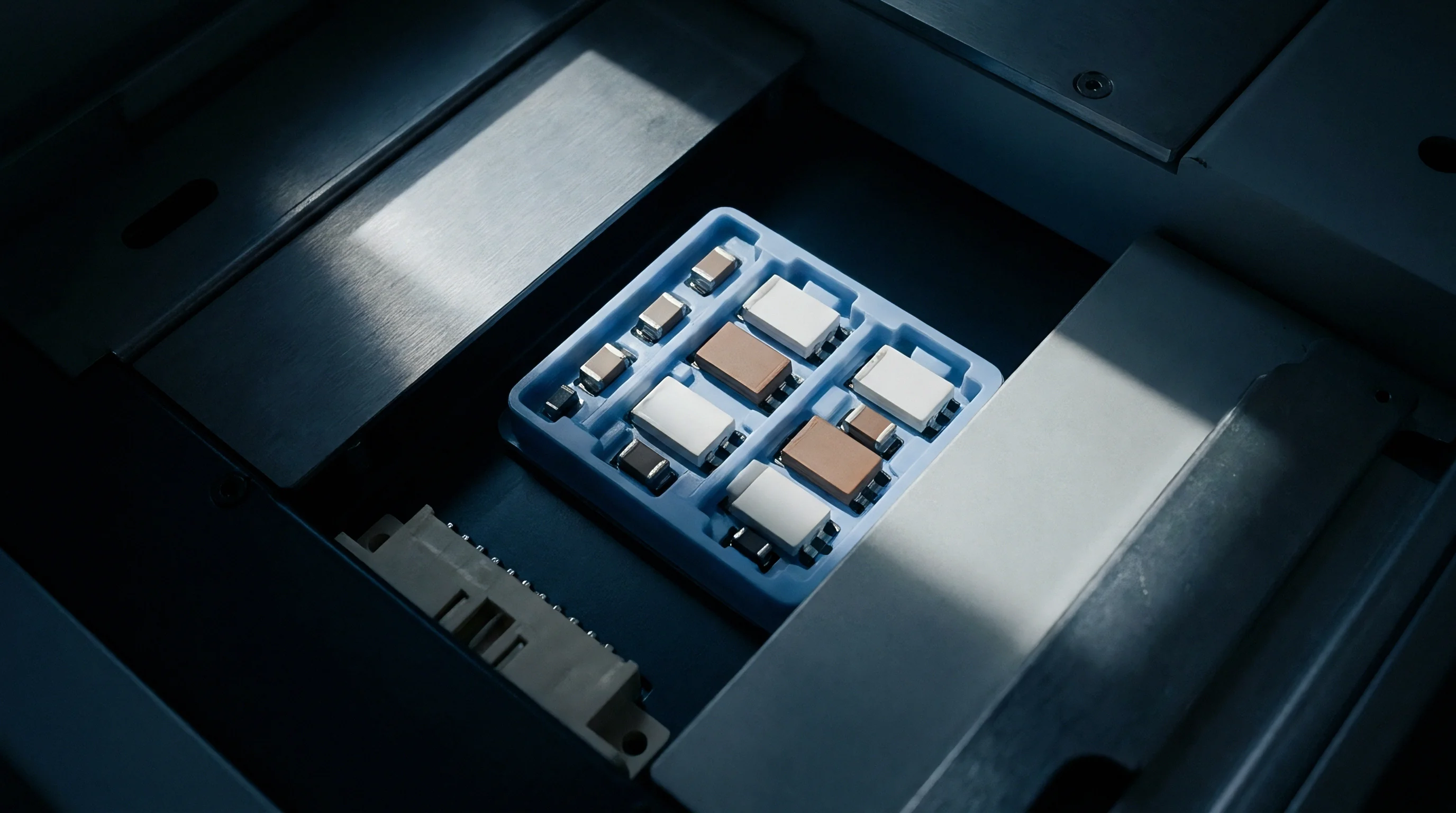
Instrumentation for compliance auditing relies on four-terminal Kelvin connections to eliminate lead resistance during low-frequency inductance and capacitance measurements. Surveillance bench testing pairs precision LCR meters with programmable direct-current bias sources capable of supplying up to six hundred volts. Automated test scripts ramp DC bias voltages while measuring capacitance, dissipation factor, and equivalent series resistance.
Test fixtures reveal drops.
Why Does Bias Voltage Alter Ceramic Capacitance Readings?
Applied direct-current potentials align ferroelectric domains within high dielectric constant materials. As electric field intensity climbs across individual dielectric layers, domain boundaries lose mobility, reducing total charge storage capacity per volt. Precision impedance analyzers capture this non-linear drop by superimposing a low-amplitude alternating-current test signal over a stepping direct-current bias potential.
Worked Attenuation Loss Calculation under DC Bias
A nominal ten-microfarad capacitor specified for a twelve-volt power rail exhibits pronounced ferroelectric saturation. Assume a Class 2 X7R component in a 0805 package with a dielectric thickness of eight micrometers operating at twelve volts DC. The applied electric field strength reaches one and a half volts per micrometer.
The domain walls freeze. At this field intensity, experimental data shows the effective capacitance drops to three point two microfarads.
To quantify the attenuation loss in a low-pass power supply filter, consider a circuit driven by an AC ripple frequency of one hundred kilohertz with a target output impedance determined by an LC filtering network. The cutoff frequency calculation uses the nominal versus the voltage-biased capacitance values:
Calculate nominal cutoff frequency with a ten-microhenry inductor and ten-microfarad nominal capacitor:
f_nominal = 1 / (2 π √(L C_nominal))
f_nominal = 1 / (2 3.14159 √(10^-5 H 10^-5 F)) = 15.91 kHz
Calculate actual operational cutoff frequency under twelve-volt DC bias with three point two microfarads effective capacitance:
f_biased = 1 / (2 π √(L C_biased))
f_biased = 1 / (2 3.14159 √(10^-5 H 3.2 10^-6 F)) = 28.14 kHz
The filter cutoff frequency shifts upward by seventy-six percent under normal operating bias voltage. Harmonic distortion rises quickly. Power supply noise at thirty kilohertz, previously attenuated by twelve decibels, passes through the filter network with minimal suppression.
The subassembly fails electromagnetic immunity and emissions audits conducted under EN 55032 and EN 55035 standards.
Test fixtures missing external direct-current bias injection units report passing capacitance figures on non-compliant subassemblies.

Drift
Continuous thermal stress accelerates aging in ferroelectric ceramic subassemblies. Dielectric constant decay follows a logarithmic temporal trend expressed as a percentage drop per time decade. Class 2 ceramic capacitors undergo spontaneous domain realignment over time, reducing capacitance systematically after soldering reflow operations.
Thermal cycles expose fractures. Market surveillance testing evaluates aging drift by subjecting audited boards to controlled thermal conditioning cycles prior to final parameter qualification.
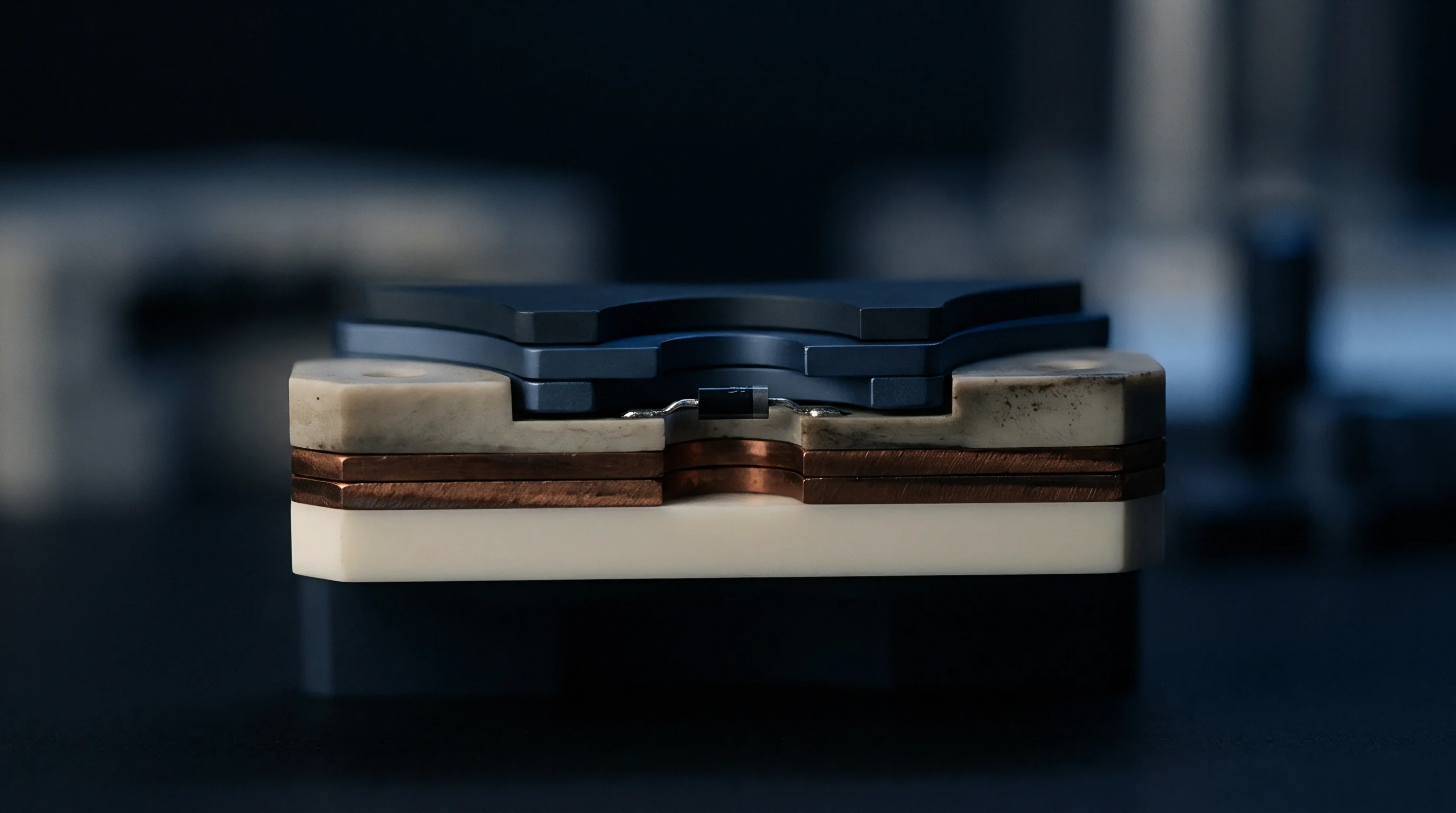
Surveillance Laboratory Extraction and Screening Sequence
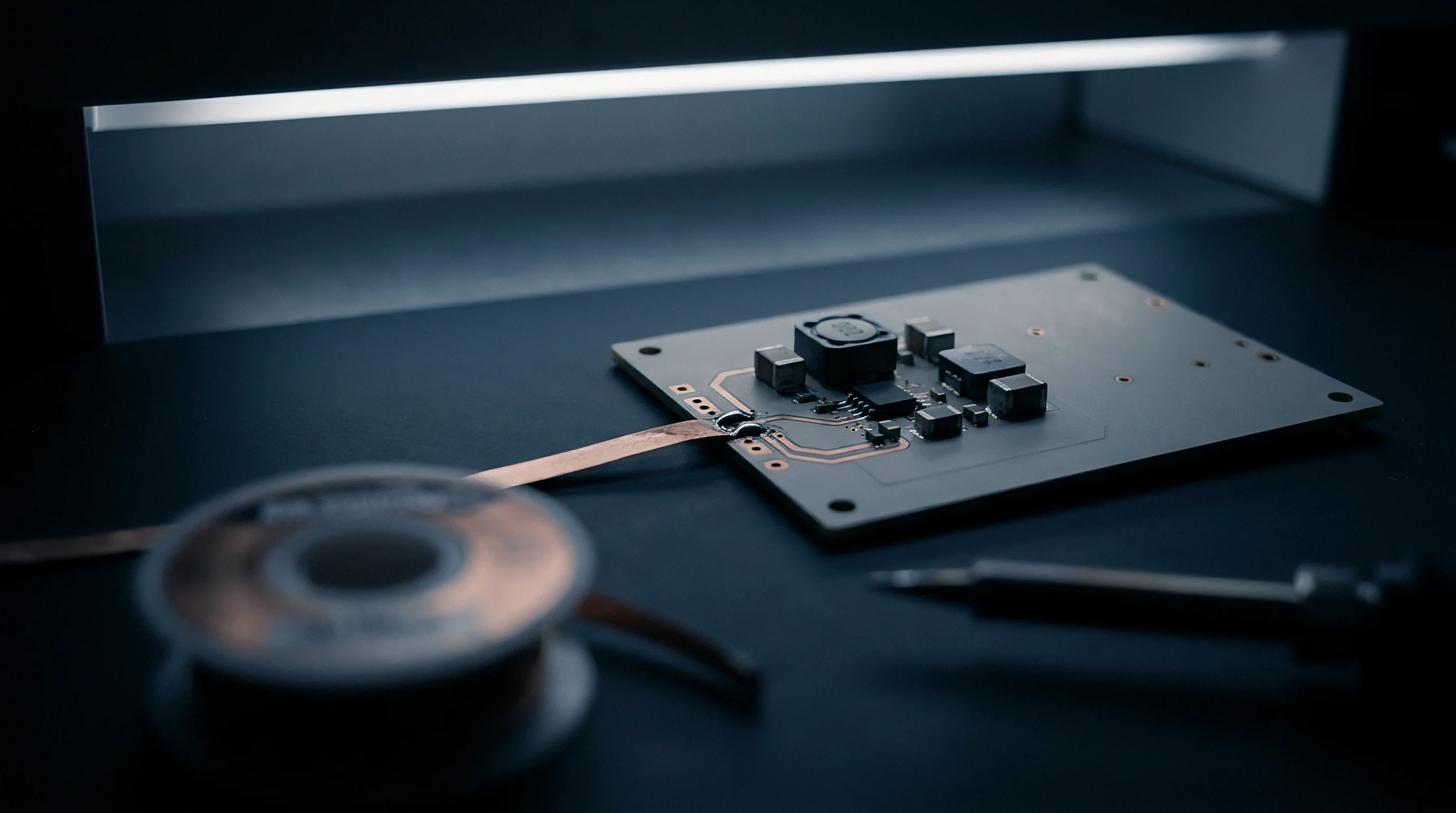
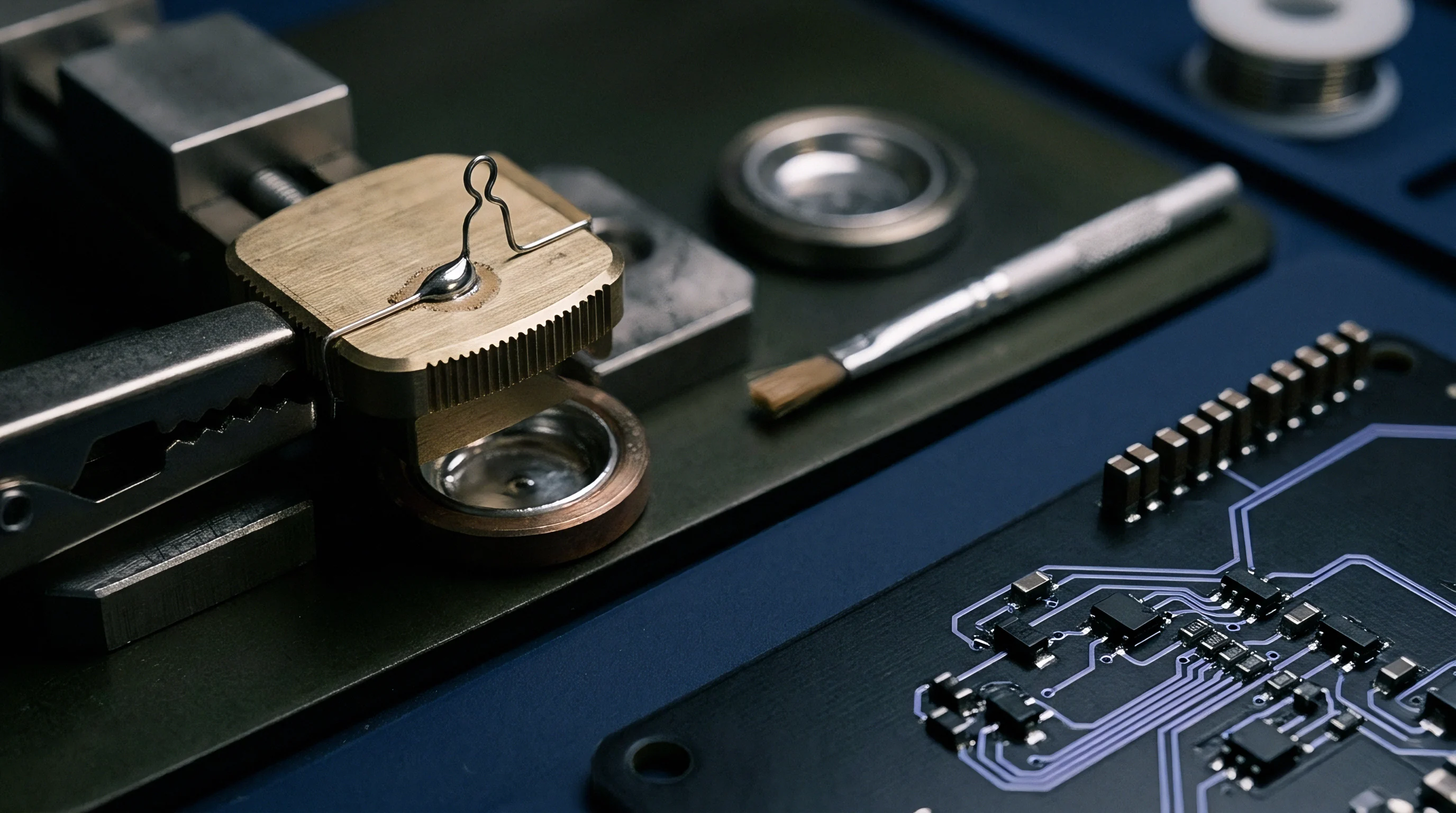
Auditors de-solder surface-mount components from subassemblies using temperature-controlled hot-air rework stations.
- De-solder target surface-mount passive components from audited circuit boards using temperature-controlled tools below two hundred sixty degrees Celsius to avoid thermal shock.
- Clean component terminations using isopropyl alcohol and clean micro-abrasive pads to eliminate residual solder flux and oxide layers.
- Bake extracted components at one hundred fifty degrees Celsius for two hours inside a dry conditioning oven to reset ferroelectric crystal domain structures to a baseline state.
- Store conditioned specimens inside a desiccator cabinet at twenty-four degrees Celsius for twenty-four hours to establish standardized decade-zero electrical reference points.
- Mount components into four-terminal Kelvin test fixtures connected to calibrated impedance analyzers configured for automated multi-frequency parameter sweeps.
- Record nominal capacitance, dissipation factor, and insulation resistance at zero-volt bias alongside rated direct-current working voltage levels.
- Subject test samples to one thousand hours of high-temperature load testing at maximum rated thermal operating limits under continuous voltage bias.
- Measure post-test electrical parameter drift to calculate overall long-term reliability degradation rates against manufacturer datasheets.
IEC 60384-1 defines test methods for measuring capacitance drift and dissipation factors in fixed electronic components.
Unapproved component swaps accelerate thermal degradation rates. Voltage stress accelerates degradation. Substituted subassemblies operating inside sealed industrial enclosures exceed thermal threshold design limits, driving accelerated capacitor insulation resistance degradation.
Insulation resistance drops from gigohms down to kilohms, creating high leakage currents, thermal runaway, and localized substrate carbonization.
What long-term statistical drift threshold separates acceptable ceramic aging from unapproved raw material variations during accelerated lifecycle stress testing?
Paperwork
Technical files supporting cross-border declarations require bill-of-materials traceability down to single component part numbers. Market surveillance authorities operating under Regulation EU 2019/1020 request complete conformity files when physical audits flag hardware anomalies. An importer holds ultimate regulatory responsibility for material compliance across target selling territories.
Direct-current bias degrades performance. Declarations relying on generalized component declarations without lot-specific material test reports fail regulatory scrutiny.
Regulatory Dossier Requirements under Harmonized Standards
Market surveillance authorities evaluate European conformity documentation against EN IEC 63000 rules. Declarations of conformity must link specific printed circuit assembly revisions to valid test reports from accredited laboratory facilities. When passive component dielectric substitutions occur without engineering change orders, the underlying technical documentation becomes legally void.
Auditors mandate comprehensive documentation packages containing specific technical evidence files:
- Component Level Bill of Materials showing exact manufacturer part numbers, dielectric series designations, voltage ratings, and mechanical package sizes for every installed passive component.
- Material Test Certificates issued by accredited third-party laboratories verifying homogeneous material compliance with RoHS and REACH chemical substance limits.
- Electromagnetic Compatibility Test Reports linking specific board assemblies, dielectric configurations, and enclosure shields to passing emission sweeps.
- Engineering Change Order History documenting every approved bill-of-materials modification alongside re-qualification test summaries signed by qualified design personnel.
- Supplier Quality Qualification Records confirming factory auditing protocols, incoming raw material inspection logs, and statistical process control checks.
Improper ceramics cause failure. Customs officials hold inventory when imported hardware fails technical documentation reviews during entry checks. Unapproved parts trigger audits.
EN IEC 63000 mandates structured technical documentation to demonstrate restricted substance compliance and material specification integrity.
Contract terms requiring compliance with IPC-A-610 Class 3 assembly standards binding suppliers to approved vendor lists prevent unauthorized component substitutions at contract manufacturing facilities.
Dispute
Commercial contracts allocate financial liability when customs authorities seize non-compliant electronic shipments. Sourcing practices protect capital reserves by implementing mandatory chargeback provisions linked to market surveillance audit outcomes. When surveillance testing proves unauthorized dielectric substitution, buyers withhold invoice payments, issue formal quality rejections, and demand full reimbursement for regulatory non-compliance fines.
Financial Risk and Penalty Allocations
Importing organizations face customs administrative holds alongside product recall orders. Landed cost calculations break down when market surveillance authorities mandate supply chain interventions. Impedance shifts break stability.
| Non-Compliance Finding Type | Primary Regulatory Action | Direct Commercial Penalty Range | Financial Recourse Target |
|---|---|---|---|
| Unapproved Dielectric Swap (Passive Filter) | Sales Prohibition Order | $25,000 to $150,000 per lot | Contract Manufacturer / Supplier |
| EMC Threshold Breach (Voltage Bias Dip) | Mandatory Field Recall | $100,000 to $500,000 base cost | Importer of Record |
| Invalid Technical Dossier (EN IEC 63000) | Customs Administrative Hold | $5,000 per day storage fee | Direct Importer |
| Thermal Degradation Safety Escape | Product Seizure and Destruction | Full Shipment Inventory Loss | Originating Manufacturer |
Commercial contracts prevent financial exposure through specific risk-mitigation terms:
- Authorized Vendor List Enforcement Clause binding contract manufacturing plants to designated component suppliers without allowance for functional equivalents.
- Mandatory Re-qualification Trigger Rule requiring full electromagnetic compatibility and safety testing following any bill-of-materials alteration.
- Surveillance Audit Cost Recovery Term obligating suppliers to pay all legal, laboratory, and administrative fees caused by regulatory rejections.
- Lot Traceability Guarantee mandating reel-level serial number logging during surface-mount pickup operations for audit cross-checking.
Supply chain organizations execute raw material verification testing before clearing final invoice disbursements for imported electronic subassemblies. Independent laboratory testing validates component dielectric chemistry, direct-current bias performance, and technical documentation completeness before products enter commercial distribution channels.