Multi Tier Electronics Supply Chain Technical File Maintenance under Regulatory Surveillance
Active technical file maintenance binds physical circuit components to traceable test evidence, preventing customs seizures and sales bans under EU surveillance.

Custody
Under Regulation (EU) 2019/1020, national market surveillance authorities in the European Union inspect technical documentation by issuing formal requests with tight response windows. Importers have between ten and thirty calendar days to produce a complete technical file proving compliance with all applicable Union harmonisation legislation. Compiling this file means reaching back through multiple tiers of component sourcing: raw circuit boards leave laminate coaters, pass through mechanical fabrication shops, pick up passive components from distributors, and receive silicon packaging at assembly contractors operating across different legal jurisdictions.
Failing to produce the record immediately halts legal market access.
The technical file is the legal link between physical hardware and regulatory claims. For CE-marked electronics, it establishes conformity with Directive 2014/30/EU for electromagnetic compatibility, Directive 2014/35/EU for low voltage safety, Directive 2011/65/EU for hazardous substances restriction, and Directive 2014/53/EU for radio equipment. Surveillance officers verify the bill of materials against populated schematics, assembly drawings, component declarations, and lab test reports.
If an authority requests the dossier for a radio-frequency module running on an industrial bus, lacking evidence for even a single surface-mount decoupling capacitor breaks the entire chain of conformity.
A market surveillance request transforms passive compliance certificates into an urgent evidentiary custody chain.
Multi-tiered supply chains invite documentation decay over time. Component manufacturers issue engineering change notices and move silicon dies to alternate fabrication lines. Secondary plants swap solder pastes, switch passive components, or rerun PCB traces to bypass lead times, often without informing the brand owner.
An engineering team might sign off an initial declaration using test reports from pre-series qualification boards, but two years down the line, a shipment landing in Rotterdam or Hamburg contains bill-of-materials changes unknown to whoever signed the file. Authorities catch these substitutions using chemical profiling, bench testing, and X-ray fluorescence screening.
This divergence between actual manufacturing and filed records creates immediate regulatory liability. Most importers only spot discrepancies when customs authorities seize containers at the port. Administrative steps move quickly from simple inspection notices to formal sales bans and mandatory public recalls across all Member States through the Safety Gate platform.
Protecting capital requires continuous dossier maintenance across every level of the component supply chain.
Sub-tier component specifications match the original drawing tolerances precisely.


Trace
A sound technical file relies on an unbroken chain of physical test reports, declarations of conformity, and bill-of-materials entries tied together by traceable internal part numbers. EN IEC 63000 outlines the technical documentation needed to evaluate electrical and electronic products regarding hazardous substance restrictions. It sets out three evidentiary tiers: supplier declarations, contractual agreements backed by material declarations, and analytical test reports based on IEC 62321 test methods.
Tier 3 laminate makers supply copper-clad base materials, prepregs, and solder masks; Tier 2 component producers supply discrete resistors, ceramic capacitors, and packaged ICs; Tier 1 contract manufacturers assemble the completed board. The importer must keep records linking every physical layer back to its underlying analytical data.

Material Declarations and Analytical Chemistry
Analytical verification under IEC 62321 demands specific sample preparation and extraction for each homogeneous material. X-ray fluorescence screening gives a fast elemental check for lead, mercury, cadmium, total chromium, and total bromine. Detecting bromine above 300 mg/kg or chromium above 500 mg/kg triggers secondary analysis.
High-performance liquid chromatography with mass spectrometry then quantifies restricted phthalates ~ such as bis(2-ethylhexyl) phthalate and dibutyl phthalate ~ below the 1000 mg/kg threshold, while gas chromatography-mass spectrometry isolates polybrominated biphenyls and polybrominated diphenyl ethers.
Disagreements often center on testing frequency and how homogeneous materials are defined. Sourcing agents routinely accept blanket compliance certificates from distributors, but surveillance laboratories disassemble integrated circuits into lead frames, bonding wires, epoxy molding compounds, and silicon dies to test every layer separately. A passing bulk test fails audit the moment a single flame-retardant additive in the encapsulation resin exceeds permitted limits.
Traceability fails when component reels blend different date codes or lot numbers. Distributors often draw stock from multiple production lines to fill orders, leaving contract assemblers with mixed reels on automated pick-and-place feeders. Even if the bill of materials lists an approved part number, the reels may hold silicon from alternate diffusion runs.
When material test reports do not match the exact lot codes found inside a seized shipping carton, the technical file loses its evidentiary value.
| Regulatory Regime | Harmonised Standard | Evidential Object | Analytical or Test Method | Target Homogeneous Threshold |
|---|---|---|---|---|
| RoHS (2011/65/EU) | EN IEC 63000:2018 | Analytical test report | IEC 62321-3-1 XRF and IEC 62321-8 GC-MS | Cd: 100 mg/kg; Pb, Hg, Phthalates: 1000 mg/kg |
| EMC (2014/30/EU) | EN 55032:2015+A11:2020 | Radiated emissions report | CISPR 16-2-3 semi-anechoic chamber 30-6000 MHz | Class B quasi-peak and average limits |
| EMC (2014/30/EU) | EN 55035:2017+A11:2020 | Immunity verification data | IEC 61000-4-2 ESD; IEC 61000-4-4 EFT bursts | Criterion B transient recovery, zero data loss |
| LVD (2014/35/EU) | EN 62368-1:2020+A11:2020 | Safety isolation assessment | Dielectric withstand test, creepage measurement | Reinforced insulation: 3000 V AC for 60 seconds |
| REACH (EC 1907/2006) | Article 33 Dossier | Full material declaration | Solvent extraction and GC-MS for SVHC candidate list | SVHC concentration below 0.1 percent weight by weight |

Sub-Tier Engineering Changes
Engineering change orders can alter technical compliance without leaving obvious traces. A fabricator might change through-hole copper plating thickness to increase mechanical rigidity, inadvertently shifting thermal profiles across ground planes. Or a vendor swaps a capacitor dielectric from X7R to Y5V to cut unit costs by fractions of a cent.
That change alters high-frequency ripple filtering and invalidates conducted emissions tests run six months prior. The financial impact hits when non-compliant stock is quarantined, forcing the importer to pay port storage fees on top of mandatory re-testing costs.
Surveillance officers regularly pull production samples from retail distribution centers and send them directly to accredited national metrology labs. There, technicians run radiated emission sweeps from 30 MHz to 6 GHz under CISPR 32 specifications. Exceeding the quasi-peak limit by even 3 dB triggers a full audit of the technical file.
If the importer cannot produce schematics matching the actual traces on the tested board, enforcement authorities treat the discrepancy as intentional fraud.
EN IEC 63000 Clause 5 requires importers to evaluate the quality of supplier documentation and maintain verifiable evidence of ongoing production conformity.
A supplier may furnish valid test certificates for raw resin granules, only for the injection molder to add liquid colorants or mold-release lubricants containing banned plasticizers. The finished enclosure then fails market surveillance audits because the declaration of conformity relied on raw material tests rather than the molded housing. Under commercial law, the importer carries strict legal liability regardless of where contamination entered the production process.
Uncontrolled component substitutions invalidate existing laboratory test data without showing visible external defects.

Quarantine
Market surveillance systems initiate administrative isolation the moment technical documentation fails preliminary review. Under Regulation (EU) 2019/1020, customs authorities flag incoming shipments using automated risk profiling engines linked to the Integrated Tariff of the European Communities. The system cross-checks tariff codes, country-of-origin manifests, and economic operator registration numbers.
At customs checkpoints, officers freeze clearance and give the importer seventy-two hours to produce the full technical dossier.

Administrative Isolation Workflows
Customs officials cross-reference physical shipping declarations against central national databases. If the economic operator has not uploaded an accredited lab test report covering that exact product variant, border authorities alert the relevant market surveillance agency. The physical goods are diverted into bonded warehouses while the importer scrambles to collect technical files from overseas suppliers.
Terminal storage charges compounding at over five hundred euros per forty-foot container daily quickly turn an administrative delay into a significant financial hit.
The authority evaluates the submitted dossier against formal completeness checklists. Any missing element triggers immediate escalation:
- General Description Gaps leave assessors unable to determine the operating functions, input voltage tolerances, or environmental limits of the electronic assembly.
- Schematic Inconsistencies make it impossible to reconcile physical circuit board traces with documented filter networks, high-speed differential signal routing, or safety isolation barriers.
- Harmonised Standard Citations referencing withdrawn or superseded standards strip the equipment of its presumption of conformity under European directives.
- Test Result Omissions leave the file without baseline empirical data for radiated emissions, electrostatic discharge immunity, or hazardous substance concentrations across homogeneous components.
- Declaration Deficiencies lacking authorized signatures, production date codes, or explicit directive references invalidate the legal status of the technical file.

Physical Verification Testing
When documentation looks suspect, surveillance agencies draw sample units and send them to reference testing facilities for destructive chemical analysis and operational checks. On power supplies, lab engineers measure safety clearance and creepage distances with optical calipers. If insulation between primary high-voltage circuits and secondary low-voltage outputs measures 4.2 millimeters instead of the 5.0 millimeters required by EN 62368-1, the batch receives an immediate safety alert.
Authorities post non-compliant products directly to the Safety Gate portal, broadcasting the violation across all thirty European Economic Area jurisdictions simultaneously. The notice lists brand names, serial numbers, bar codes, country of origin, and internal photos of the circuit board. Competing distributors monitor these public alerts, effectively destroying the commercial viability of the affected product line.
Failing to supply a compliant technical dossier leads to mandatory destruction of the seized goods at the importer’s expense, alongside statutory administrative fines.
Drift
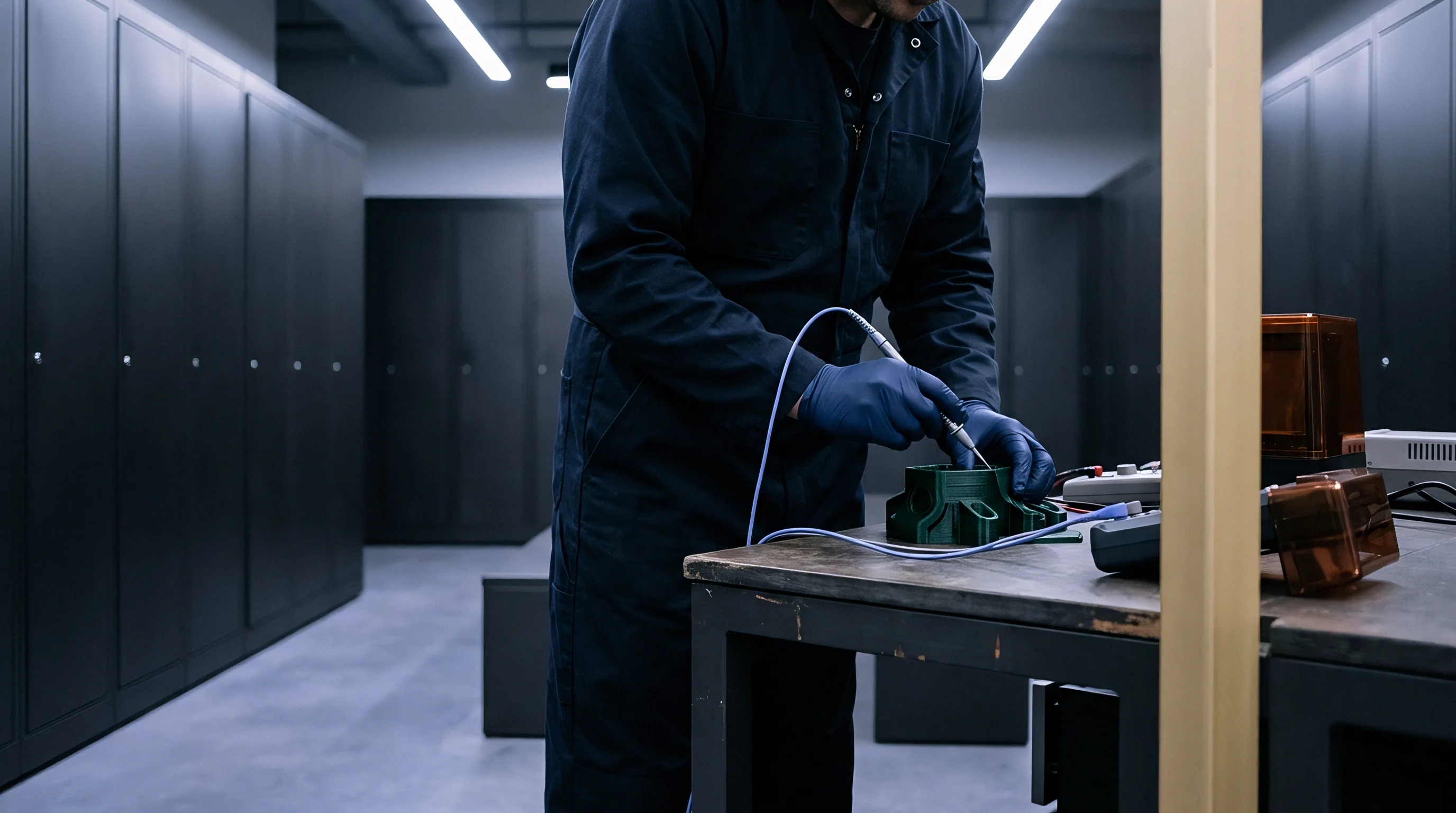
Electronic assemblies degrade environmentally, physically, and operationally over time, which can quietly alter regulatory compliance long after factory testing. While a technical file proves conformity at the time of manufacture, market surveillance often tests units pulled from distribution channels after months of transport and warehousing. Solder joint fatigue, dielectric breakdown in passive components, and moisture absorption in circuit laminates shift electrical parameters, pushing electromagnetic emissions and isolation performance outside certified limits.
Reliability Degradation and Emissions Profiles
Electrolytic capacitors in switched-mode power supplies gradually dry out, raising their equivalent series resistance. An ESR jump from 0.05 ohms to 0.45 ohms degrades input stage filtering and increases conducted emissions fed back onto the AC mains. A product that passed EN 55032 conducted emission limits with a comfortable 6 dB margin during initial type examination can easily fail surveillance testing two years later.
Similarly, high-speed signal lines undergo impedance shifts when humidity alters FR4 dielectric properties in storage, creating harmonic radiation spikes near the 2.4 GHz industrial, scientific, and medical band.
Thermal cycling inside shipping containers accelerates intermetallic compound growth in lead-free SAC305 solder joints. As brittle tin-copper layers crack under transport vibration, micro-fractures open in ground plane return paths. These breaks turn internal loop antennas into effective dipole radiators.
When a lab engineer measures an emissions failure on an older unit, they are seeing radiation that simply was not present when the original test report was signed.
A component parameter shift of twenty percent converts compliant board filtering networks into active harmonic radiators.
Field emissions shifts on aged assemblies stem from accelerated corrosion on nickel-gold surface finishes, which creates parasitic diode junctions across grounding contacts. This causes non-linear mixing of internal clock harmonics, generating intermodulation products that radiate through the plastic enclosure and exceed spurious emission limits under standard EN 300 328.
| Component Category | Degradation Mechanism | Physical Manifestation | Electrical Parameter Shift | Conformity Exposure |
|---|---|---|---|---|
| Electrolytic Capacitors | Electrolyte evaporation through rubber seals | Internal gas pressure and dried dielectric | ESR increases by up to 800 percent; capacitance drops | Conducted emissions failures under EN 55032 |
| Multilayer Ceramic Capacitors | Flex cracking under board mechanical strain | Dielectric insulation fracture | Insulation resistance drops; leakage current rises | Safety isolation breakdown under EN 62368-1 |
| FR4 Base Laminates | Moisture uptake under high relative humidity | Hydrolytic swelling of resin matrix | Dielectric constant shifts from 4.2 to 4.8 at 1 GHz | Differential pair impedance mismatch and radiation |
| SAC305 Solder Joints | Thermal cycling and tin pest formation | Micro-voiding at copper pad interfaces | Contact impedance rises; intermittent ground breaks | Radiated immunity susceptibility under EN 55035 |
| Ferrite Suppression Beads | Curie temperature exposure and core cracking | Magnetic domain dislocation | Impedance drops across 100-500 MHz band by 40 percent | Broadband noise envelope failures in field audits |
Sub-tier vendors rarely evaluate long-term material stability under continuous electrical bias. Sourcing teams tend to rely on initial batch testing while skipping ongoing stress screens like high-temperature operating life or temperature-humidity-bias testing. When surveillance authorities pull aged units from the field, technical documentation that ignores component aging leaves the brand owner exposed to non-compliance penalties.
Legal boundaries remain unclear regarding manufacturer responsibility for material degradation that occurs after custody transfers to third-party logistics operators.


Audit
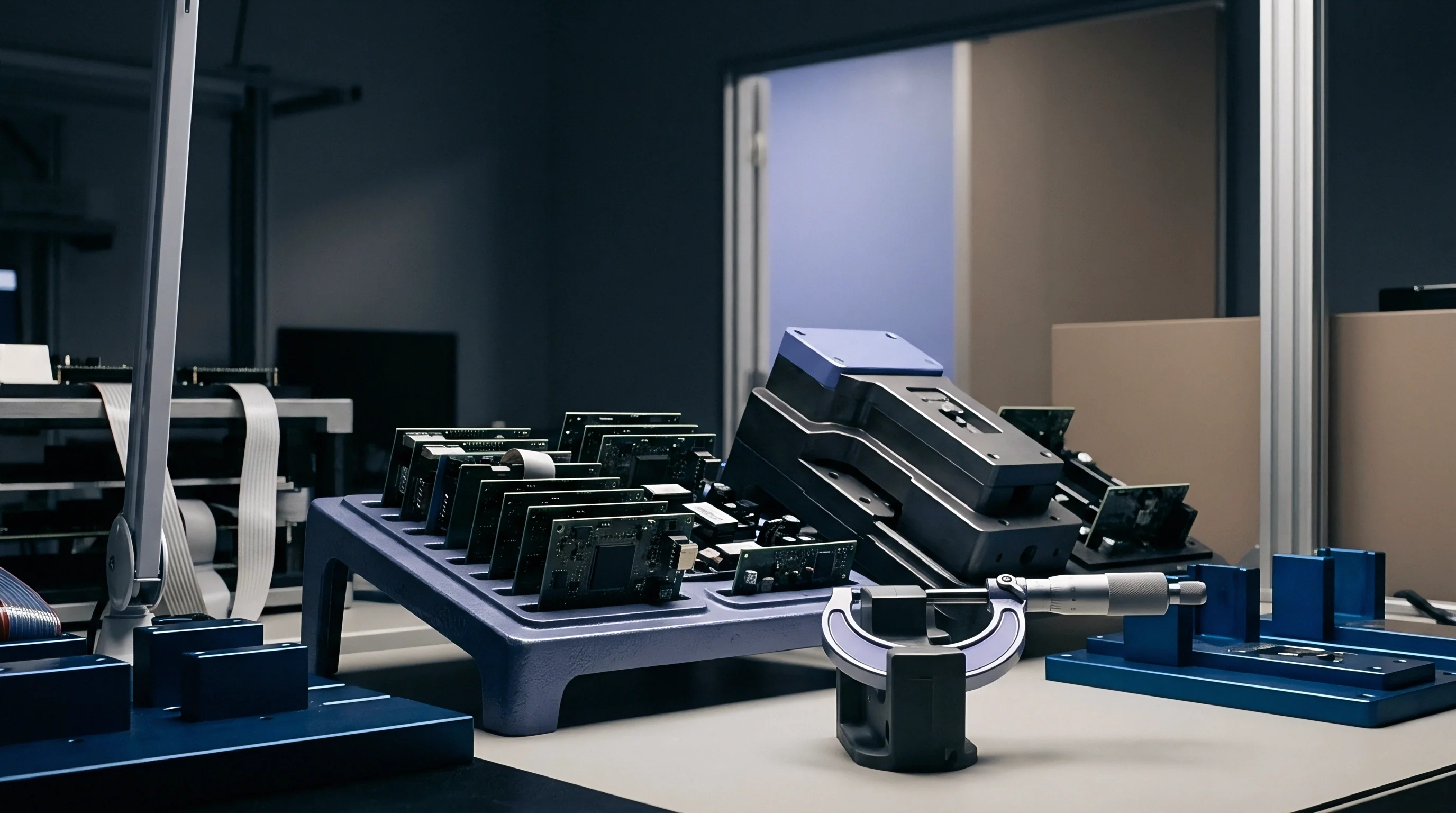
Maintaining an up-to-date technical file requires structured supplier oversight, lot-level incoming inspection, and statistical process control across every tier of manufacturing. Importers safeguard their regulatory standing by building explicit documentation covenants into commercial contracts. An electronics manufacturing agreement must mandate that no layout, component, or engineering change takes place without prior written authorization backed by updated testing data.
Contractual Controls and Supply Chain Verification
A robust supply chain verification program combines documentation controls with physical inspection. Each stage generates auditable records for the technical dossier:
- Approved Component Lists lock down bill of materials configurations by specifying exact manufacturer part numbers and authorized distributors, preventing grey-market broker purchases.
- Change Notification Covenants require manufacturing partners to issue formal engineering notices at least ninety days before altering fabrication processes, silicon revisions, or sub-tier suppliers.
- Batch Testing Certificates obligate contract assemblers to provide lot-specific chemical and functional test data with every shipment, tying physical serial numbers directly to dossier records.
- Destructive Lot Auditing verifies incoming units using micro-sectioning and X-ray fluorescence analysis to confirm that internal layers and surface treatments remain compliant.
- Active Dossier Synchronization keeps the technical file current with every new test report, engineering change notice, and updated standard reference, preserving the presumption of conformity.
Inspection covenants need clear financial penalties for unnotified bill-of-materials changes. Sourcing contracts should require the assembler to cover all freight, demurrage, re-testing, and recall expenses stemming from unauthorized component swaps. Without explicit indemnification clauses, suppliers often treat component changes as routine internal optimizations, leaving the importer to carry the full financial burden of enforcement.
Traceability systems must link physical markings directly to the digital technical dossier. Importers often laser-etch high-density 2D data matrix codes onto the circuit board surface. This mark encodes the bill-of-materials revision, manufacturing facility ID, primary production date code, and surface-mount line designation.
Scanning a board instantly pulls up matching material declarations and lab reports from the cloud file, allowing immediate responses during customs audits.
A technical file must represent the physical reality of the specific manufacturing lot entering the market, not an idealized baseline prototype.
Cost models clearly demonstrate the economic return of keeping files updated. A European brand importing 100,000 smart metering modules annually at a landed cost of 45 euros per unit faces severe exposure if goods are seized. A market surveillance hold that halts sales for four months can pile up 30,000 euros in port demurrage, 25,000 euros in lab re-testing fees, 50,000 euros in administrative fines, and over 400,000 euros in lost margin.
Against a potential loss of 505,000 euros, spending 20,000 euros a year to maintain an active technical file is straightforward risk management.
Section 14.2 of the master supply agreement stipulates that any unnotified component substitution forfeits the final batch payment and triggers full indemnification for associated regulatory testing costs.