Thermal Expansion
Dimensional growth occurs when printed circuit assemblies absorb thermal energy during wave soldering and reflow processes. The coefficient of thermal expansion quantifies fractional length change per degree of temperature elevation within copper conductors and surrounding epoxy laminates. Material anisotropy forces engineers to evaluate expansion vectors independently across planar axes and through the vertical thickness of multilayer boards.
Mismatched expansion rates between copper plated through holes and glass reinforced substrates generate high cyclic shear stresses inside internal barrel joints. Automated optical inspection equipment flags barrel cracking after thermal shock testing subjects finished assemblies to rapid temperature cycling between freezing and boiling thresholds.
Substrate Anisotropy
Glass transition temperatures mark distinct boundaries where epoxy resin matrices alter expansion characteristics drastically. Above this critical thermal threshold, resin expansion accelerates while reinforcing woven glass filaments retain dimensional stability in the plane of the board. Multilayer fabrication steps demand tight control over resin content fractions to balance out of plane expansion forces acting on fragile inner layer connections.
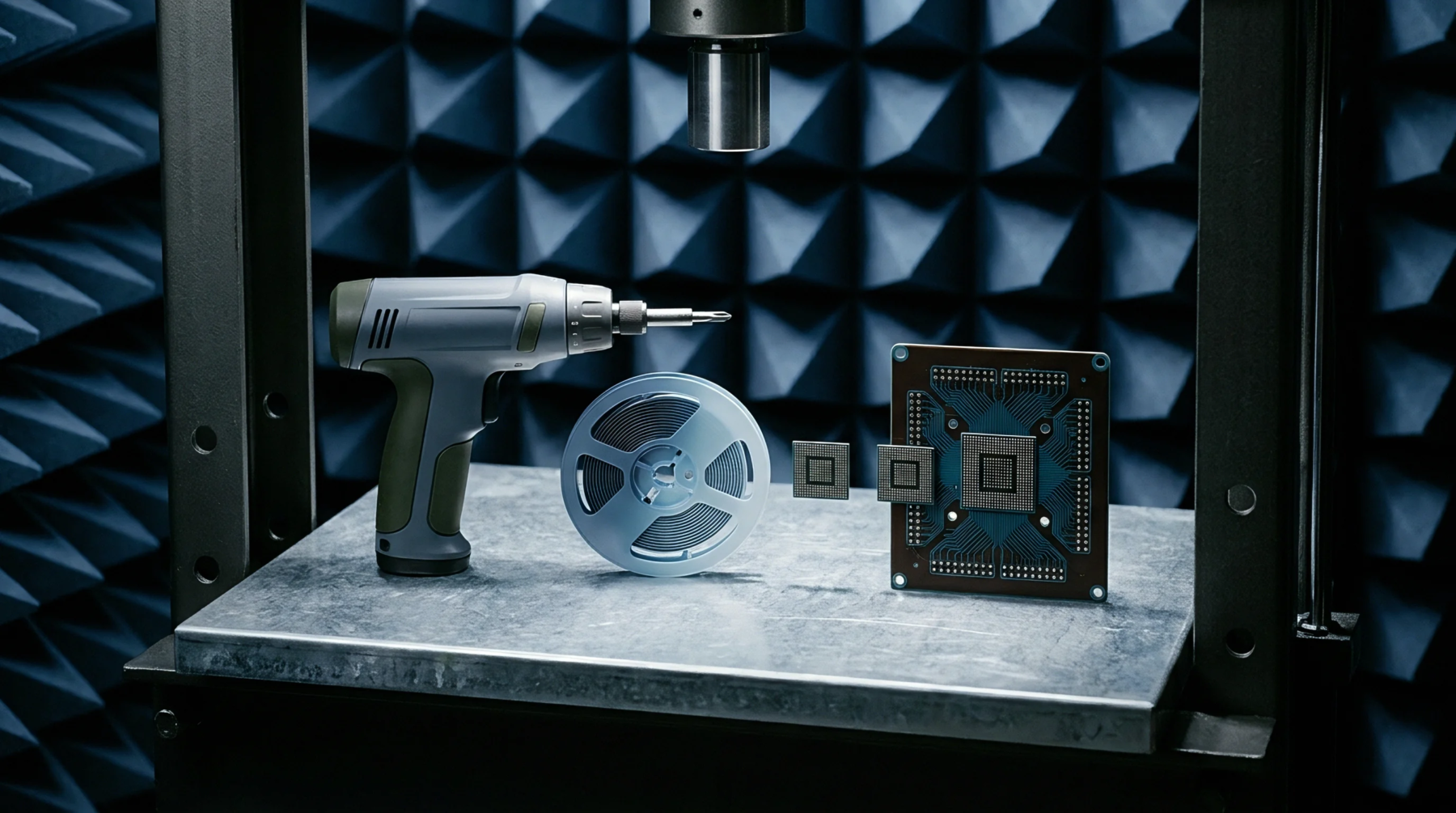
Stresses concentrate at the interface where ceramic chip carriers mount directly onto organic circuit boards during surface mount reflow soldering.
Interconnect Stress
Microsectioning laboratories measure barrel fatigue by counting thermal cycles sustained prior to internal copper wall fracture. Stiff polyimide materials restrict vertical movement more effectively than standard epoxy formulations during high temperature processing runs. Designers select dielectric layers with matched expansion profiles to preserve plated through hole integrity throughout extended operational lifecycles in harsh environments.
Temperature extremes generate continuous mechanical fatigue that ultimately determines electronic hardware reliability without warning.