Structural Degradation
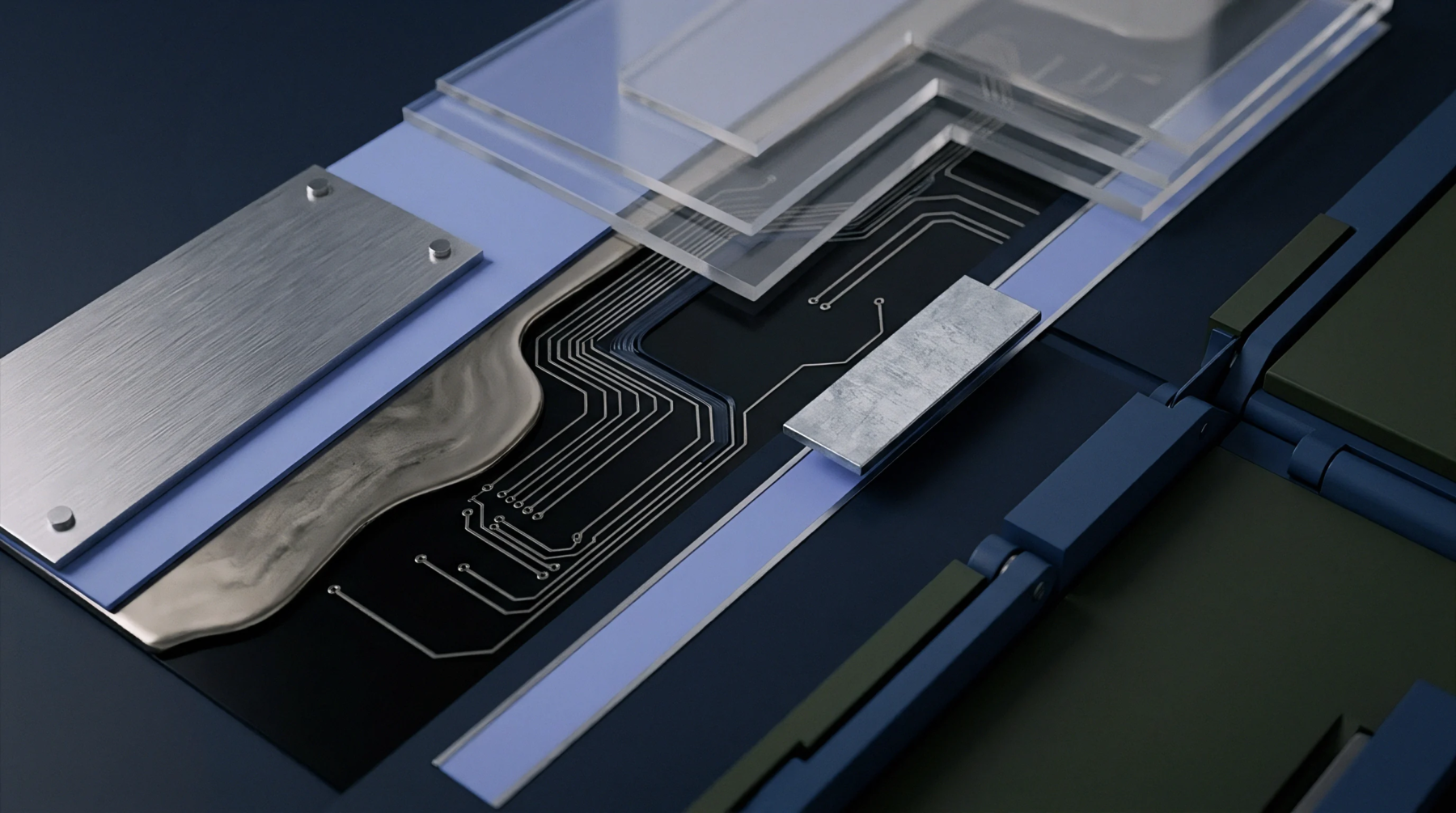
Mechanical strain results from the cumulative expansion and contraction of dielectric materials against copper interconnects during thermal cycling. Microvia fatigue refers to the progressive structural compromise of these small-diameter holes that connect layers in a multilayer printed circuit board. Copper barrels often crack at the interface between the via and the landing pad when thermal loads exceed the elastic limit of the electrodeposited metal.
This failure mode initiates at the heel of the via where stress concentrations concentrate during repeated temperature fluctuations. Failure occurs when cracks propagate through the copper barrel, thereby breaking the electrical path between layers and interrupting signal integrity.
Production Vulnerability
Precise control of the drilling geometry and the subsequent metallization process determines the baseline resistance of the interconnection to mechanical shear. High aspect ratio holes present a challenge because uniform copper deposition deep inside the via becomes difficult to achieve with standard plating baths. Voids in the copper barrel act as nucleation points for cracks under thermal stress, which accelerates the onset of degradation.
Non-uniform dielectric removal during laser ablation leaves behind organic residues that prevent robust adhesion between the copper plating and the pad. Proper desmear operations and optimized pulse plating parameters mitigate these internal weaknesses during the fabrication phase.
Assessment Criteria
Thermal shock testing followed by microsection analysis provides the data necessary to quantify the rate of internal damage. Inspectors observe for circumferential cracks along the copper barrel wall or separation at the floor of the via. Automated optical inspection tools struggle to detect these microscopic fractures because surface features often remain unchanged while internal integrity diminishes.
Cross-sectional examinations reveal the total crack length relative to the barrel circumference as a percentage of the total area. Microvia fatigue eventually leads to intermittent open circuits that defy standard continuity checks until the device reaches an advanced state of structural collapse.