
Statistical Inspection Bounds and Commercial Risk Allocation in Assembly
Statistical inspection bounds govern defect escape rates, defining commercial liability boundaries and scrap allocation across surface mount assembly lines.
Statistical inspection bounds govern defect escape rates, defining commercial liability boundaries and scrap allocation across surface mount assembly lines.

Microsectioning Class 3 boards settles barrel fill disputes by measuring net axial solder rise and subtracting internal voids against the 75 percent threshold.

Strain energy damage modeling accurately predicts lead-free solder joint fatigue under multi-pass thermal transients where linear creep models fail.
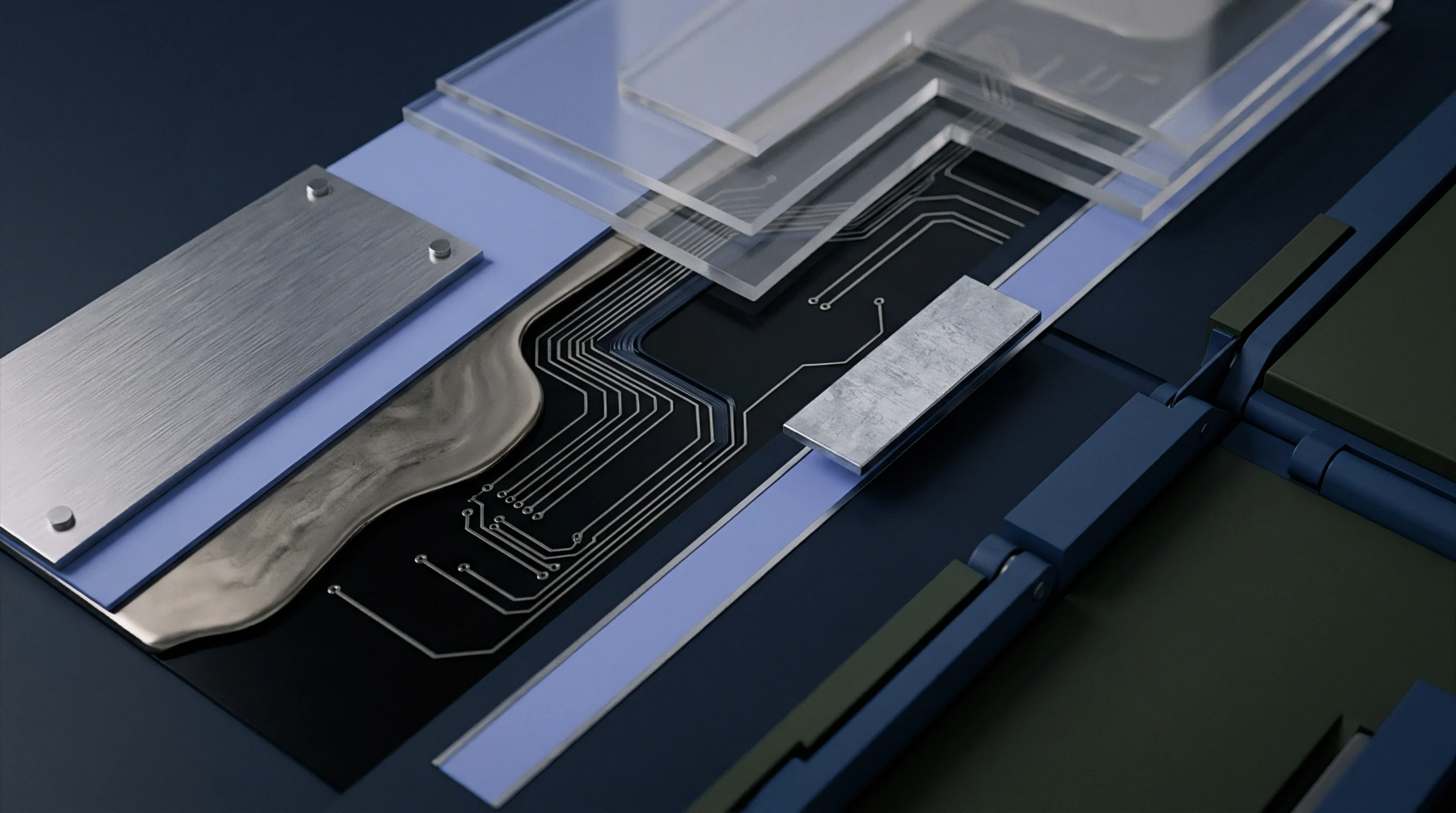
Rapid preheat ramp rates induce severe thermal gradients in MLCCs, causing latent micro-cracks that degrade insulation resistance under bias.

Matching reflow soak durations to flux solvent evaporation rates eliminates sub-component pressure spikes and drops QFN thermal pad voiding below ten percent.

Profiling variable weight copper stackups requires extended soak dwell and high gas velocity to equalize thermal delta across light pads and heavy ground planes.

Contractual SMT yield indemnification defines financial remedies for scrap exceeding baseline thresholds by isolating line defects from component defects.
Vapor phase reflow eliminates thermal deltas across unequal copper density substrates by transferring latent condensation energy at constant fluid temperatures.

Quantifying solder paste solvent evaporation rates in reflow profiles prevents micro-boiling, solder ball spattering, and excessive voiding beneath BTCs.

Contractual first-article approval requires binding solder volume maps, 5-point profile logs, X-ray void limits, and clear downtime liability terms.
Expertise is a utility, not a secret. sentiention™ publishes its working knowledge as open reference: intelligence layer covering the materials it sources, the markets it enters, and the reference that serves both.