Soldering Impedance
Thermal resistance within an assembly interface regulates heat flow from a component lead to the copper pad during reflow operations, providing a quantified boundary for bond integrity. The pcola sost describes this specific resistance value measured in units of Kelvin per Watt between the solder joint and the substrate base. It defines the point where thermal energy dissipation fails to reach required equilibrium under high power loads.
Engineers use this figure to prevent premature joint fracture during thermal cycling tests. Exceeding this boundary condition initiates localized delamination of the solder mask or fracturing of the intermetallic compound layer.
Measurement Protocol
Technicians determine the resistance by applying a controlled heat source to the component side while monitoring the temperature drop across the joint interface. A calibrated infrared sensor records the gradient after the system stabilizes at operating temperature. Variations in solder paste volume or alignment influence the result, as inconsistencies in the fillet geometry change the path for thermal conduction.
Higher readings signal a lack of wetting or voids trapped inside the joint. Consistent application of this check ensures that all thermal paths conform to the design specification before the board enters final testing. Assemblies failing this check require reworking or immediate rejection to protect the remaining circuitry from heat accumulation.
Fabrication Impact
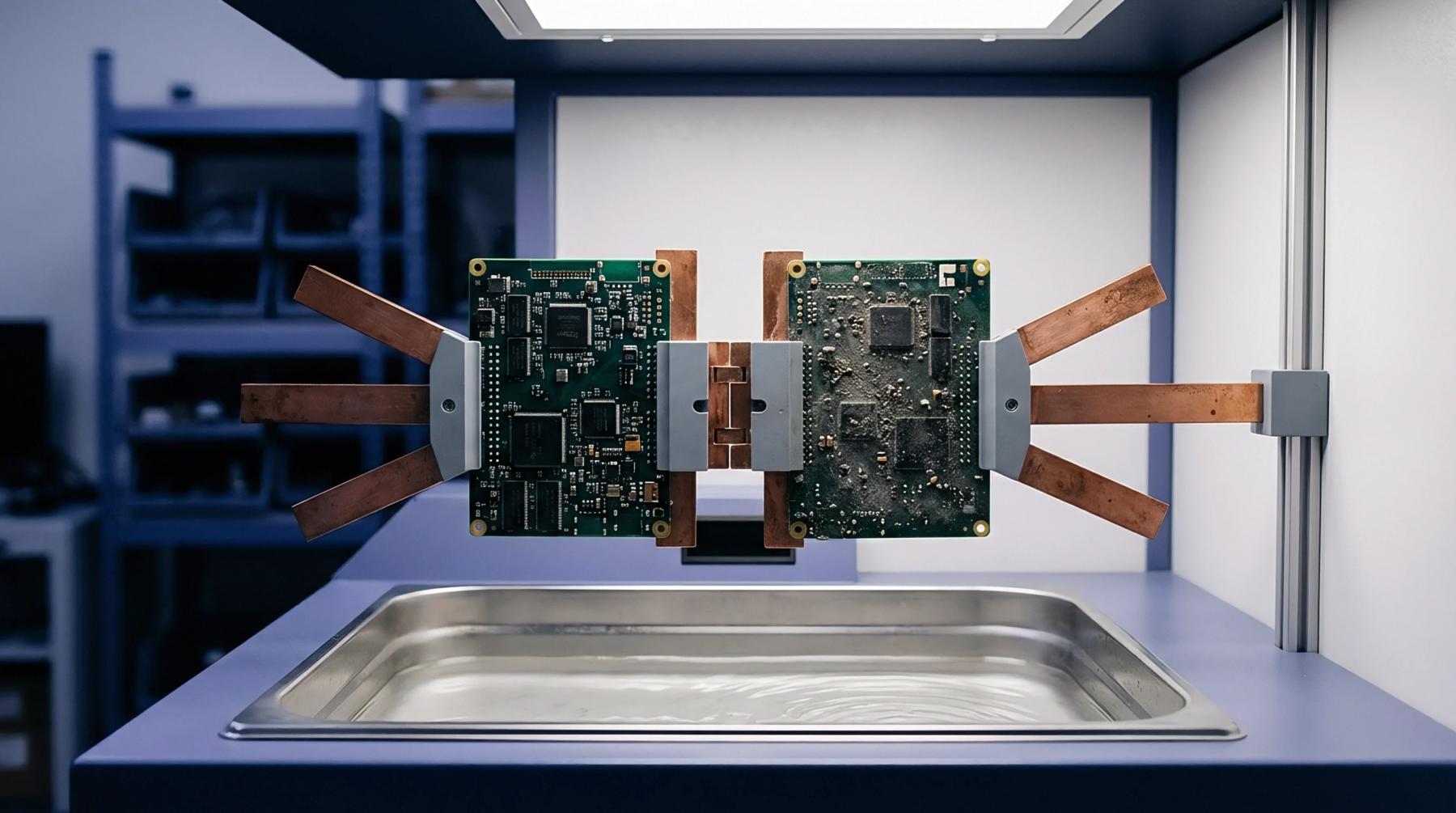
Proper heat management relies upon the precision of the copper plating thickness and the chemical composition of the solder alloy used in manufacturing. If the pcola sost deviates from the established norm, the board experiences significant stress at the junction between materials with differing expansion coefficients. This variance arises when the cleaning process leaves surface contaminants or when the reflow oven profile fails to match the component thermal mass requirements.
Tight control over the deposition process minimizes these discrepancies across the entire panel surface. Rigid adherence to these parameters guarantees that the mechanical structure withstands the operational duty cycle without developing microscopic cracks. A stable joint exhibits predictable resistance that correlates directly with the material volume and its ability to dissipate power.