Alignment Deviation
Layer-to-layer feature alignment experiences systematic shift across successive process steps in printed circuit board fabrication. Registration drift quantifies the progressive deviation of drill target positions and conductor pads relative to nominal artwork locations. High-density interconnect boards demand strict control over this cumulative positional movement.
Cumulative Distortion
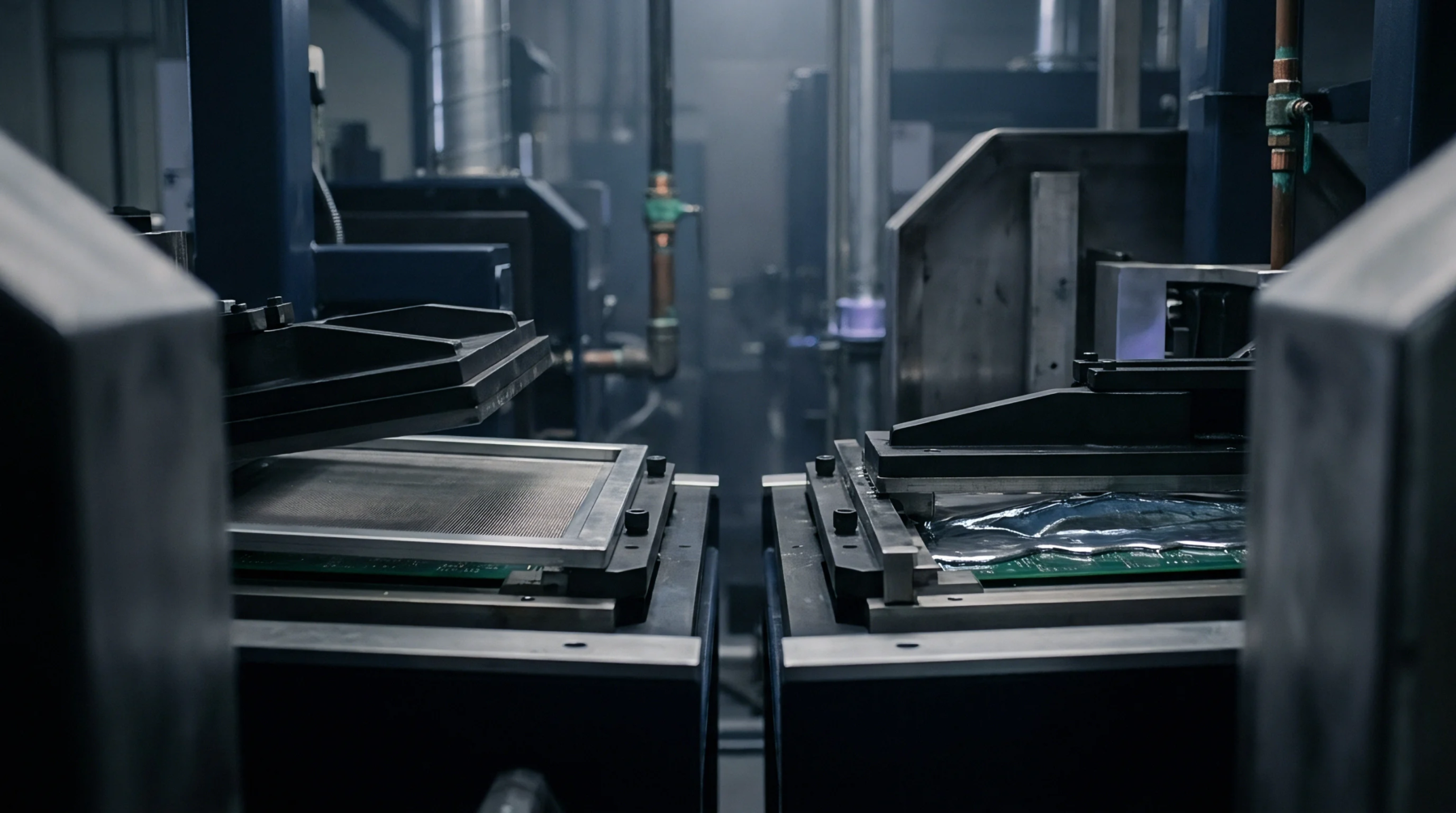
Material dimensional changes combine with mechanical optical alignment tolerances to shift internal copper features. Tracking registration drift requires automated X-ray inspection systems to measure internal pad positions after lamination thermal cycles. Differential resin expansion, core baking shrinkage, and press plate thermal expansion introduce systematic directional vectors to the alignment shift.
Microvia capture pads suffer annular ring breakout when total drift exceeds design land margins. Environmental controls over room temperature and relative humidity stabilize artwork film and raw prepreg dimensions prior to exposure. Statistical process monitoring identifies trend shifts caused by drill spindle wear or lamination press temperature non-uniformity.
Out-of-Spec Control
Real-time feedback from X-ray drill optics adjusts drilling center coordinates to match the actual shifted centers of inner layer targets. Controlling registration drift preserves layer interconnections in complex 20-layer stackups. Rejection rates decline when dynamic offset compensation counteracts systematic material expansion.
Audit logs track registration trends across daily shift changes.