Thermal Prediction
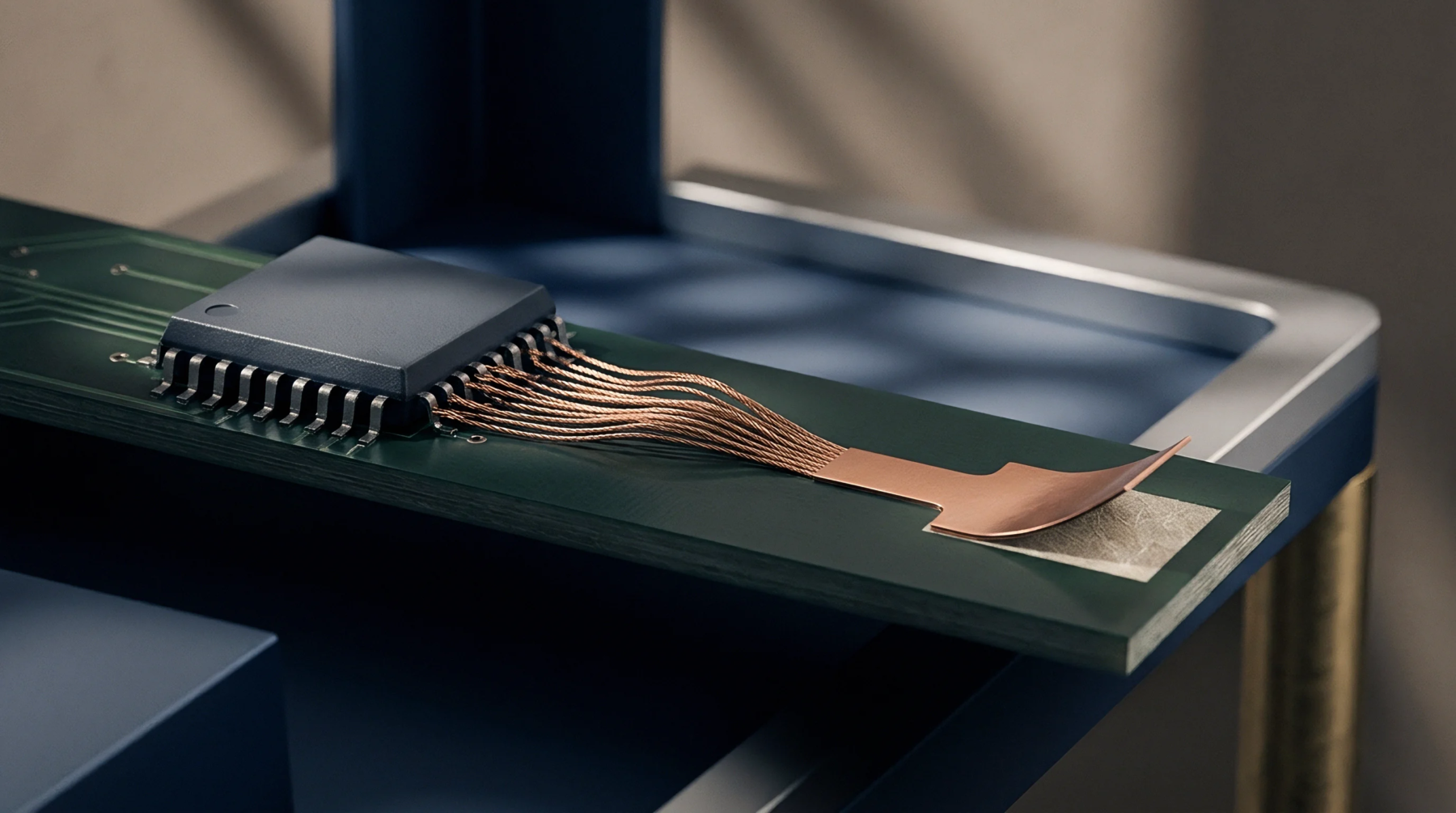
The stefan equation calculates the rate of phase boundary movement during solidification by relating the latent heat release to the temperature gradient across the solid and liquid interfaces. Engineers apply this model to determine the solidification front velocity when molten solder transitions to a solid state within plated through holes or along surface mount pads. The analytical model relies on the assumption that heat conduction governs the cooling process while convection within the liquid phase remains negligible.
It dictates the temporal evolution of the solid layer thickness during controlled cooling cycles in reflow ovens. Precision in this calculation permits the prediction of dendritic growth patterns that influence metallurgical grain size in soldered joints. The boundary conditions fail when the temperature gradient approaches zero because the underlying mathematical assumption of a sharp interface becomes invalid at that extreme.
Solidification Mechanics
The formulation requires specific thermal conductivity values for both the solid and liquid metal phases to resolve the heat flux imbalance. Solder joint formation proceeds as the temperature at the interface drops below the liquidus point of the alloy. Molten material rejects heat into the cooler substrate, allowing the solid lattice to advance into the remaining liquid volume.
Each coordinate along the interface reflects the balance between latent heat extraction and incoming heat from the surrounding bulk. Variation in the cooling rate alters the local temperature gradient, which changes the velocity of the moving front accordingly. Designers use these calculations to avoid rapid quenching that traps gases or induces thermal stress within the connection.
The process remains stable as long as the cooling rate does not cause undercooling that triggers spontaneous nucleation ahead of the primary interface.
Assembly Control
Production lines monitor the dwell time within the heating zones to ensure the solder profile aligns with the expected solidification outcomes derived from the model. Variations in the thickness of the printed circuit board substrate change the thermal mass and modify the rate of heat removal during the cooling stage. Technicians adjust conveyor speeds to maintain the integrity of the interface motion as measured by thermocouples mounted on test vehicles.
A predictable solidification sequence prevents the formation of voids and ensures the intermetallic layer reaches the required thickness for mechanical reliability. Accurate modelling supports the validation of reflow profiles by correlating benchtop testing results with the mathematical expectations of metal phase transition dynamics.