Printing Tool
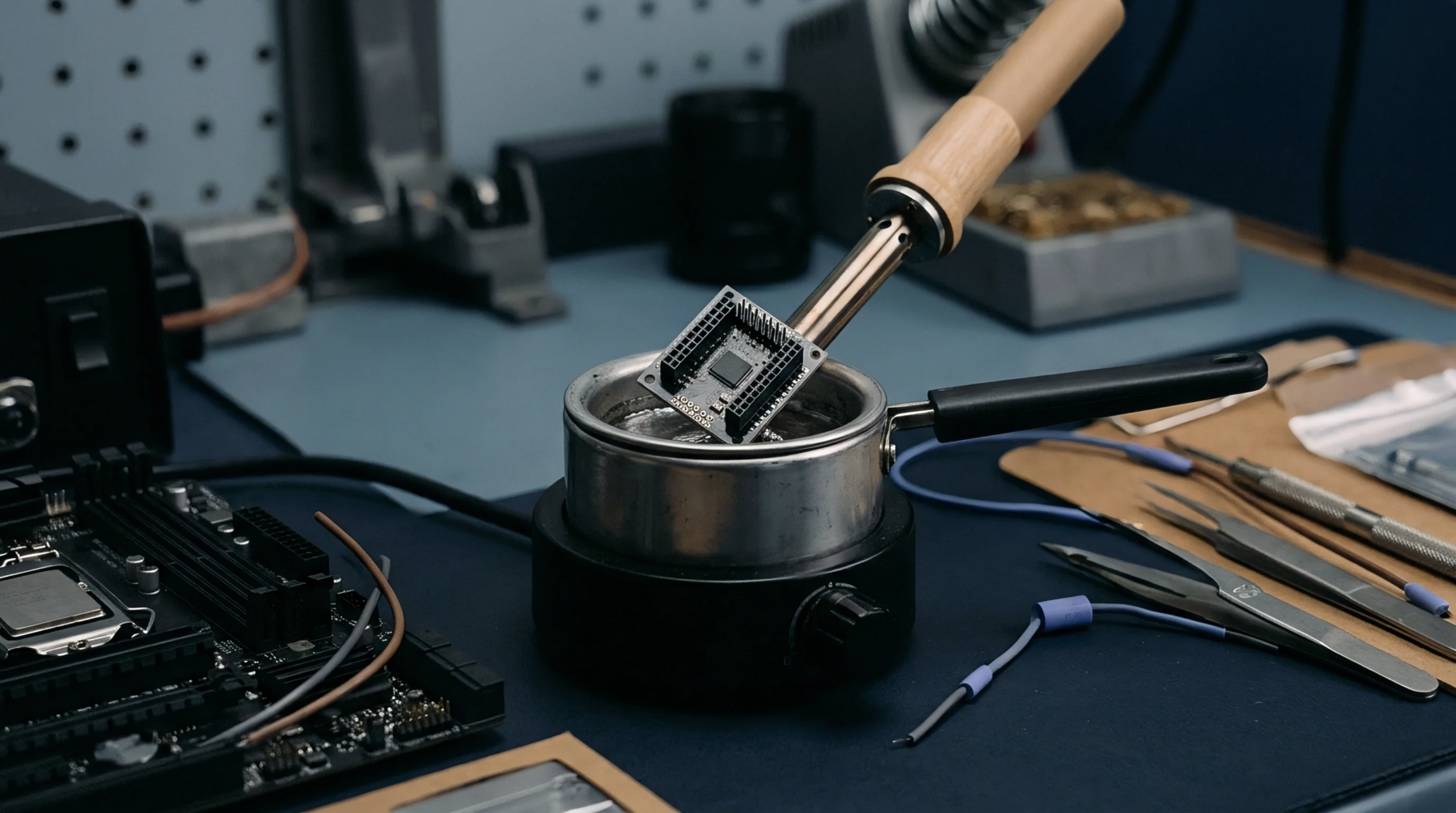
A specialized metal foil used in solder paste application features sections of reduced thickness to deliver different volumes of paste to the circuit board. Solder specialists use a step-down stencil when a board contains both large components that need plenty of paste and small parts that require very little. The thinner areas allow the stencil to release smaller amounts of paste for fine pitch components, which prevents electrical bridging.
Meanwhile, the standard thickness sections provide enough material for large connectors or power devices. This variation in foil depth addresses the conflicting requirements of diverse component sizes on a single assembly.
Fabrication Process
Creating these depth variations requires chemical etching or laser milling on one side of the stainless steel sheet and the mounting frame. The bottom of the stencil remains flat against the board while the top surface has recessed pockets. Squeegee blades must be flexible enough to conform to these height changes or the paste deposition will be inconsistent.
Design Constraint
Sufficient clearance is needed between the step transition and the nearest aperture to allow the squeegee to level the paste. If the transition is too close, the paste volume on the adjacent pads may be too high or too low.