Measurement Method
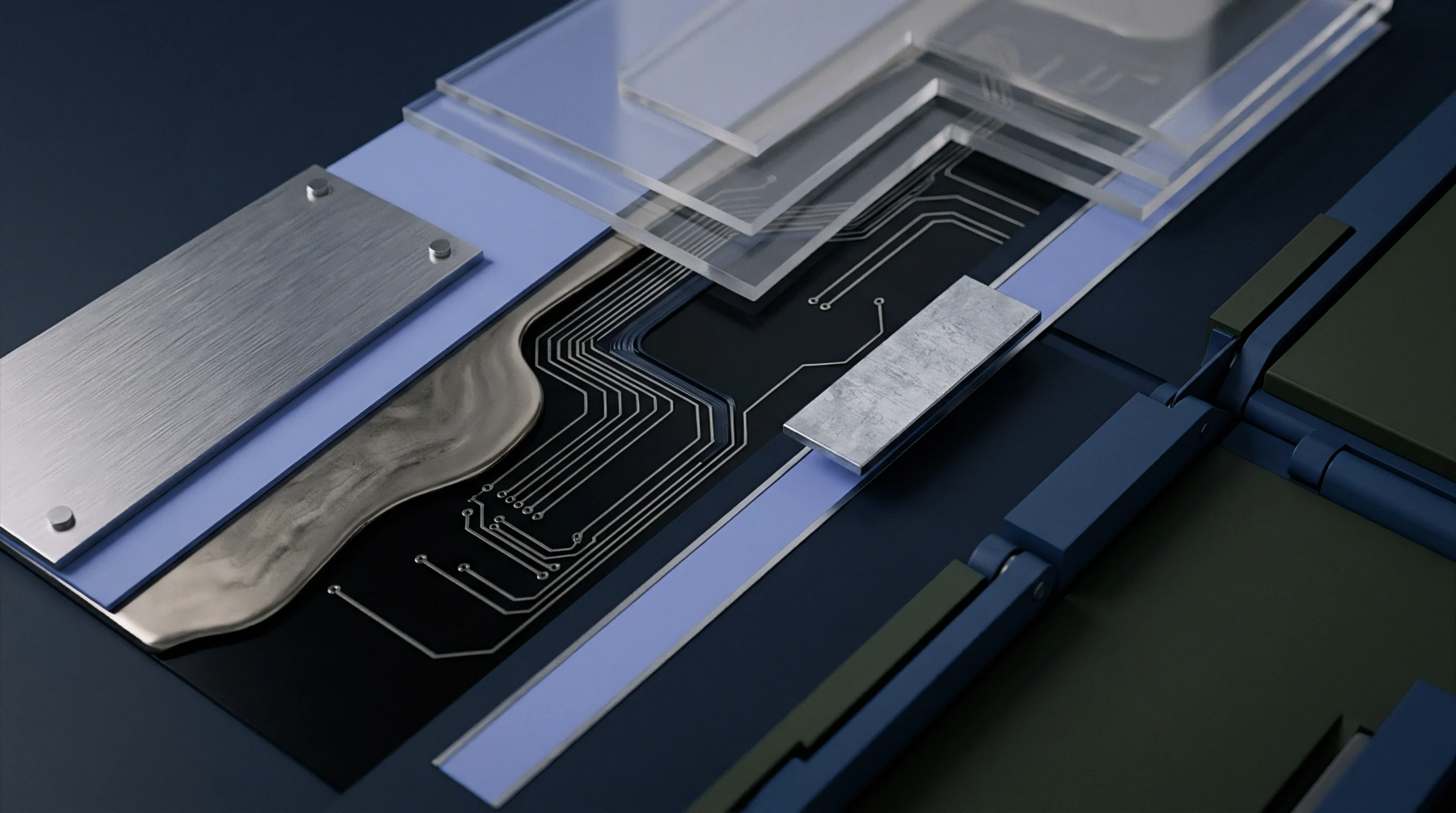
Permittivity instability represents a board fabrication metric that tracks localized shifts in laminate polarization behavior across printed circuit board cores. Production engineers monitor dielectric constant variation to control impedance stability within high speed multilayer stacks during chemical etching. Photolithography alignment errors shift copper traces relative to glass weave bundles, creating regional capacitance gradients that alter high frequency signal propagation.
Automated optical inspection systems measure line width deviations while time domain reflectometers verify the resulting impedance profiles against tight design tolerances. Laminate manufacturers press woven fiberglass and epoxy resin sheets under extreme heat and pressure, yet resin rich pockets form randomly between yarn bundles. These resin pockets exhibit lower permittivity than glass reinforcement regions, producing cyclical impedance fluctuations along routed differential pairs.
High speed serial links demand uniform propagation velocity to preserve eye diagram openings during transmission across backplanes. Signal degradation intensifies when routing passes directly over resin rich windows, because localized capacitance drops trigger severe reflections at receiver pins. Etching chemistry variations compound this issue by thinning conductor edges irregularly, which shifts the local transmission line geometry.
Testing equipment evaluates insertion loss penalties by sweeping frequencies through coupons placed on the fabrication panel edge.
Process Control
Resin distribution anomalies emerge during the lamination press cycle when matrix viscosity drops before crosslinking fixes the structural geometry. Facility operators adjust platen thermal profiles and clamping ramps to minimize resin migration away from central core regions. Mechanical drilling parameters dictate hole wall roughness, which influences plating adhesion and localized capacitance stability in plated through holes.
Automated test fixtures deploy vector network analyzers to scan production panels for insertion loss anomalies before outer layer lamination proceeds. When raw material suppliers deliver laminate stock with excessive glass weight variations, assembly facilities reject entire lots to prevent downstream yield collapse. Signal integrity engineers analyze scatter parameters extracted from microstrip test structures to isolate manufacturing defects from design flaws.
Performance Limit
Impedance anomalies disrupt digital signal transmission by introducing phase jitter and skew across parallel data buses. Operating frequencies exceeding ten gigahertz push current paths closer to individual fiberglass yarn bundles, magnifying local permittivity shifts. Signal attenuation scales directly with frequency, forcing manufacturers to adopt low loss substrate materials containing specialized resin formulations.
Standard FR4 laminates fail to maintain stable transmission characteristics at high data rates because moisture absorption alters internal polarization mechanisms. Circuit designers compensate for known material shifts by adjusting trace widths within computer aided manufacturing software before generating phototools. Advanced packaging architectures rely on ultra thin core materials to suppress resonance modes caused by high frequency field concentrations.
Final acceptance testing validates that insertion loss and return loss remain within specified margins across the entire operating bandwidth of the finished circuit board.