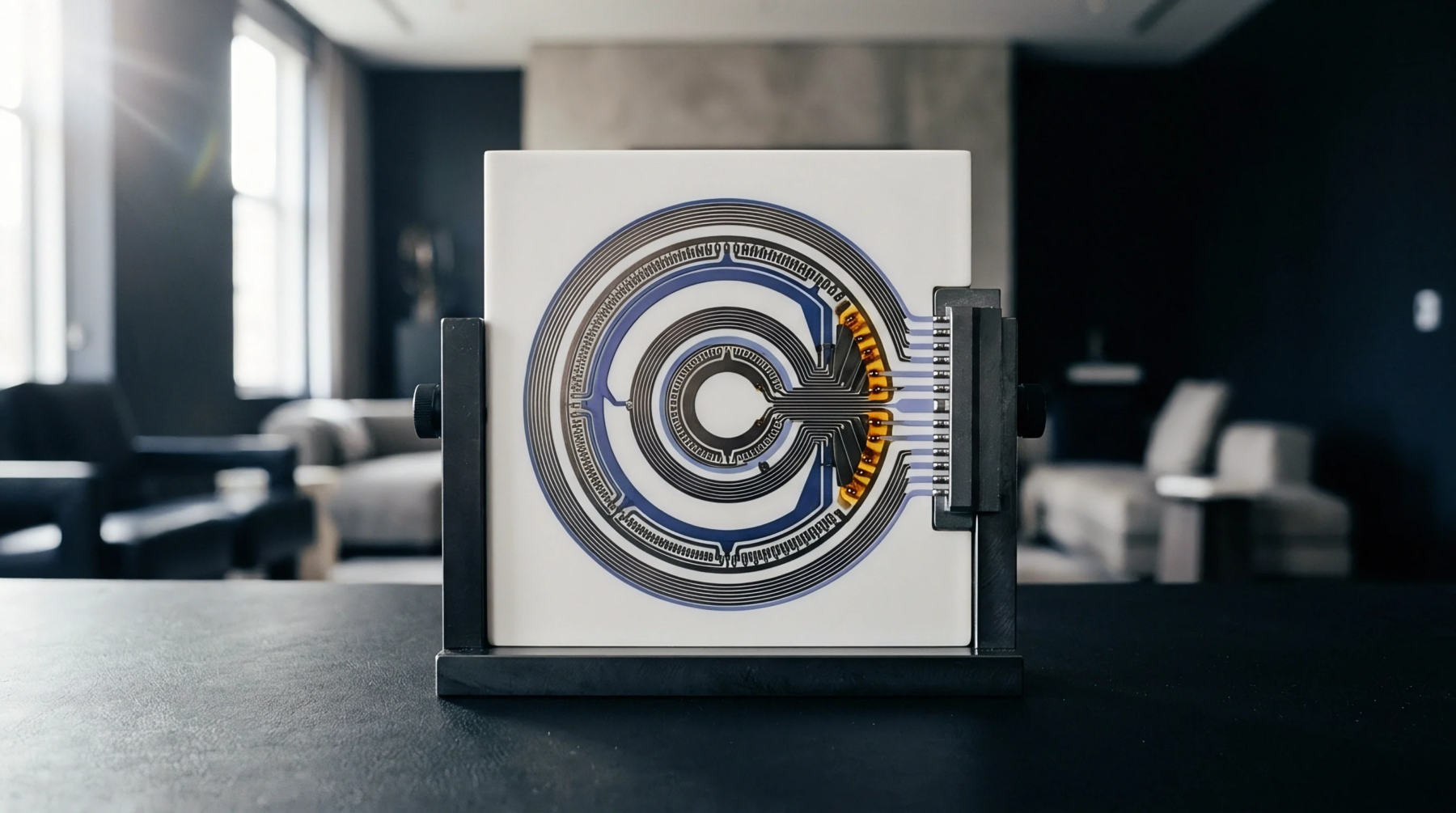
Rheological Principles Governing High Frequency Laminate Stackup Lamination
Prepreg viscosity profiles under precise heating rates dictate resin fill, dielectric spacing, and internal layer registration in high frequency stackups.
Prepreg viscosity profiles under precise heating rates dictate resin fill, dielectric spacing, and internal layer registration in high frequency stackups.
Predict anisotropic sub-core shrinkage by coupling glass yarn orientation with etched copper density across logarithmic decay models for each thermal pass.
Optimizing inner layer registration requires balancing thermal expansion tolerances through four-slot pinning while managing prepreg viscosity windows under staged pressure.
Anisotropic inner layer shrink requires asymmetric artwork scaling factors matching prepreg warp and fill glass weave thermal coefficients.
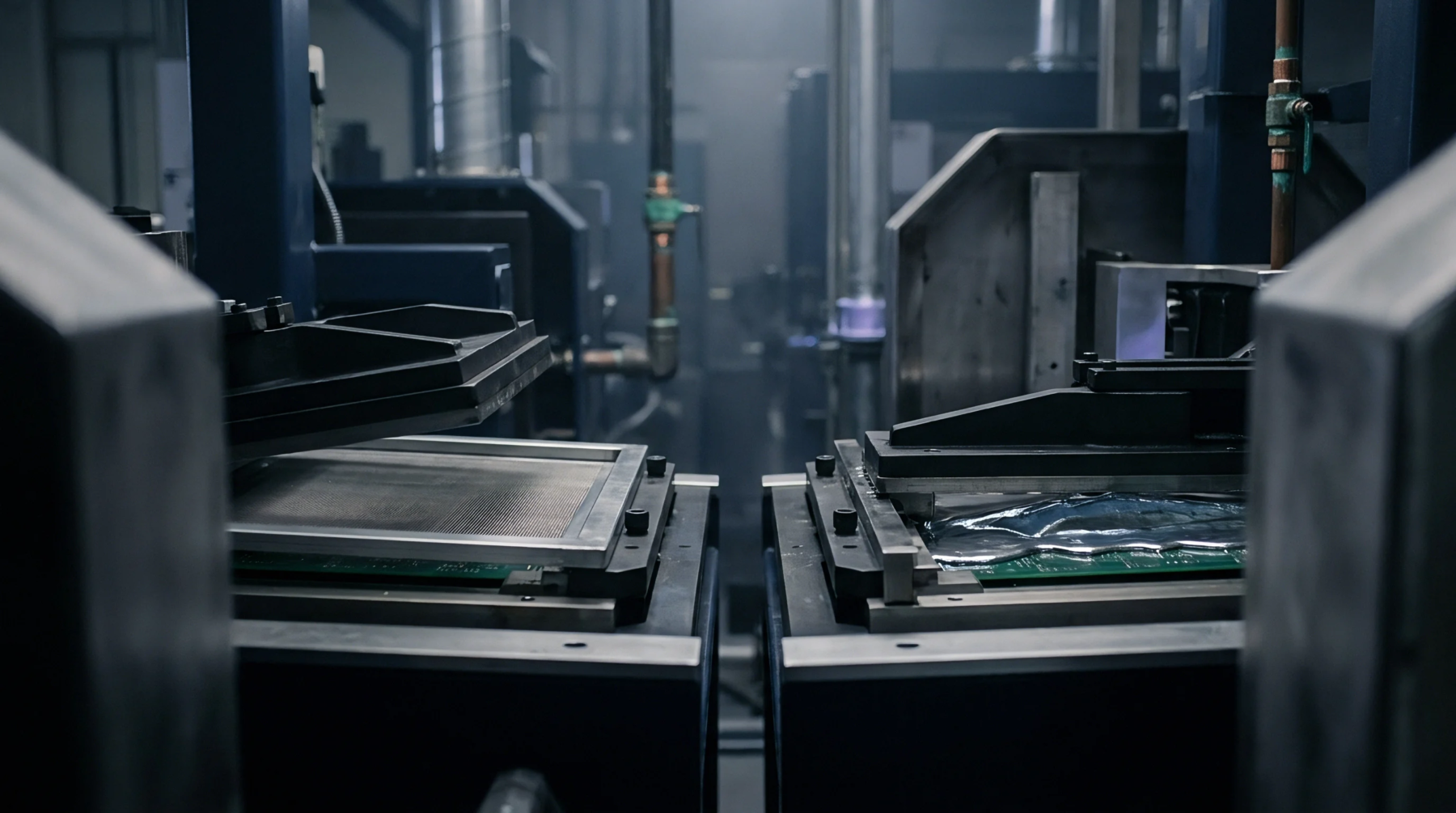
Layer registration drift budgets require RSS vector stacking of material shrink, tooling clearance, and drill wander to protect inner layer annular rings.
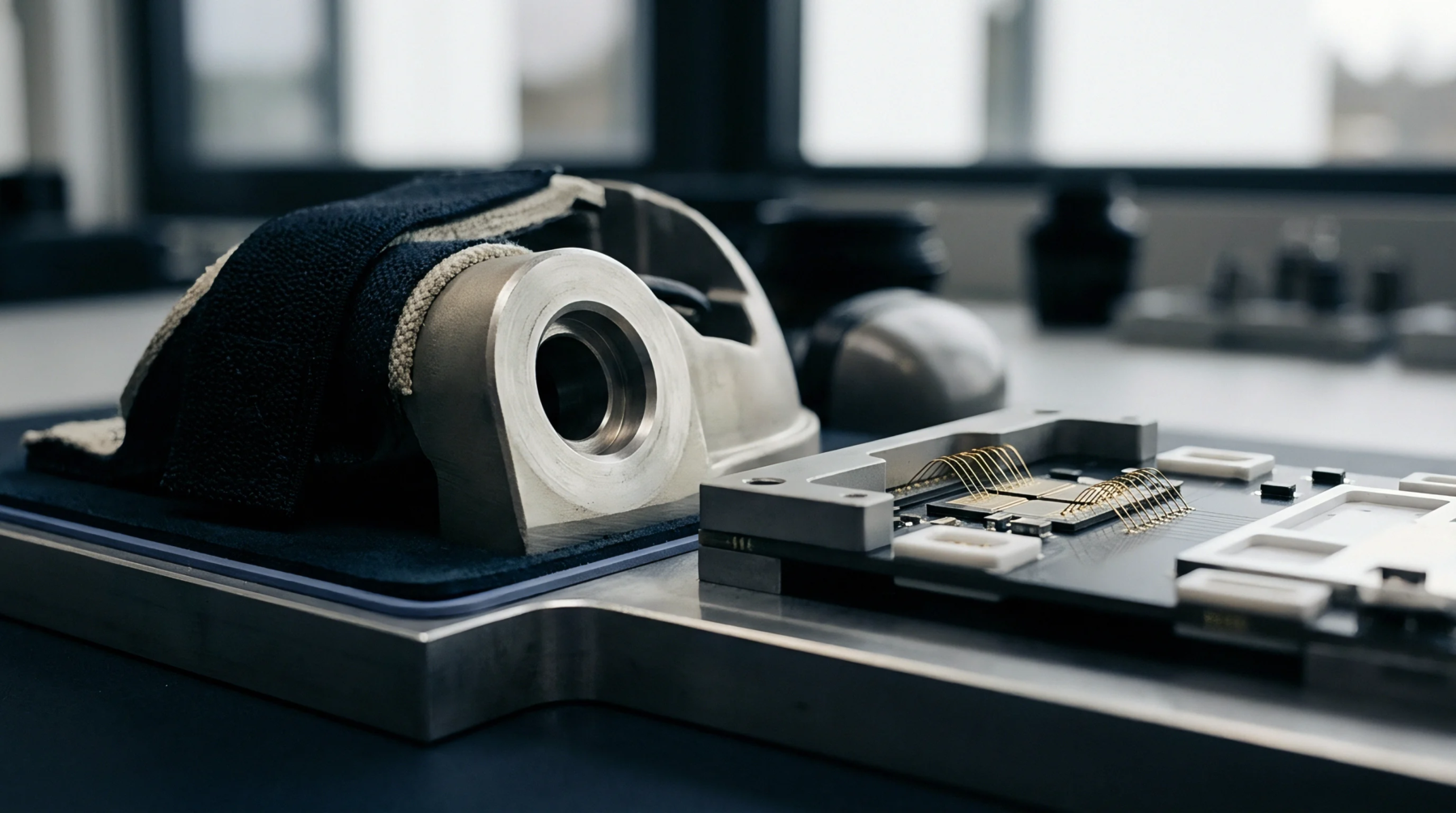
Moving from four to six layers adds 30 to 55 percent to bare board cost through double core usage, lamination press overhead, and tighter registration yields.
Expertise is a utility, not a secret. sentiention™ publishes its working knowledge as open reference: intelligence layer covering the materials it sources, the markets it enters, and the reference that serves both.