Nitrogen Inerting Flow Rate Optimization for Selective Soldering Nozzles
Optimizing selective soldering nitrogen flow balances laminar oxygen displacement against gas turbulence, minimizing dross and defects at lowest landed cost.

Plume
Molten tin oxidizes within milliseconds. Selective soldering nozzles expose a standing wave of liquid solder at operating temperatures between 265 °C and 300 °C directly to the local atmosphere. In an ambient air environment containing roughly 209,000 parts per million of oxygen, tin-rich alloys such as SAC305 rapidly generate a heavy film of stannic oxide and stannous oxide across the wave surface.
This oxide skin alters the surface energy of the molten metal, increasing surface tension from approximately 460 mN/m to well over 550 mN/m. High surface tension inhibits clean separation between the solder jet and the board land, leading to solder bridging, webbing, and icicle formation on fine-pitch through-hole components.
Inerting the soldering zone with nitrogen gas displaces ambient air, collapsing the oxidation reaction rate at the liquid surface. Nitrogen flow creates a localized micro-environment surrounding the solder nozzle tip. Reducing the oxygen concentration to sub-100 ppm levels prevents the skin formation that destabilizes wetting dynamics.
Lower surface tension allows the solder alloy to flow freely into high-aspect-ratio plated through-holes while permitting crisp de-wetting when the nozzle travels away from a completed joint.
At oxygen concentrations below 50 ppm, the static oxidation rate of molten SAC305 solder at 280 °C drops by two orders of magnitude relative to open air.
Oxide suppression directly affects solder pot maintenance cycles and pump impeller longevity. Without an effective inert nitrogen cover, dross accumulates rapidly inside the nozzle body and solder pump reservoir. Dross consists of oxidized alloy matrix particles suspended in unoxidized metal, creating an abrasive sludge that clogs the inner channels of small-diameter nozzles.
A clogged nozzle distorts the symmetrical solder jet shape, causing uneven solder wave heights and localized thermal drop across the joint interface.
Failure to maintain adequate oxygen displacement results in immediate visual non-conformance under IPC-A-610 Class 3 standards. Solder joints formed within an under-inerted environment display dull, grainy surface topographies, pinholes, and insufficient vertical hole fill due to reduced capillary force. Production lines running without optimized gas shielding suffer continuous first-pass yield degradation, driving up manual touch-up labor costs and introducing heat-stress damage to adjacent surface-mount components during rework.
Boundary
Delivering nitrogen gas to a selective wave nozzle demands strict control over fluid dynamics. The protective gas envelope exiting the nozzle hood forms a boundary layer surrounding the vertical liquid solder flow. Flow rate dictates whether this gas shield remains stably laminar or transitions into a turbulent regime.
Standard flow rates for typical nozzle diameters ranging from 3 mm to 12 mm span between 15 and 40 Standard Liters per Minute (SLPM).
Low nitrogen flow rates fail to displace ambient air entrained by the movement of the printed circuit board assembly across the solder jet. When nitrogen velocity drops below the convective draft velocity created by the heated solder pot, room air penetrates the protective zone. Conversely, excessively high nitrogen flow rates introduce gas turbulence.
High gas velocity induces turbulent shear, drawing ambient oxygen directly into the solder-to-pin contact surface through vortex action.

Gas Layer Dynamics at High Velocity
Extremely high nitrogen delivery rates degrade process repeatability through thermal and physical disruptions. Cold nitrogen gas fed directly to the nozzle chills the solder jet tip, causing localized temperature drops of up to 15 °C at the wetting wave. Preheating the nitrogen gas supply to temperatures between 150 °C and 200 °C mitigates localized chilling, maintaining solder pot temperature stability within a tight plus-or-minus 2 °C window across extended production shifts.
Process instability occurs when gas flow parameters deviate outside established fluid boundaries:
- Turbulent Air Infiltration occurs when gas output velocity exceeds critical Reynolds numbers, creating eddies that pull room air into the liquid wave interface.
- Thermal Quenching Defect arises from cold gas streams chilling the molten wave, causing premature solder solidification and incomplete pin wetting.
- Wave Solder Splatter manifests when excessive gas pressure disrupts the hydrodynamic equilibrium of the solder jet apex, depositing micro-solder balls onto the solder mask.
- Gas Envelope Cavitation happens when asymmetrical flow delivery creates localized vacuum zones, allowing oxygen to reach one side of the component lead array.
Correct gas flow setup balances velocity against volume to maintain a steady, non-turbulent displacement cone. The laminar velocity profile shields the molten solder jet without exerting mechanical pressure against the liquid column. A stable boundary envelope maintains a flat, oxygen-free contact surface across the entire nozzle diameter range.
Gas velocity that disrupts the smooth mirror finish of the solder wave has passed the laminar limit and begun entraining room air.

Purity
Nitrogen gas purity supplied to the selective soldering machine dictates the floor level of oxygen obtainable inside the process chamber. Commercial nitrogen delivery systems supply gas via bulk liquid nitrogen dewars, high-pressure bottle banks, or on-site Pressure Swing Adsorption (PSA) membrane generators. Liquid nitrogen delivery yields gas purity of 99.999% (5.0 grade), containing less than 10 ppm total oxygen impurities.
Standard PSA membrane generators produce purity levels between 99.9% (3.0 grade, 1,000 ppm O2) and 99.99% (4.0 grade, 100 ppm O2).
Operating with lower-purity nitrogen requires significantly higher volumetric flow rates to achieve acceptable residual oxygen levels at the solder nozzle. A system fed by 99.9% purity nitrogen cannot achieve an oxygen concentration below 1,000 ppm at the joint, regardless of how many standard liters per minute pass through the nozzle assembly. High-reliability electronics assembly specified under IPC-J-STD-001 Class 3 typically establishes a target maximum threshold of 50 to 100 ppm residual oxygen during active pin immersion.
| Gas Supply Purity | Nozzle Inner Diameter (mm) | Nitrogen Flow Rate (SLPM) | Measured Local O2 (ppm) | Dross Accumulation Rate (g/hr) |
|---|---|---|---|---|
| 99.999% (5.0 Grade) | 6.0 | 20 | 35 | 0.2 |
| 99.999% (5.0 Grade) | 6.0 | 35 | 15 | 0.1 |
| 99.99% (4.0 Grade) | 6.0 | 20 | 180 | 1.8 |
| 99.99% (4.0 Grade) | 6.0 | 35 | 110 | 1.1 |
| 99.9% (3.0 Grade) | 6.0 | 25 | 1,150 | 14.5 |
| 99.9% (3.0 Grade) | 6.0 | 45 | 1,020 | 12.8 |
Wetting balance testing shows distinct differences in soldering performance between SAC305 (Sn96.5Ag3.0Cu0.5) and lead-free eutectic alloys like SN100C (Sn-0.7Cu-Ni-Ge). SAC305 exhibits faster wetting times under higher oxygen concentrations due to silver content lowering surface energy. SN100C relies heavily on ultra-low oxygen atmospheres to maximize the fluidizing action of its trace nickel and germanium additions.
When oxygen concentrations exceed 150 ppm, SN100C experiences rapid surface oxidation that degrades hole fill on thick 12-layer backplanes.
Clean gas delivery lines prevent atmospheric contamination from compromising high-grade nitrogen sources before reaching the machine header.
Equipment suppliers frequently claim their patented nozzle shrouds achieve 20 ppm oxygen purity using low-cost 99.9% nitrogen supplies. Physical gas dynamics demonstrate that gas purity at the nozzle outlet can never exceed the input supply purity. A supply gas containing 1,000 ppm oxygen will deliver at least 1,000 ppm oxygen to the solder wave, irrespective of shroud geometry or machine flow settings.
Draft
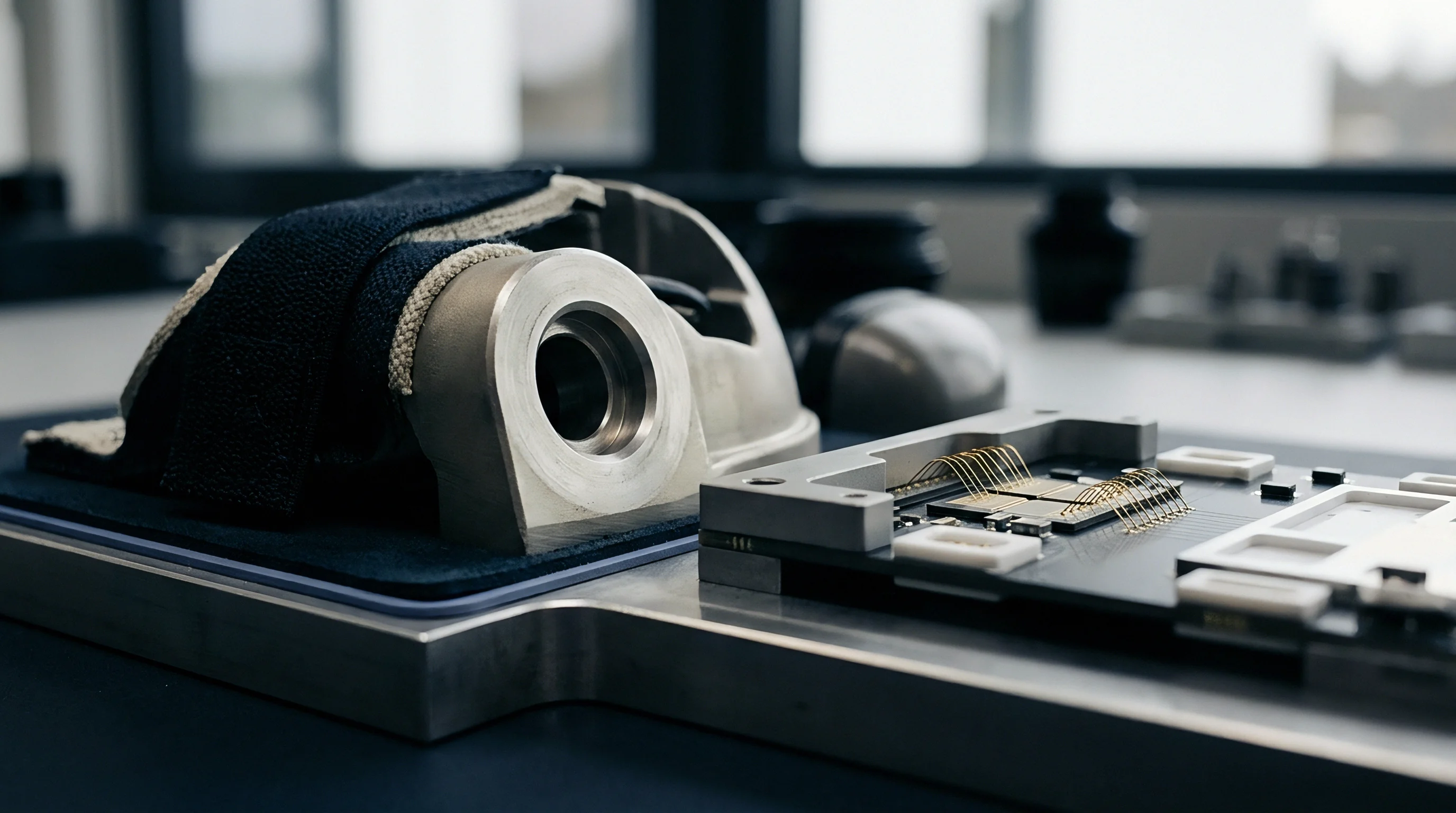
Selective soldering machines operate within dynamic factory floor environments. Exhaust ventilation systems, building HVAC distribution ducts, and internal machine cooling fans create ambient air currents across the soldering cell. Exhaust duct extraction forces pull air through the machine cabinet to remove flux solvent fumes and thermal off-gassing.
Uncontrolled air currents destabilize the nitrogen plume surrounding the solder nozzle.
Excessive extraction pressure inside the cabinet acts as an external draft, pulling protective nitrogen away from the solder jet faster than the supply manifold can deliver it. Balancing line exhaust velocity against nitrogen delivery velocity prevents ambient draft interference. Duct dampers set to extract air at low face velocities, typically between 0.3 m/s and 0.5 m/s, maintain adequate fume removal without stripping the inert shroud off the nozzle assembly.
Mechanical Protection Methods
Optimizing mechanical shielding components reduces the flow rate required to maintain a given oxygen purity level. Nozzle shrouds, nitrogen extenders, and board-level clearance baffles physically constrain the gas envelope around the solder jet.
Evaluating mechanical draft suppression options involves checking specific line items:
- Concentric Nozzle Shrouds route nitrogen through an outer annular ring surrounding the inner solder tube, creating a parallel gas curtain.
- Adjustable Hood Plates extend down from the PCB carrier fixture to block horizontal airflow across the board surface during the soldering stroke.
- Exhaust Baffle Dampers restrict cabinet draft suction, preventing vacuum pressure from destabilizing the local inert gas blanket.
- Selective Nitrogen Sleeves surround non-standard long-lead component arrays to prevent air entrainment inside tight component pitch areas.
Board clearance restrictions directly influence shroud effectiveness. High-density printed circuit assemblies with tall SMT components adjacent to through-hole lands force operators to use narrow nozzle hoods or un-shrouded extended nozzles. Un-shrouded nozzles expose the liquid solder stream directly to ambient cabinet drafts, requiring up to a 50% increase in volumetric nitrogen flow to keep oxygen levels below 100 ppm.
How much nitrogen volume is lost when PCB clearance requirements force the complete removal of concentric nozzle shrouds?
Gauge
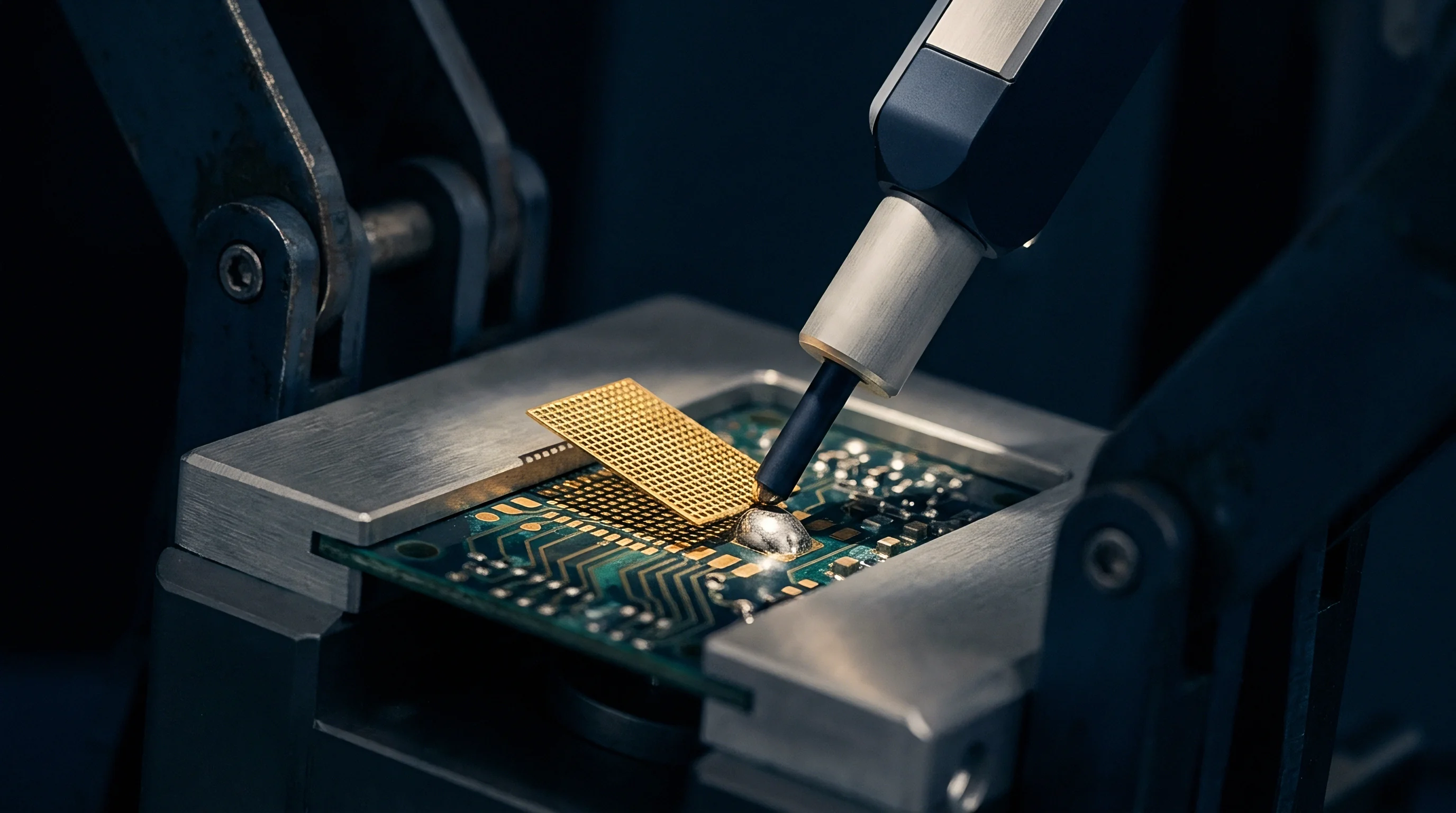
Accurate verification of nitrogen inerting performance requires real-time oxygen measurement at the precise point of soldering. Placing an oxygen sensor inside the upper machine cabinet yields misleading data. Cabinet oxygen readings reflect overall cell aeration rather than the micro-atmosphere directly contacting the molten solder wave apex.
Measurement protocols mandate sampling within 2 mm to 5 mm of the active solder jet edge.
Zirconia-cell oxygen analyzers provide rapid response times and high accuracy for continuous inline sampling. Zirconia sensors operate by measuring the electrochemical potential difference across a solid zirconium dioxide ceramic tube maintained at 650 °C. Unlike chemical galvanic cell sensors, which degrade rapidly and exhibit slow response times, zirconia sensors read dynamic oxygen fluctuations down to 1 ppm within milliseconds. Stainless steel micro-sampling tubes drawn directly to the nozzle hood deliver localized gas samples to the sensor manifold without introducing atmospheric air leaks.

Which Residual Oxygen Sampling Location Prevents False Sensor Readings?
Sampling tubes positioned too close to the solder stream risk drawing liquid solder or flux residue into the sensor line, clogging the internal filters and ruining the measurement cell. Positioning the sample port 3 mm above the solder wave rim and 2 mm offset from the jet outer diameter collects valid local atmospheric samples without ingesting liquid metal. Sampling tubes require daily inspection and solvent flushing to remove condensed rosin and flux activator residues.
Validation of machine nitrogen flow settings follows a strict sequence during initial process setup and batch line release:
- Connect the calibrated zirconia oxygen analyzer sampling line to the dedicated micro-port on the selective nozzle shroud assembly.
- Verify machine inlet nitrogen supply pressure matches the manufacturer specification of 0.4 MPa to 0.6 MPa under active gas flow conditions.
- Initialize nitrogen gas flow at the baseline rate of 25 SLPM and allow the machine chamber to purge for 300 seconds.
- Enable the solder pump to establish a stable, continuous liquid solder wave height at nominal operating temperature.
- Record steady-state oxygen concentration readings on the analyzer across a continuous 120-second sampling window.
- Adjust the mass flow controller in increments of 5 SLPM, allowing 60 seconds for equilibrium at each step, until local oxygen falls below 50 ppm.
- Lock the mass flow controller settings and log the final flow rate and oxygen PPM values into the job routing dossier.
IPC J-STD-001 Revision H mandates documented atmosphere controls maintaining specified oxygen purity throughout the soldering cycle to validate Class 3 acceptance.
Contractual agreements specifying Class 3 build compliance enforce continuous inline logging of nitrogen purity metrics. If the logged oxygen value spikes above 100 ppm during an active assembly cycle, automated line controls halt the selective soldering conveyor, preventing un-verified boards from progressing to final inspection.
Expense
Determining the optimum nitrogen flow rate requires balancing raw gas consumption costs against board defect scrap, touch-up labor, and nozzle maintenance downtime. Operating nitrogen lines at unnecessarily high flow rates burns expensive gas without adding process margin. Operating at insufficient flow rates generates costly solder bridging, dross formation, and joint non-conformance.
Commercial nitrogen pricing varies by delivery method. Liquid nitrogen delivered to a bulk storage tank costs between $0.35 and $0.70 per cubic meter ($0.010 to $0.020 per Standard Liter). High-pressure gas cylinders cost substantially more, ranging from $2.00 to $5.00 per cubic meter.
An automated selective soldering line equipped with two independent soldering nozzles running continuously at 35 SLPM per nozzle consumes 4.2 cubic meters of nitrogen gas per operating hour.
| Flow Rate per Nozzle (SLPM) | Total Cell Consumption (m³/hr) | Annual Gas Cost ($0.50/m³) | Dross Removal Maintenance (hr/yr) | First-Pass Defect Rate (%) | Total Annual Operating Cost ($) |
|---|---|---|---|---|---|
| 15 (Under-Shielded) | 1.8 | 3,600 | 120 | 2.45 | 48,600 |
| 25 (Optimized) | 3.0 | 6,000 | 24 | 0.12 | 11,400 |
| 35 (Optimized) | 4.2 | 8,400 | 12 | 0.08 | 11,800 |
| 50 (Over-Shielded) | 6.0 | 12,000 | 10 | 0.18 | 18,900 |
Consider a practical production line scenario: a contract manufacturer runs a two-shift assembly operation totaling 4,000 production hours per year, building high-reliability automotive control units. The selective soldering cell contains two 8 mm nozzles. Testing shows that running at 15 SLPM yields a local oxygen level of 450 ppm, causing dross accumulation that requires 15 minutes of manual pot clearing every four hours.
Raising flow rate to 25 SLPM reduces local oxygen to 45 ppm, eliminating dross clears except for once per shift (30 minutes total per day) and reducing first-pass solder bridge rejects from 2.45% down to 0.12%.
At 15 SLPM, annual nitrogen gas cost equals $3,600 (1.8 m³/hr × 4,000 hrs × $0.50/m³). However, maintenance labor at $50/hr adds $6,000 annually, while defect rework and scrap on 100,000 boards (2,450 failed boards at $15 per rework cycle) costs $36,750. Total operational cost sits at $46,350 per year.
Increasing nitrogen flow to 25 SLPM elevates annual gas expenditure to $6,000 (3.0 m³/hr × 4,000 hrs × $0.50/m³). Maintenance labor drops to $1,200 annually, and board rework drops to $1,800 (120 failed boards at $15 each). Total operational cost drops to $9,000 per year, yielding net annual savings of $37,350.
Increasing flow further to 50 SLPM increases gas costs to $12,000 per year. Gas turbulence at 50 SLPM slightly increases solder splash defects, driving defect rework up to $2,700 annually while providing negligible maintenance savings. Total operating cost rises to $15,900.
Process optimization identifies 25 to 30 SLPM as the precise economic sweet spot where overall manufacturing landed cost hits its absolute minimum.
Excess gas flow past the point of laminar oxygen displacement increases operational utility bill costs without improving board quality.
Line qualification dossiers record the optimized flow rate alongside supplier gas purity certifications. Machine mass flow controllers locked with mechanical tamper seals or software password permissions prevent floor operators from altering qualified flow settings during shift changes. Landed cost calculations depend entirely on maintaining these validated parameters across every single production lot.