Cohesive Force
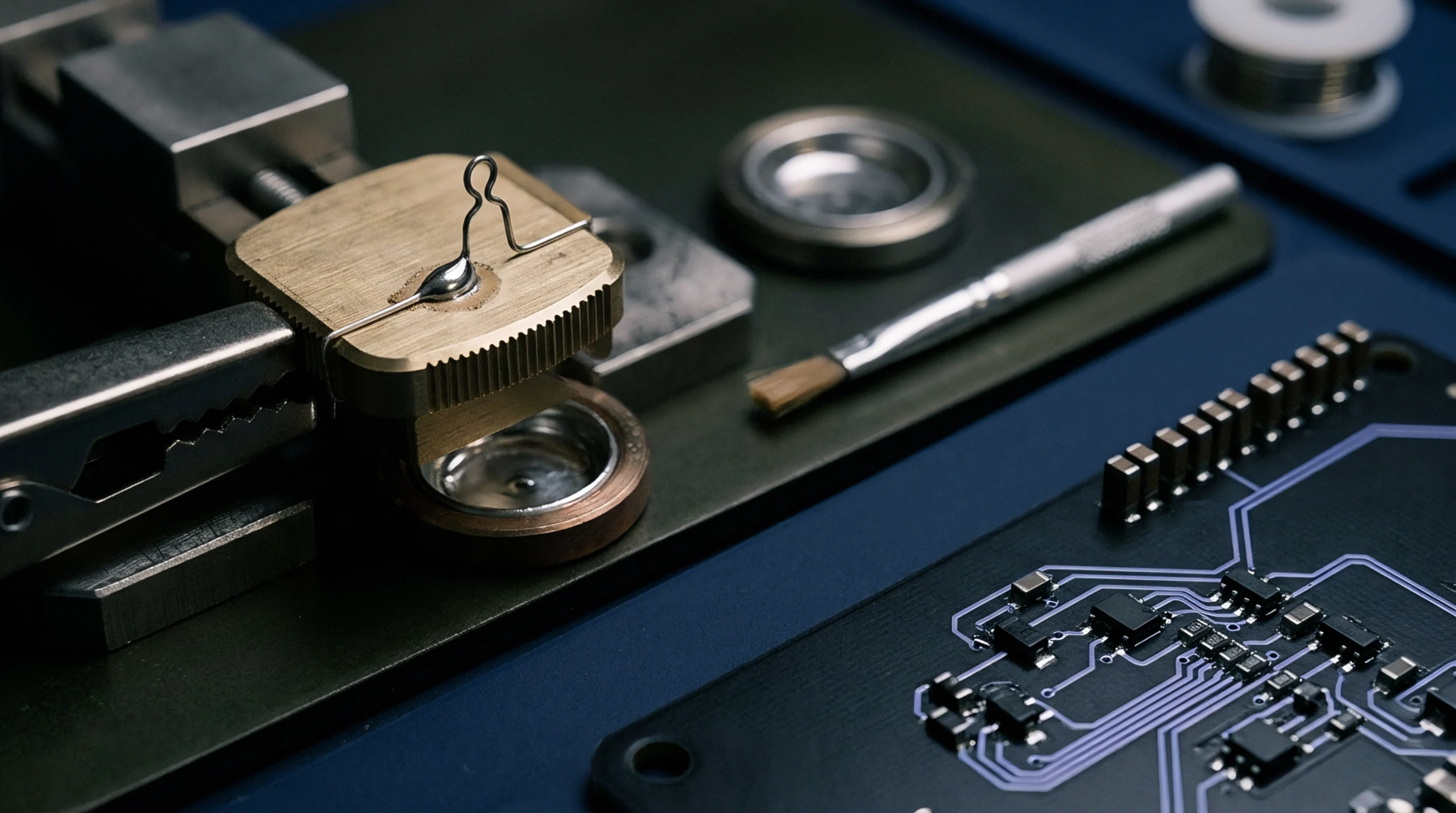
The cohesive energy present at the boundary of a liquid metal determines its tendency to minimize its surface area. In the context of electronic soldering, surface tension governs how liquid solder behaves when it contacts the copper pad and component termination. High force levels can cause the solder to pull back into a spherical droplet, while low force levels allow the metal to spread and wet the substrate.
This physical property is heavily influenced by the temperature of the reflow oven and the chemical composition of the flux.
Wetting Dynamics
Flux application lowers the interfacial energy between the liquid solder and the oxidized copper pad, enabling capillary action. As the solder alloy reaches its liquidus temperature, surface tension pulls the molten metal up into the joint gap, creating a curved fillet. This wetting action is essential for establishing a reliable metallic bond.
If the surface tension remains too high because of oxidation or insufficient flux activation, the solder will fail to spread, leading to non-wetting or de-wetting defects. Controlling the alloy composition and applying a suitable flux ensure the necessary flow occurs before solidification.
Defect Control
Optimizing liquid metal forces prevents assembly failures like tombstoning or solder balling. When unbalanced forces pull on a two-terminal component, the surface tension of the wetting solder can lift one end off the pad. Aligning the pad geometries and print volumes balances these forces during reflow.