Diagnostic Method
High frequency ultrasound provides a means of non-destructive internal inspection for electronic components. Standard practitioners use acoustic micro-imaging to identify sub-surface anomalies such as air pockets or interface delamination between packaging materials. The technique works through the capture of acoustic energy reflected from boundaries where the density of the medium changes significantly.
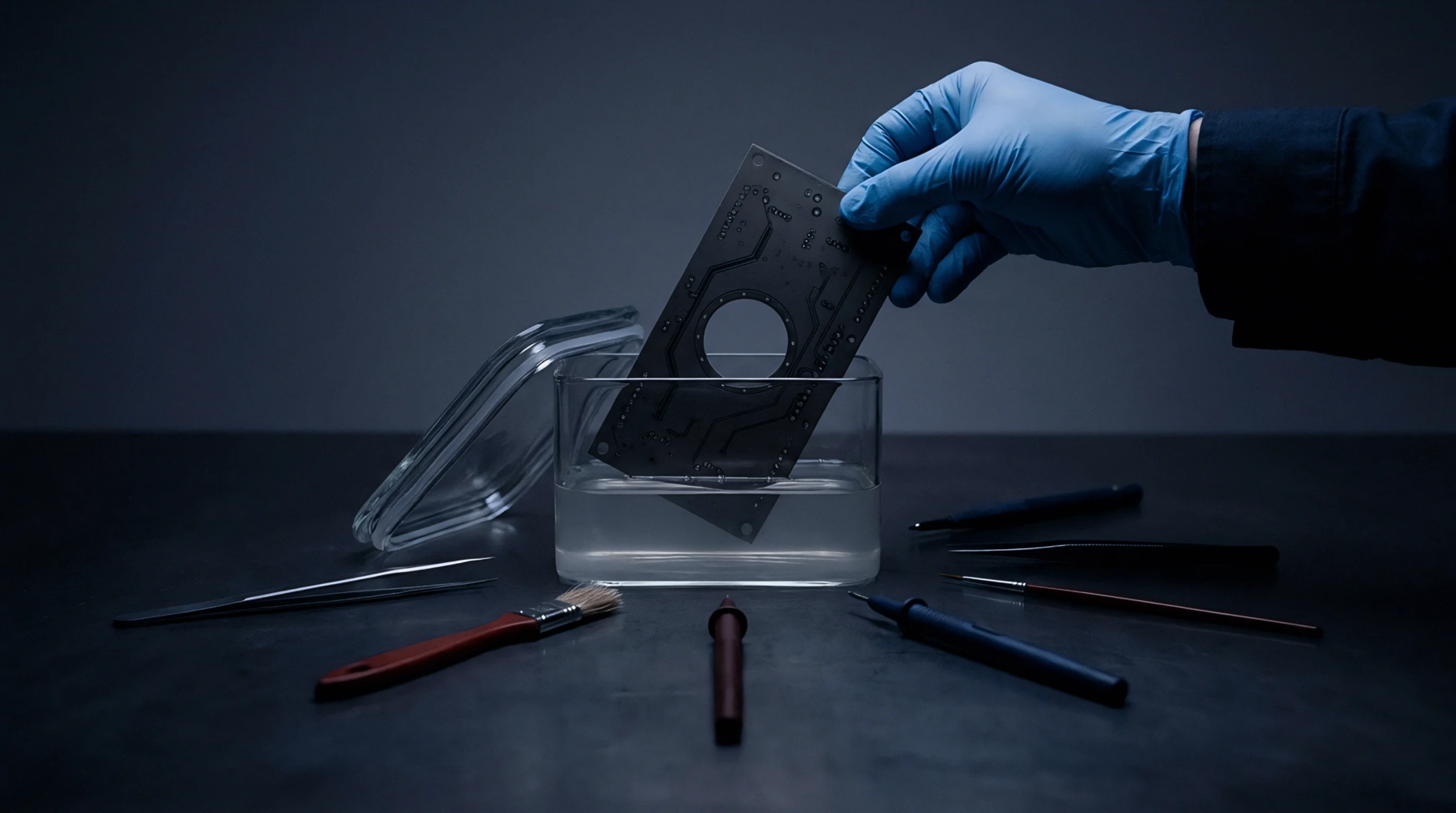
Success depends on the immersion of the sample in a coupling fluid to facilitate signal transmission without attenuation.
Physical Mechanism
A piezoelectric transducer acts as both the source of ultrasonic pulses and the sensor for returning echoes. When these waves encounter a gap between a silicon die and a plastic mold compound, the difference in acoustic impedance creates a high amplitude reflection. This variation allows the software to generate a spatial map of internal density changes based on the precise timing of returned signals.
The process begins with the transducer scanning across the x and y axes while maintaining a fixed focal depth. Digital conversion then transforms these analog echo signals into grayscale values where different intensities represent distinct bond qualities.
Resolution Boundary
Detecting small features requires transducers that operate at frequencies between 15 megahertz and 300 megahertz. Higher frequencies improve vertical resolution but limit the penetration depth into the package body. Lower ranges help when scanning thick substrates or power modules where signal loss is a concern.