
Isotropic versus Anisotropic Dielectric Models in Packaging Substrates
Anisotropic dielectric tensor modeling eliminates up to 8 ohm trace impedance errors and timing skew in high speed package substrates compared to isotropic models.
Anisotropic dielectric tensor modeling eliminates up to 8 ohm trace impedance errors and timing skew in high speed package substrates compared to isotropic models.

Silica-filled resin viscosity minimization requires synchronizing heating ramps with press pressure timing to ensure complete void encapsulation without core shift.

Sub-30 micron mSAP feature generation requires controlling seed layer thickness, LDI resist profiles, plating additive dynamics, and flash etch undercut.

Differential phase skew control requires spread-glass fabrics or off-axis routing to eliminate local micro-scale dielectric variations across high-speed traces.
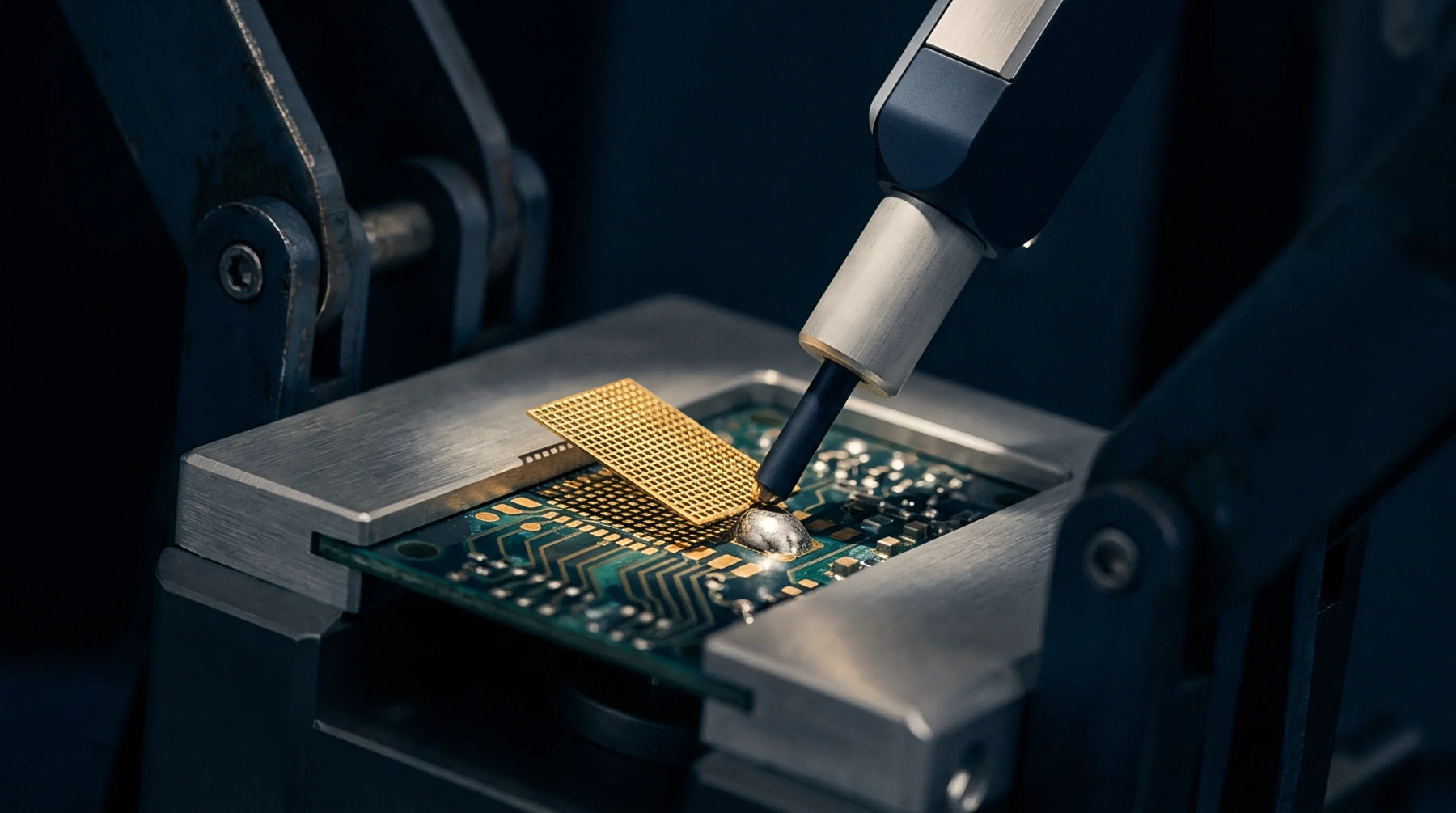
Select spread-glass prepreg and extract dielectric constants from TRL transmission line measurements to eliminate weave skew and impedance errors.

Sub-hundred-micron fine-line multi-core panel surcharges stem from seed-etch yield hits, core-shift registration buffers, and panel margin expansion.

Dynamic resin flow in thin core laminates governs post-press dielectric thickness, feature filling capability, and panel impedance uniformity.
Expertise is a utility, not a secret. sentiention™ publishes its working knowledge as open reference: intelligence layer covering the materials it sources, the markets it enters, and the reference that serves both.