Metallurgical Progression
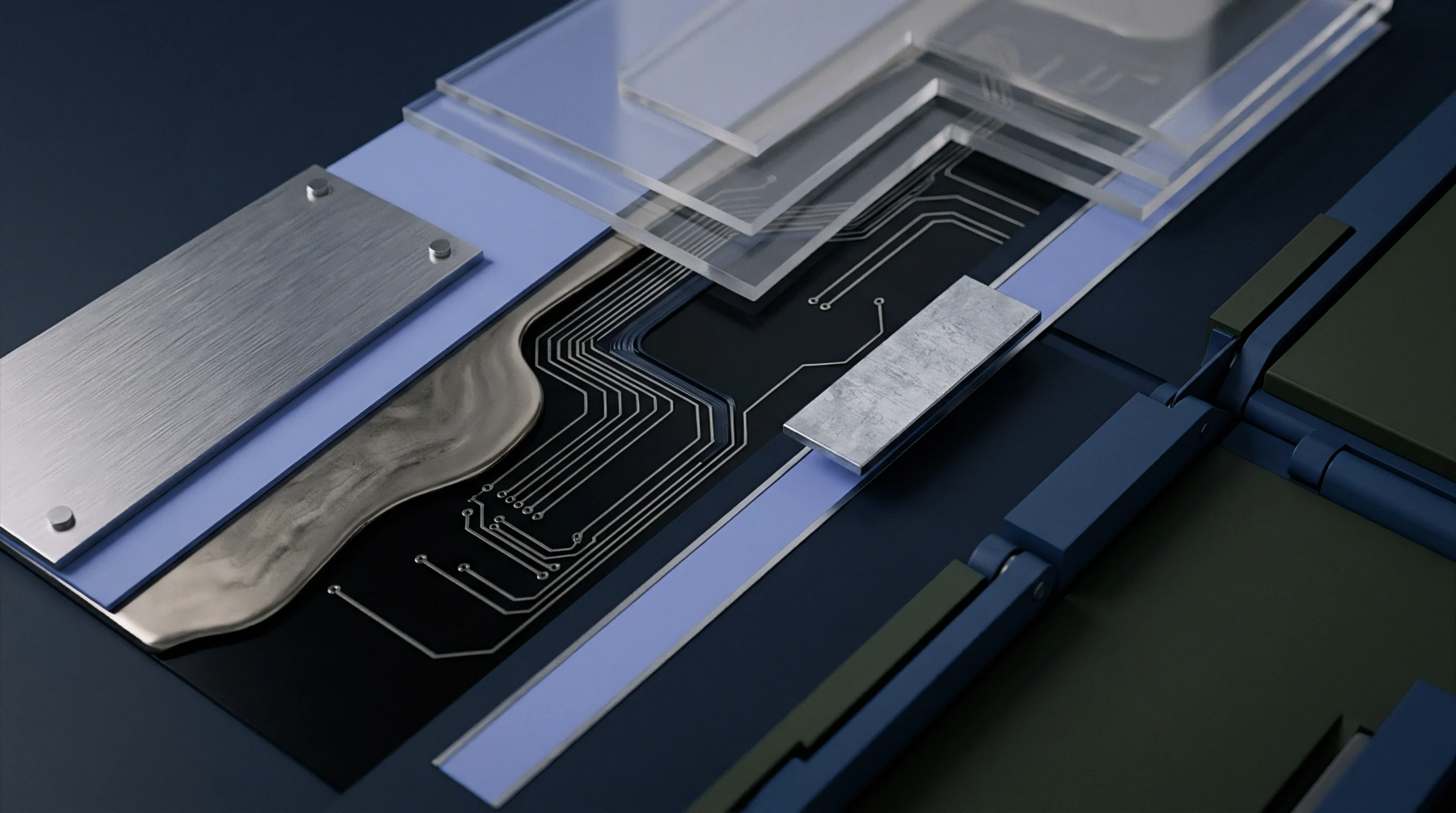
Copper dissolution into molten solder creates an underlying reaction zone where intermetallic compound growth forms discrete layers during surface mount reflow. Tin atoms migrate toward the base metal substrate while copper ions diffuse outward to establish a rigid crystalline boundary. Prolonged thermal exposure thickens this transition stratum until brittle phases compromise joint flexibility under mechanical shock.
Automated optical inspection cannot detect subsurface grain boundaries, so destructive cross sectioning remains necessary to measure boundary thickness on polished microsections.
Thermal Kinetics
Alloy constituents react faster when conveyor ovens maintain peak temperatures above two hundred and twenty degrees Celsius for extended durations. Activation energy dictates that atomic diffusion accelerates exponentially as preheat profiles linger near the liquidus point of the solder paste. Excessive dwell times expand the intermediate boundary beyond acceptable micron thresholds specified by quality standards for automotive electronics.
Component manufacturers recommend restricting total time above liquidus to ninety seconds in order to limit phase accumulation.
Mechanical Vulnerability
Brittle microstructures shatter easily when printed circuit boards experience vibrational stress or thermal cycling in service environments. Cracks propagate rapidly through thick crystalline layers rather than ductile solder fillets during drop impact testing. Shear strength degrades measurably once the boundary layer exceeds three microns in thickness.
Process engineers adjust conveyor speeds downward and nitrogen flow rates upward to suppress unwanted phase expansion before final solidification occurs.