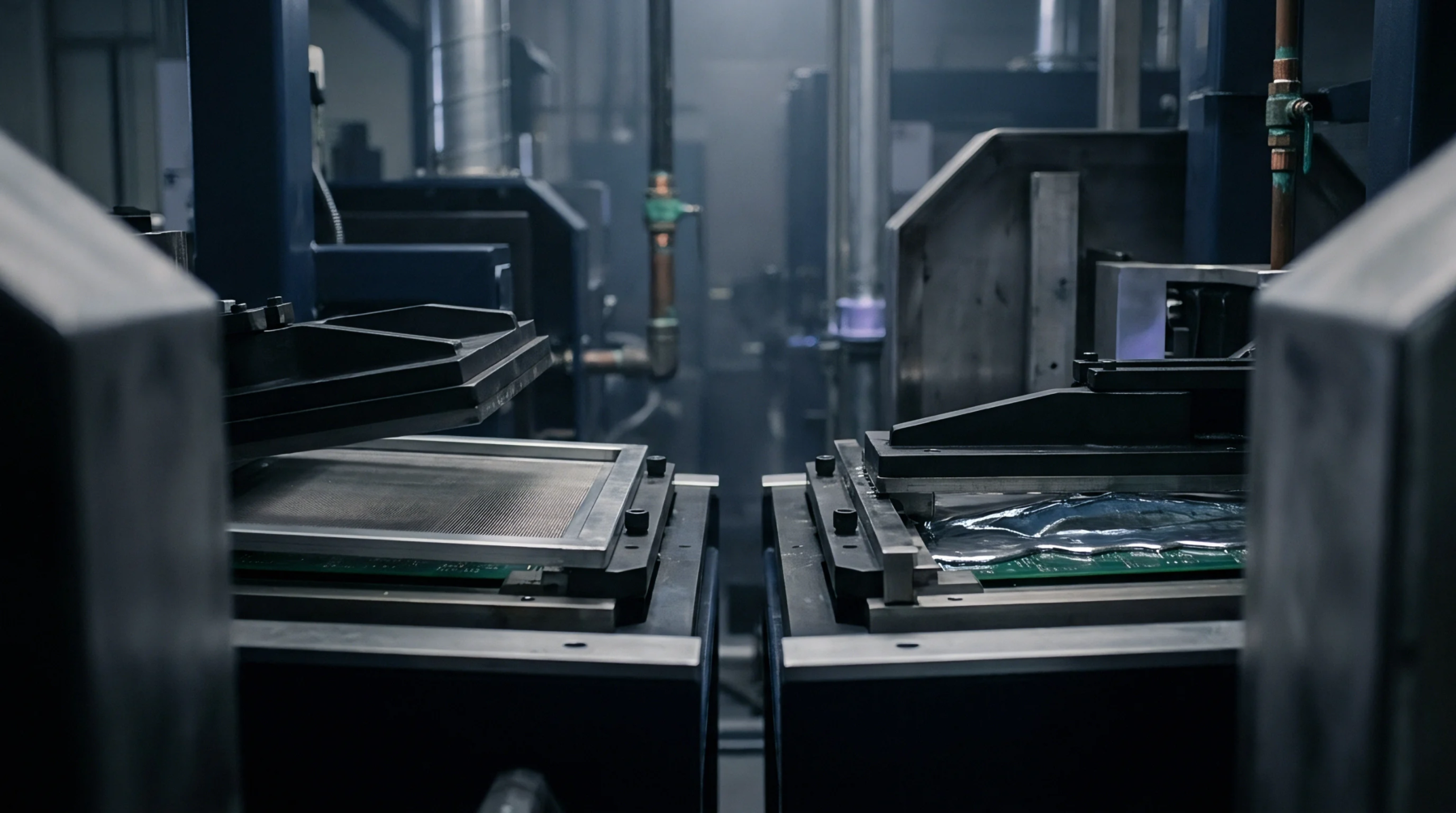
Inner Layer Thermal Stress Mechanics in Multilayer Circuit Boards
Z-axis thermal expansion drives inner layer post failure; specifying high-Tg low-CTE laminates and 1-ounce inner copper prevents reflow interconnect cracks.
Z-axis thermal expansion drives inner layer post failure; specifying high-Tg low-CTE laminates and 1-ounce inner copper prevents reflow interconnect cracks.

Correct coupon placement in panel margins guarantees accurate impedance testing and microsection validation while maximizing usable board yield.
IPC-6012 Class 3 procurement requires mandatory microsection verification per panel, enforcing 25 um average barrel copper and zero hole plating voids.
Standard IPC coupons placed along panel waste borders verify plating, registration, and impedance without consuming functional board surface area.
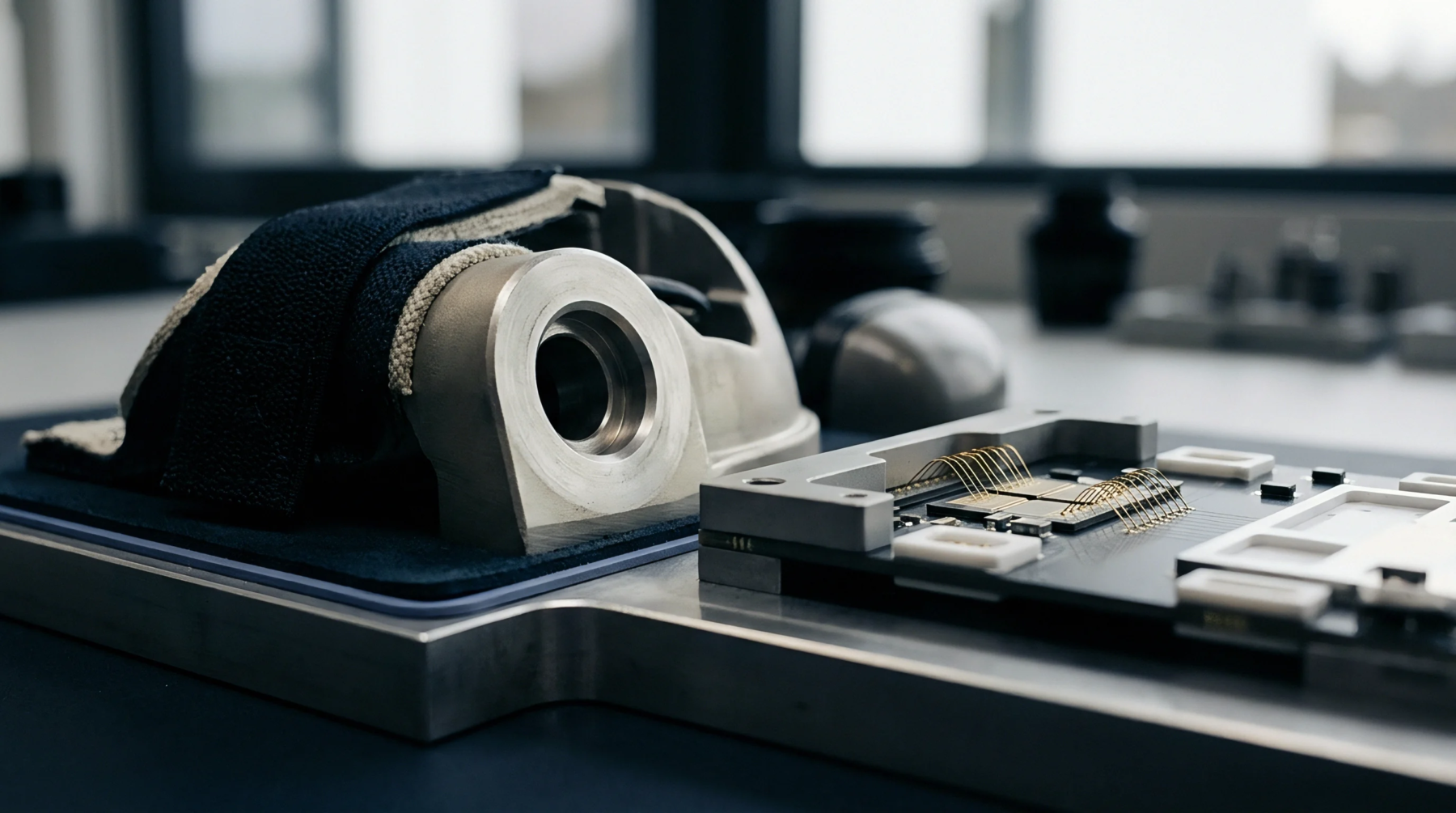
Microvia interface mechanics dictate that thermal cycling drives out-of-plane dielectric expansion, inducing shear failure at contaminated target pad boundaries.
Market surveillance sampling targets high-risk import batches; importers defend compliance through accredited test dossiers and formal uncertainty guard bands.
Correlating micro-ohmic resistance drift in thermal stress coupons with microsection defect rates isolates latent inner layer post separation before assembly.
Specifying staggered microvias and single-press HDI stackups preserves multi-vendor competition while cutting panel scrap costs.
Contractual first-article approval requires binding solder volume maps, 5-point profile logs, X-ray void limits, and clear downtime liability terms.
Expertise is a utility, not a secret. sentiention™ publishes its working knowledge as open reference: intelligence layer covering the materials it sources, the markets it enters, and the reference that serves both.