Heterogeneous Substrate Interface Compression Dynamics under High Vacuum Hydraulic Pressing
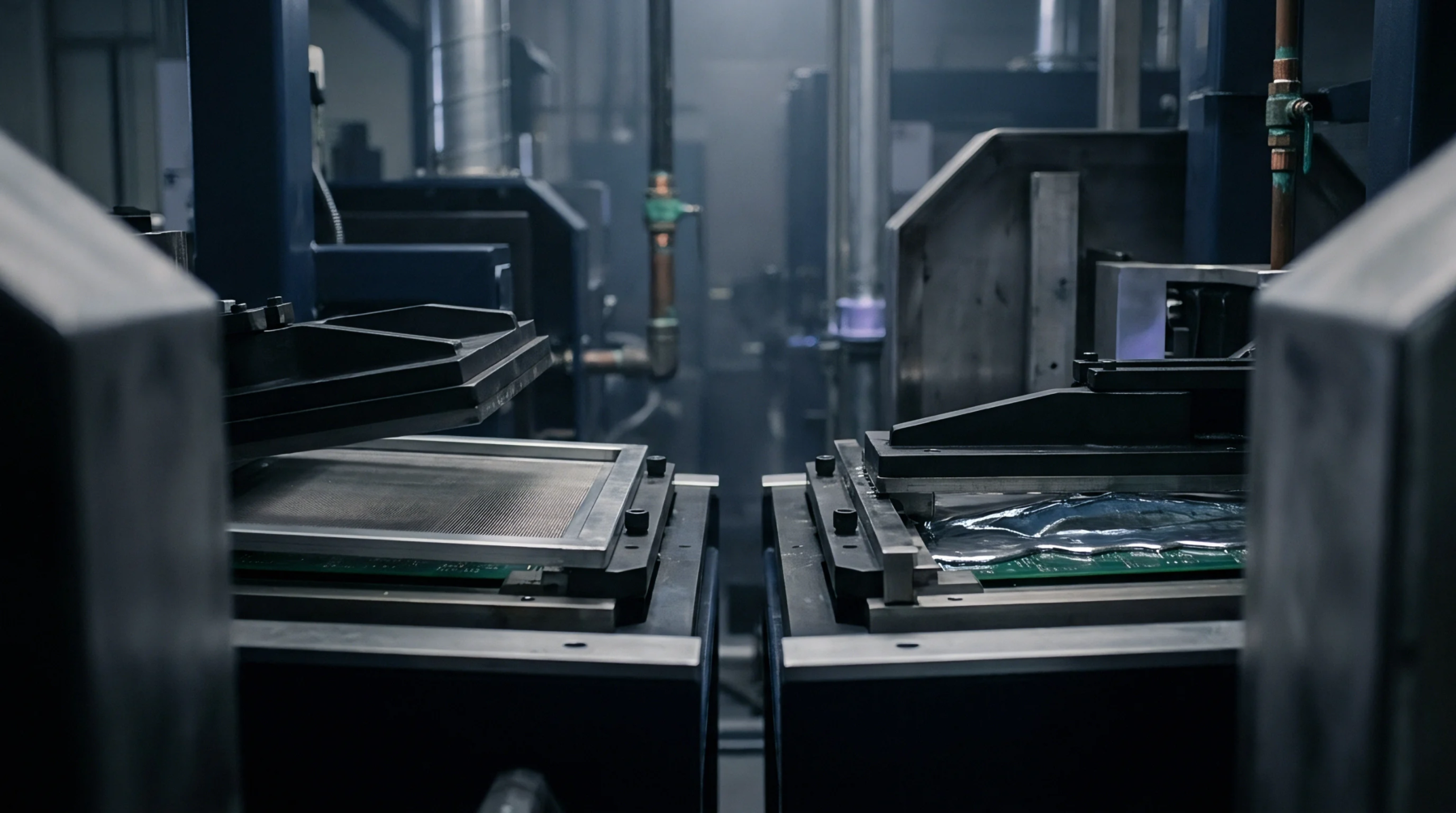
High vacuum hydraulic pressing balances resin squeeze and platen pressure profiles to prevent voids and registration shift across dissimilar laminates.
High vacuum hydraulic pressing balances resin squeeze and platen pressure profiles to prevent voids and registration shift across dissimilar laminates.
Anisotropic resistance tensors accurately model high frequency microvia loss by capturing directional grain scattering and thermal strain ignored by scalar checks.
Weibull parameters fitted to chamber failure data map thermal fatigue kinetics to field reliability, setting empirical bounds for batch warranty reserve.
Predictive non-linear spatial vector modeling eliminates microvia breakout in any-layer sequential substrates by dynamically compensating for thermal core deformation.
Mitigate thin substrate core squeeze out using multi-stage vacuum press profiles with low kiss pressure during resin melt, ramping smoothly to full consolidation only at gelation onset.
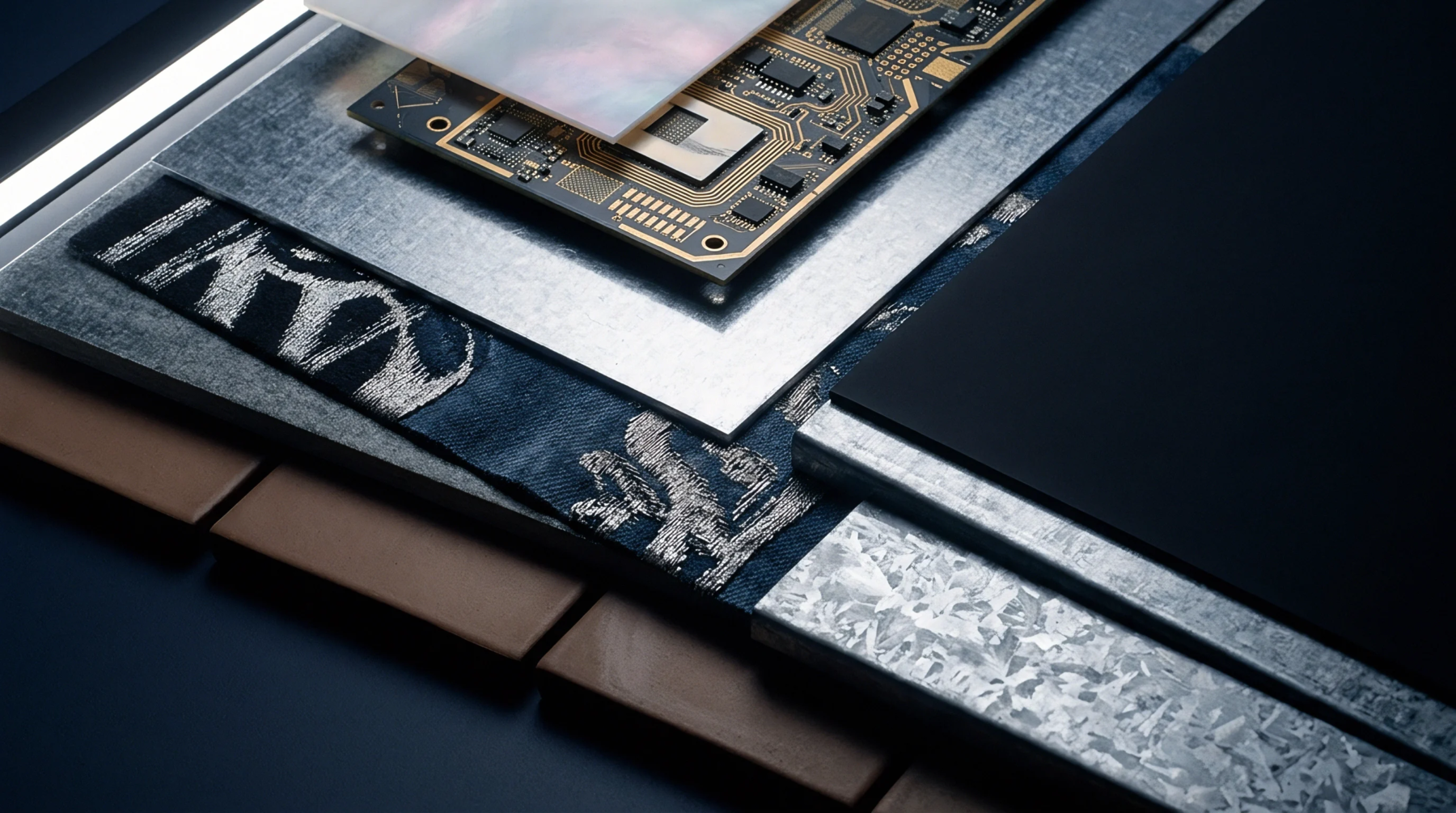
Dynamic scaling coefficients for hybrid PTFE and high-Tg FR4 assemblies calculate differential layer movement using post-etch strain data and press parameters.
Copper pattern density variations induce localized hydrostatic pressure gradients during lamination, driving resin starvation, weave distortion, and impedance drift.
Sub-millimeter strain gradients beneath ultra-thin dielectrics require optical or diffraction metrology to prevent latent pad cratering and field failures.

Rate-dependent strain tensor extraction requires fine-scale DIC or submodeling to resolve local inelastic strain gradients that dictate solder fatigue life.
Continuous bias humidity screening exposes subsurface copper ion transport by measuring insulation resistance drops along degraded glass-resin interfaces.
Thermal cycling drives anisotropic permittivity drift in sputtered fluorinated polyimide multilayers through z-axis expansion and interfacial micro-cavity formation.
Dynamic stress screening combined with IEEE 1838 test access isolates intermittent microbump defects and bounds escape risks in multi-die packages.
Calibrating thermal ramp rates to package-specific mass limits prevents artificial microbump plastic shear while isolating true manufacturing defects.
Dynamic thermal transient Kelvin screening detects latent stacked microvia target pad separations by measuring instantaneous sub-milliohm resistance shifts under high-current pulsed excitation.
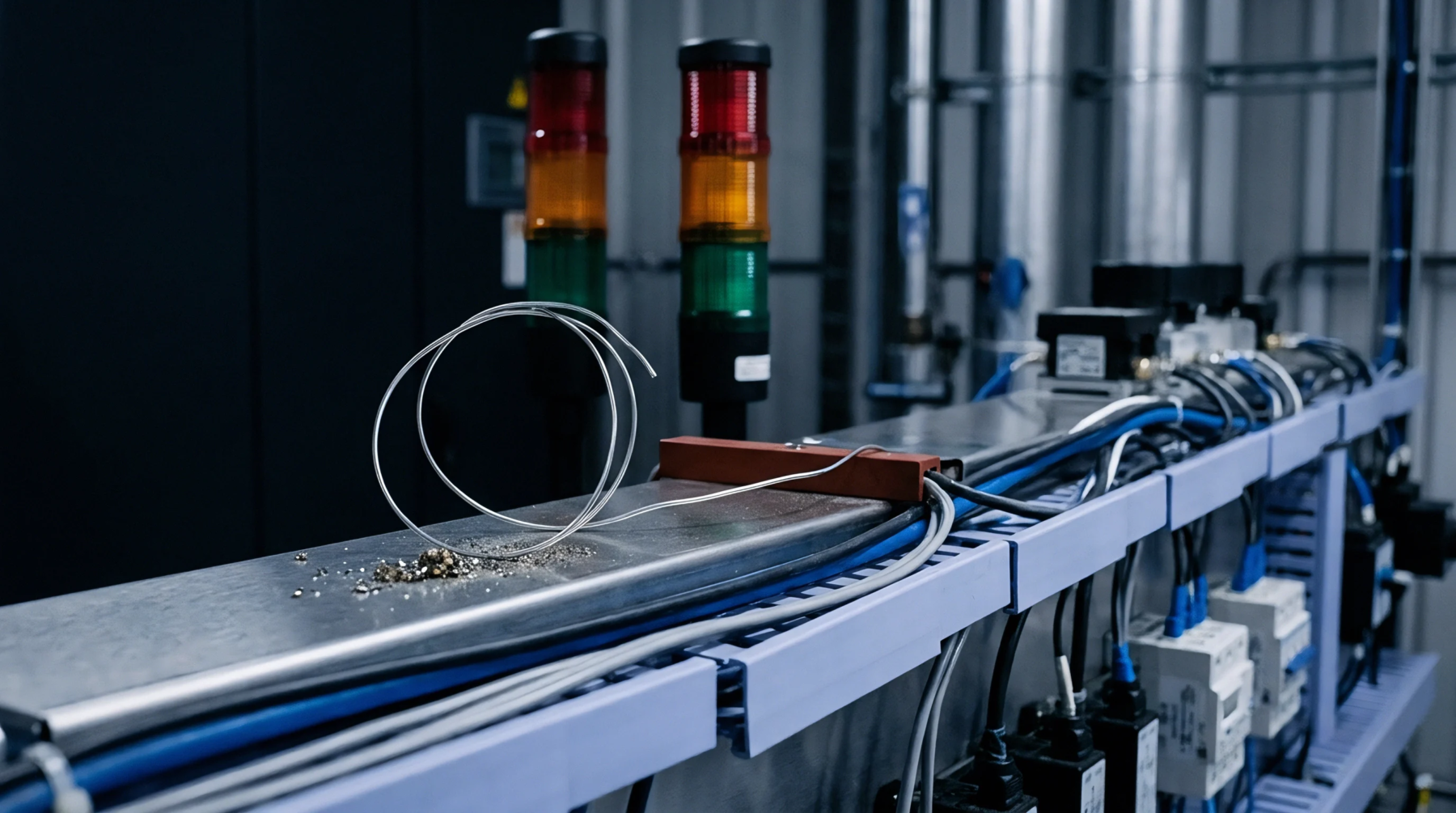
Strict convective ramp limits below 2.0C/s combined with flexible polymer terminations eliminate MLCC microcracking during surface mount reflow assembly.

Sub-terahertz packaging stackups demand 3D anisotropic permittivity tensor extraction to eliminate phase velocity errors, differential skew, and panel yield loss.
Coupled multiphysics cohesive zone modeling predicts RF interconnect fatigue by linking electrothermal skin-effect heating to interfacial fracture mechanics.
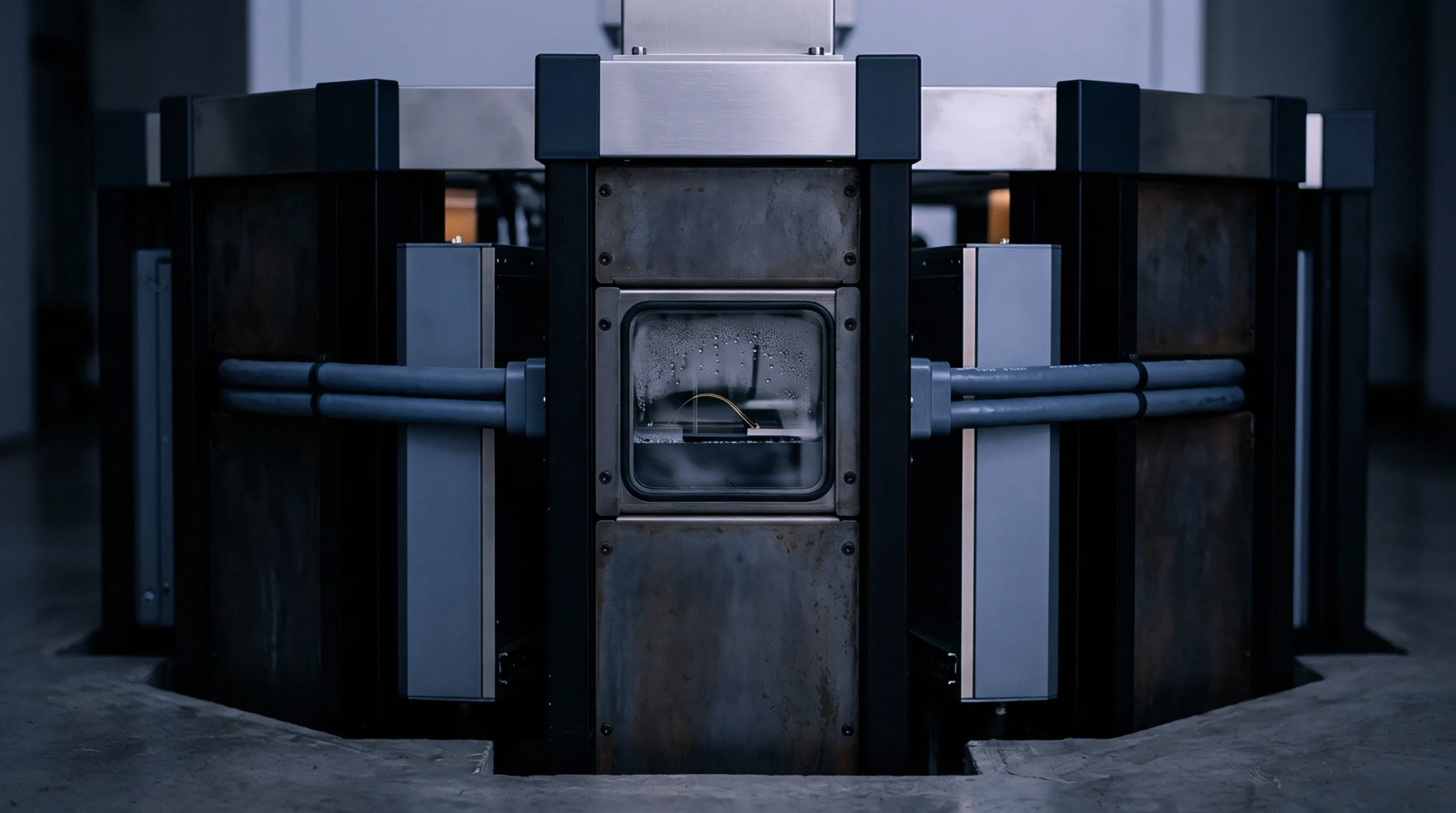
Grain boundary relaxation converts elastic thermal mismatch stresses into permanent sliding and interfacial cavitation, dictating interconnect life limits.
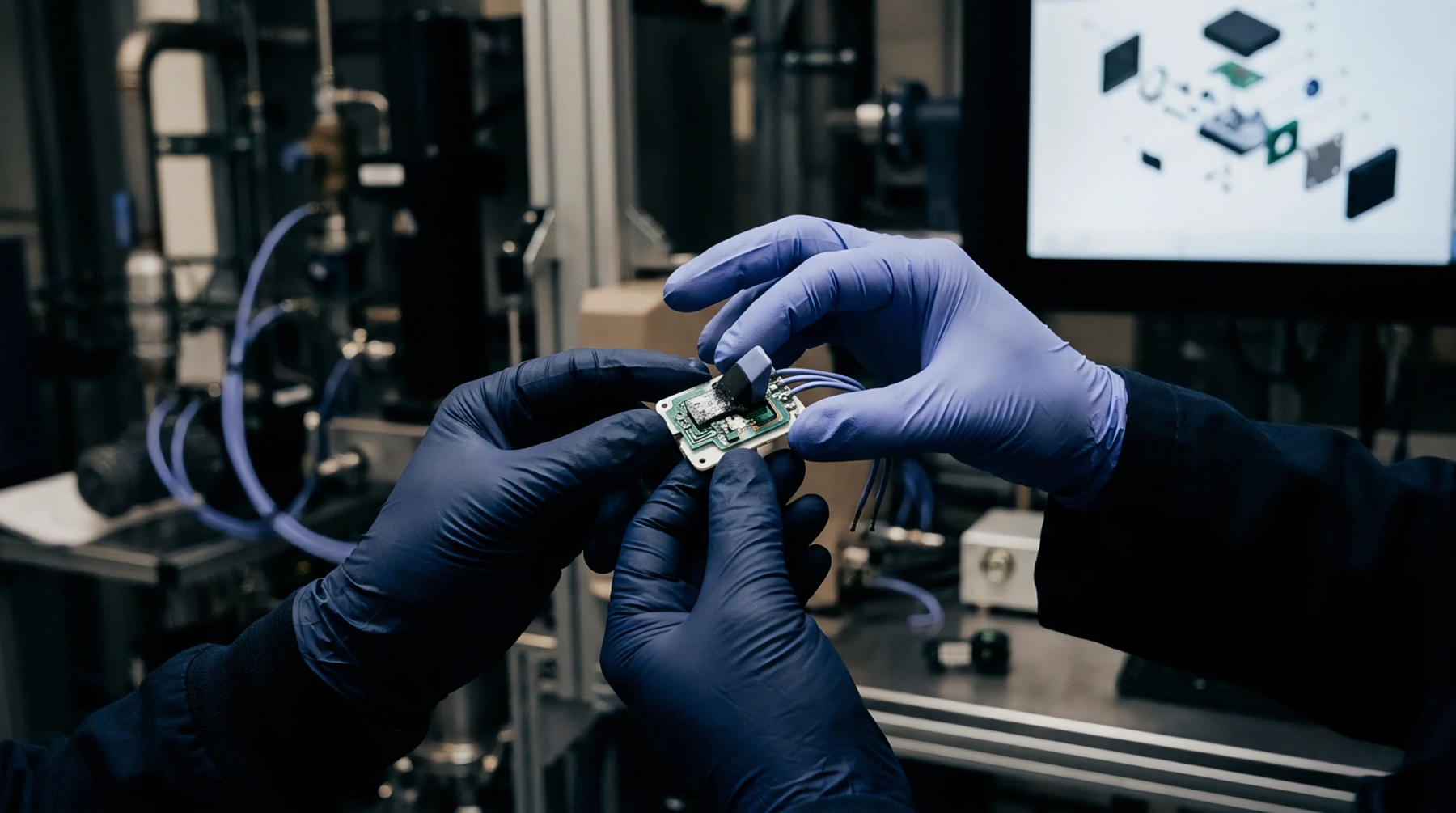
Localized core distortion limits sub-77 GHz microvia alignment unless dynamic local grid scaling compensates for asymmetric resin shear.

Non-linear viscoelastic modeling predicts multi-pass lamination strain to prevent microvia misregistration and structural delamination in HDI panels.
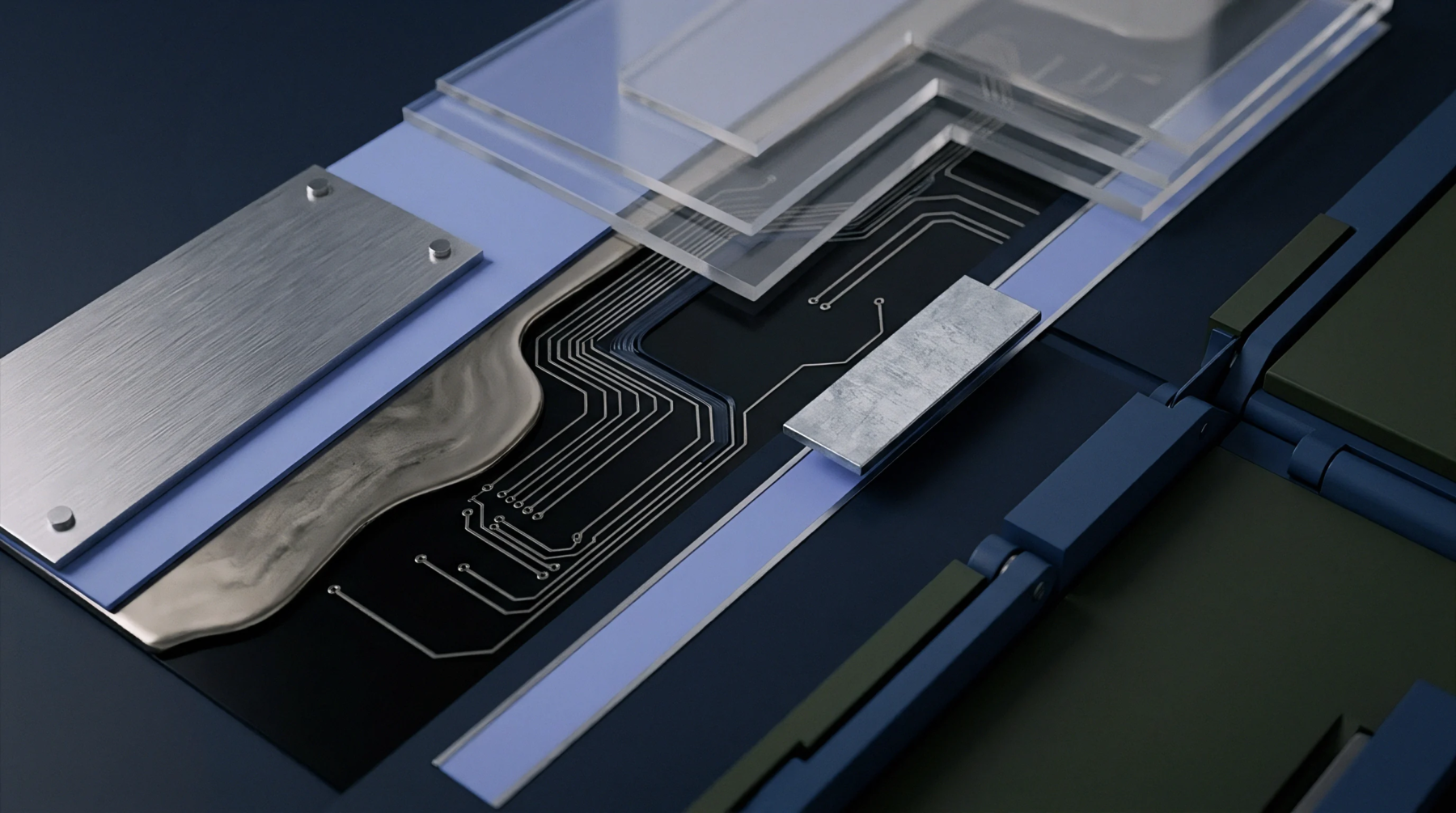
Modeling latent solder defect escapes under partial ICT access requires combining nodal coverage data with physical mechanical compression failure modes.
Managing thermal expansion mismatch in multi-press rigid-flex builds requires matching dielectric CTEs, compensating artwork scaling, and controlling copper plating ductility.
Matching glass style symmetry and thermal expansion coefficients across dielectric plies eliminates panel warp and prevents plated hole barrel fatigue under thermal cycle.
Heavy copper with low-profile foil concentrates severe Mode II shear strain during thermal reflow, requiring high-resin prepregs and qualified press dwell cycles.
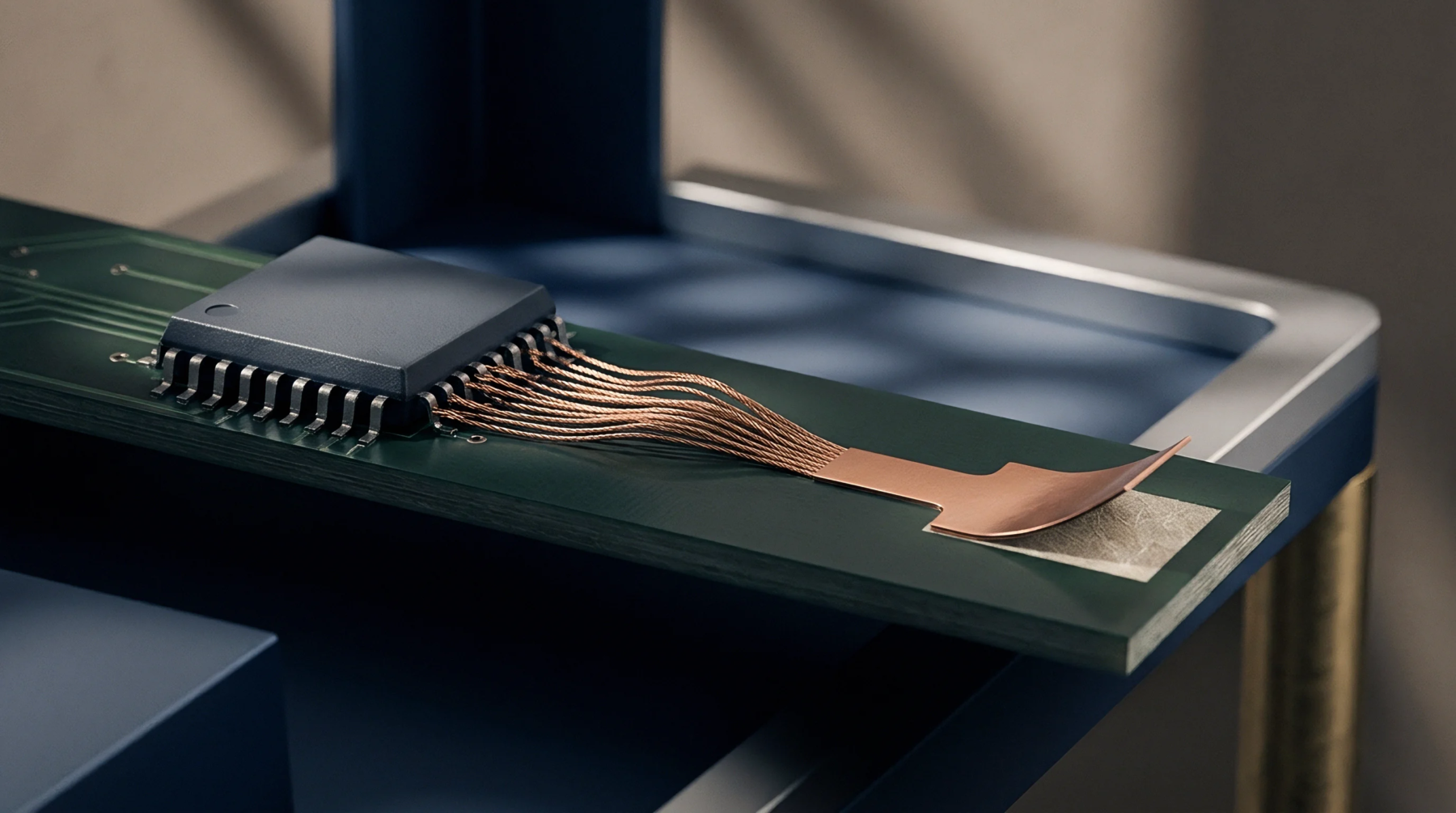
Extended selective soldering dwell drives polycarboxylic acid hydrolysis of silane bonds, accelerating interfacial crack growth along glass fiber bundles.
Expertise is a utility, not a secret. sentiention™ publishes its working knowledge as open reference: intelligence layer covering the materials it sources, the markets it enters, and the reference that serves both.