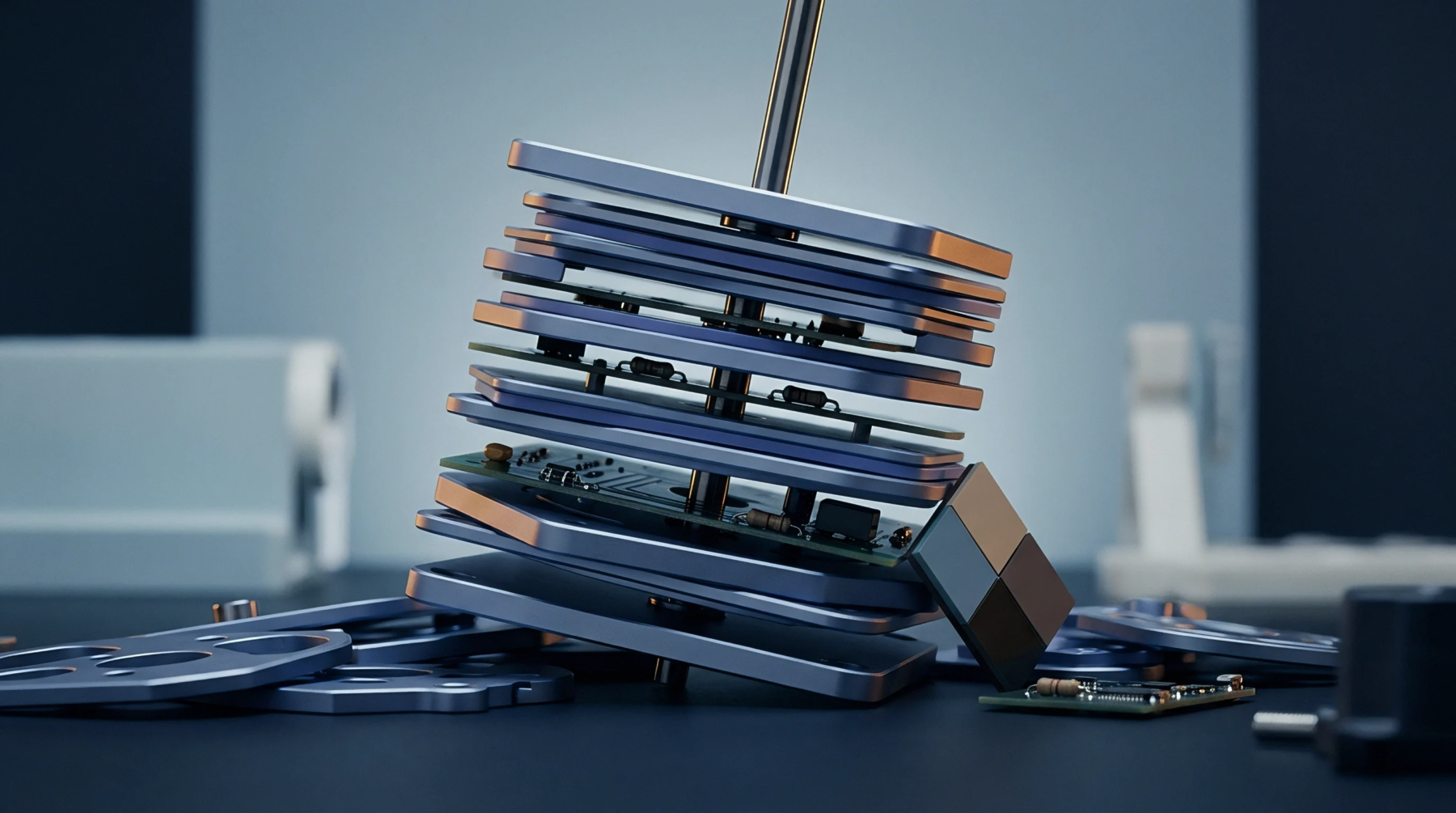
Time-Dependent Behavior
The reduction of internal stress in a polymer material while it is held at a constant strain describes the transition from an elastic to a viscous state over time. In the context of printed circuit boards, viscoelastic relaxation occurs when the epoxy or polyimide resin reorganizes its molecular chains to accommodate the forces generated during manufacturing. This process is highly sensitive to temperature and becomes much faster as the material approaches its glass transition point.
Residual Forces
Residual forces that develop during the cooling phase of lamination or reflow do not remain constant but slowly dissipate as the board sits at room temperature or undergoes further heating. This relaxation can lead to changes in the shape of the board long after it has been manufactured, potentially affecting the alignment of components or the integrity of solder joints. Understanding the rate of this stress decay is essential for predicting the long-term dimensional stability of the assembly.
Dynamic Analysis
Dynamic mechanical analysis measures the ability of the resin to store and dissipate energy, providing the data needed to model the relaxation behavior. The storage modulus represents the elastic part of the response, while the loss modulus represents the viscous part. By characterizing these properties, engineers can design boards that maintain their flatness and structural integrity throughout their operational life in challenging thermal environments, ensuring that the critical clearances and electrical connections are preserved even as the materials age and the internal stresses reorganize.
This focus on material science is the foundation of high-reliability electronic design.