
Test Point Access Argued before the Layout Is Released
Resolving test point access before layout release prevents costly PCB re-spins, ensures high fault coverage, and protects assembly yield.
Resolving test point access before layout release prevents costly PCB re-spins, ensures high fault coverage, and protects assembly yield.

Standard electrical tests verify bare substrate isolation, component pin continuity, thermal stress survival, and electromagnetic conformity before batch signoff.

Multilayer power distribution field escape risk requires bench near-field scanning and transfer impedance limits to prevent far-field compliance chamber failures.

Boundary scan isolates structural opens and shorts on compliant nets, requiring hybrid physical probe testing to catch unmapped passives and dynamic failures.

Flying probe testing saves tooling costs on runs under 11,000 units, while bed of nails fixtures deliver superior cycle speeds and lower per-unit cost at scale.

Boundary scan coverage limits depend on physical net topology, requiring strict fault universe definitions to prevent un-tested node escapes in populated assemblies.

Electrical test coverage metrics require mapping physical nodal access and test regimes against a complete structural fault universe to limit field escapes.
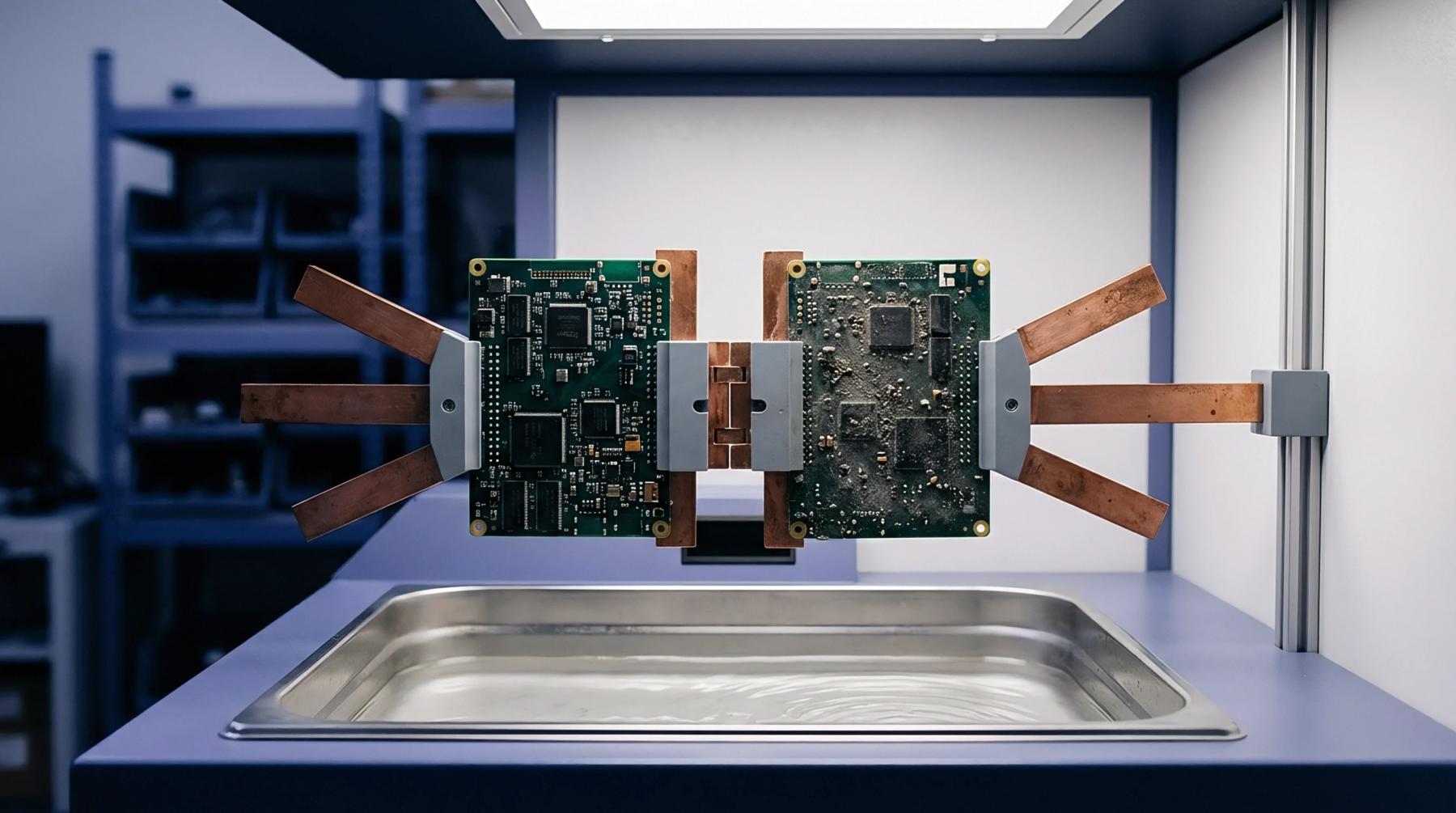
Boundary scan interconnect testing turns silicon multiplexers into virtual probes to verify fine-pitch BGA solder joints without physical test pads.

Boundary scan netlist coverage is bounded by physical TAP access, requiring explicit fault universe math to quantify unverified structural escape risks.

Integrating hybrid boundary scan and flying probe regimes eliminates unreached structural defects by establishing 99 percent nodal fault coverage.

First pass yield gaps in high-density assemblies stem from optical test blind spots, microvia structural fatigue, and restricted physical probe access.

Hybrid execution matrices combine physical probe mechanics with boundary scan cell vectors to maximize structural fault coverage on partially accessible ASIC clusters.
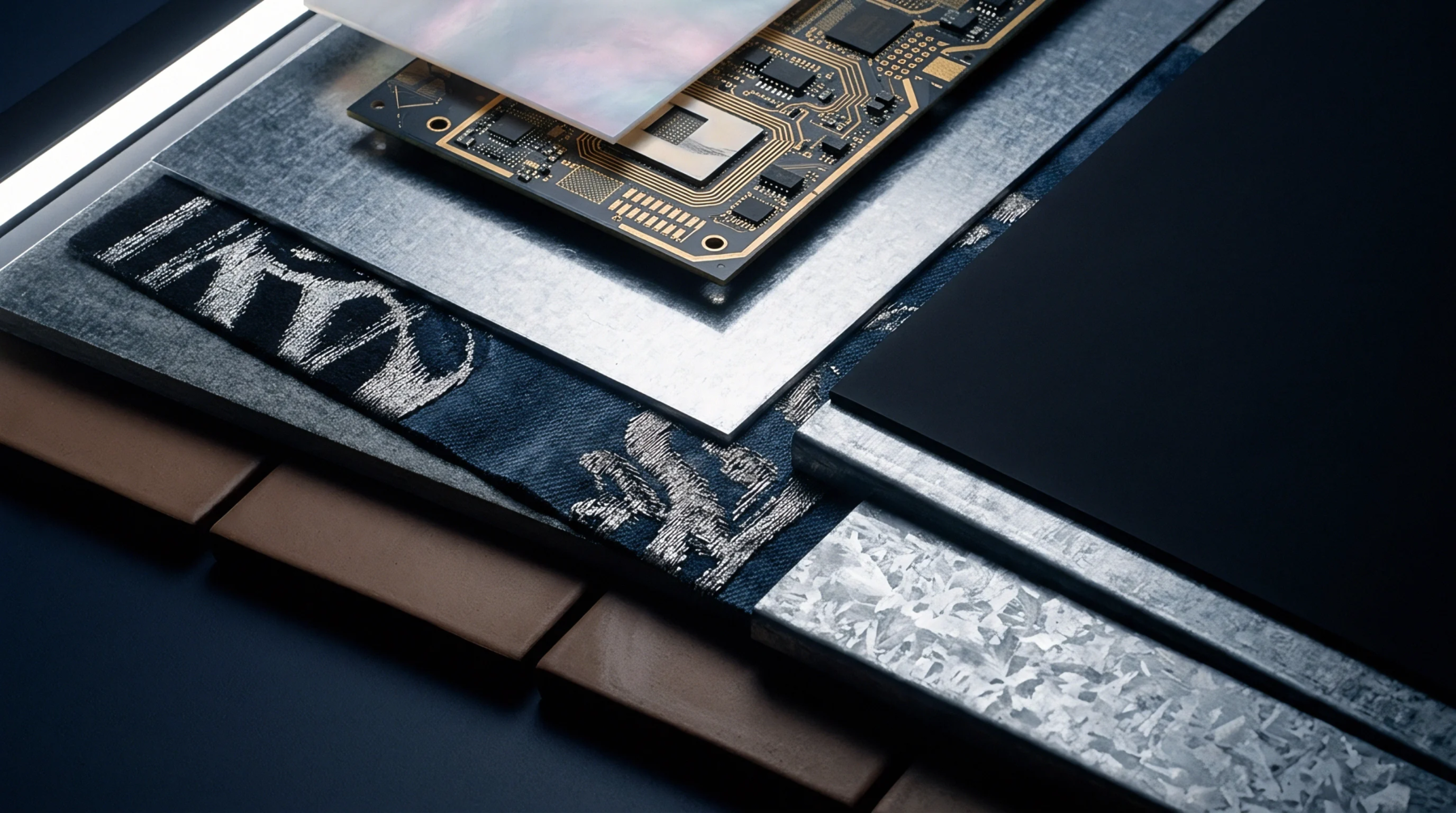
Modeling probe parasitics and edge skew on boundary scan nets prevents false test failures and maintains scan chain timing margins under fixture actuation.

Combining flying probe vectors with boundary scan coverage maximizes test fault detection while protecting micro-land integrity on dense interposers.

Test point geometry and access density directly dictate structural fault coverage, fixture expense, signal integrity, and field escape liabilities across production batches.

Boundary scan access limits require balancing physical probe suppression against quantitative fault escape risks in high-density logic clusters.
Combining boundary scan and in-circuit testing metrics requires mapping per-pin PCOLA-SOPS access, deduplicating overlapping faults, and logging verified nets for batch release.

Boundary scan test coverage calculations require explicit PCOLA-SOAMI net weighting to yield verifiable structural fault isolation in HDI board assemblies.

Asset recovery requires extracting uncompiled CAD netlists, verifying ICT fault coverage parity, and auditing firmware signing keys before final settlement.

Deriving boundary scan coverage for high-density ASIC arrays requires precise accounting of scannable versus un-scannable nets to prevent costly field escapes.

Boundary scan TAP probe evaluation demands dynamic contact resistance monitoring under 20mV dry-circuit limits to prevent false structural defect calls.

Integrating IEEE 1149.1 boundary scan with flying probe target vectors maximizes fault coverage on high-density PCBs while slashing test times and fixture costs.
Dynamic vector synthesis and IJTAG internal monitoring resolve mixed-signal diagnostic ambiguity in access-constrained clusters, cutting escape rates below 20 PPM.
IEEE 1149 boundary scan delivers direct structural fault coverage on dense BGAs without physical probes by shifting test vectors through standardized internal chip logic.

Resolving boundary scan escape rates requires weighting fault coverage by defect universe and enforcing active guarding on unprobed parallel nets.

Quantifying component change masking in multi-tier assemblies requires sensitivity matrix formulation, thermal transient screening, and interface nodal access audits.

Unprobed high-speed nets demand combined boundary scan and thermal screening to bound latent defect escape liabilities before batch signoff.
Resolving intermittent high speed signal integrity escapes requires pairing static boundary scan with embedded IJTAG at speed stress testing to catch dynamic physical layer failures.

Active silicon substitutions alter transient edge rates, parasitic resonances, and material composition, legally invalidating technical construction files.

Ensuring complete bottom-side nodal access with standard pad pitch and strain-mitigated fixturing locks in fault coverage and prevents field defect escapes.
Expertise is a utility, not a secret. sentiention™ publishes its working knowledge as open reference: intelligence layer covering the materials it sources, the markets it enters, and the reference that serves both.