
In-Circuit Test Fixture Strain Rate Transformation and Boundary Qualification
Dynamic strain rate transformation during fixture actuation verifies mechanical compliance against IPC-9704 limits before structural testing begins.
Dynamic strain rate transformation during fixture actuation verifies mechanical compliance against IPC-9704 limits before structural testing begins.

Quantifying microcrack defect escape rates requires coupling dynamic in situ event detection with accelerated thermal screening to intercept latent joint opens.
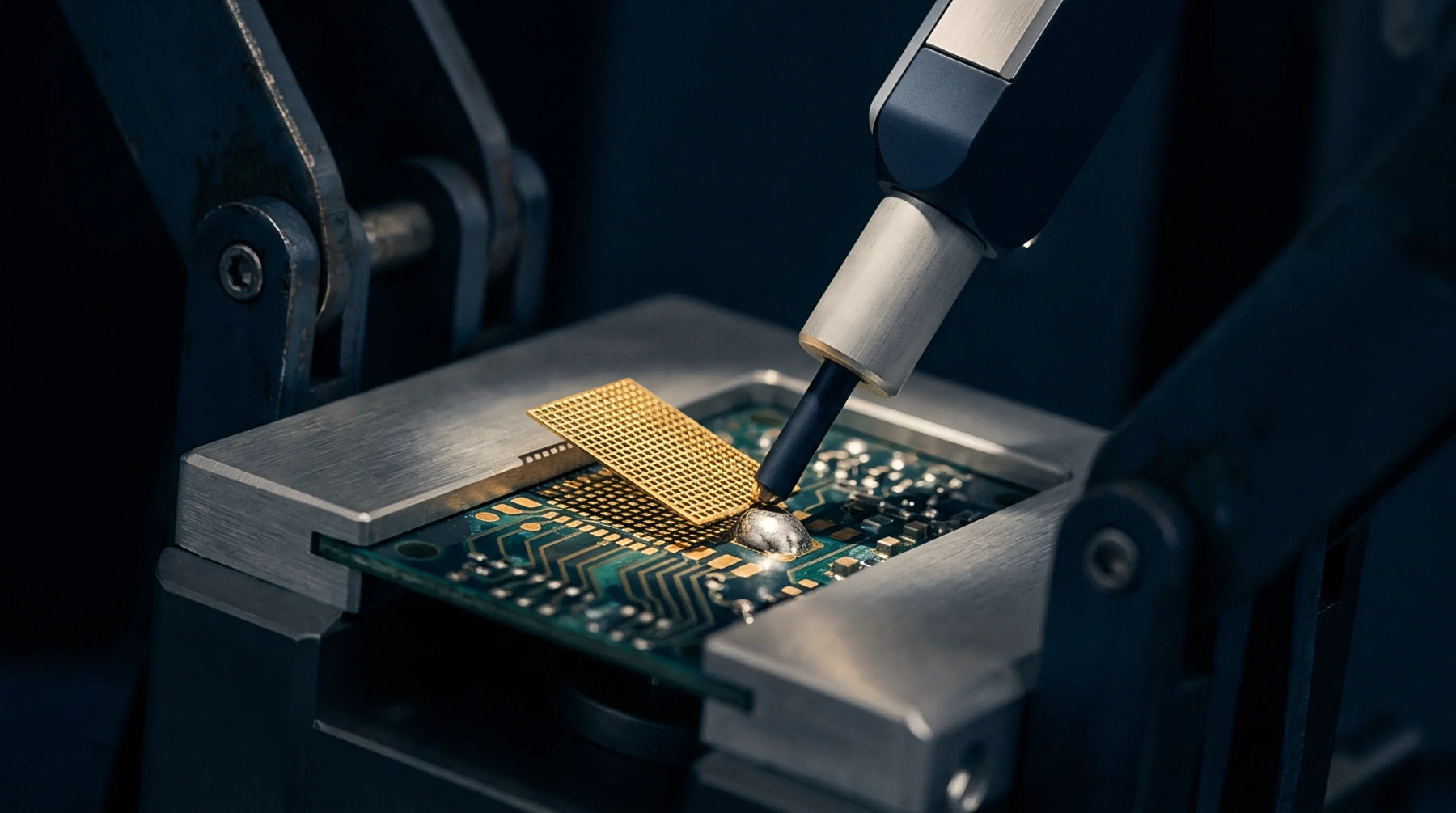
Partitioning boundary scan registers into parallel sub-chains cuts test vector execution time while maintaining high fault coverage on dense boards.

Integrating boundary scan vectors into bed of nails fixtures closes non-access coverage gaps while reducing physical probe strain and assembly rework costs.

Managing parasitic phase jitter in boundary scan fixtures requires interleaved ground probes, damped trace terminations, and controlled clock edge rates.

Physical test probe access drops on high-density microvia boards, demanding solder beads or boundary scan to maintain coverage without damaging copper caps.

Test point designs require 0.80 mm targets on 1.27 mm pitch with bottom-side placement to maximize fixture alignment and maintain strain under 500 microstrain.

Combining IEEE 1149.6 boundary scan vectors with deflection-assisted flying Kelvin probes isolates unmasked BGA head-in-pillow defects down to 4.5 micro-ohms.

Boundary scan integration replaces physical test points with silicon registers, securing structural fault coverage on high density circuit assemblies.

Quantifying boundary scan interconnect fault coverage pairs extracted netlist node universes with modified counting sequence vector execution logs.

Selecting boundary cells matching pin drive requirements enables full interconnect fault coverage and prevents system logic corruption during shift sequences.
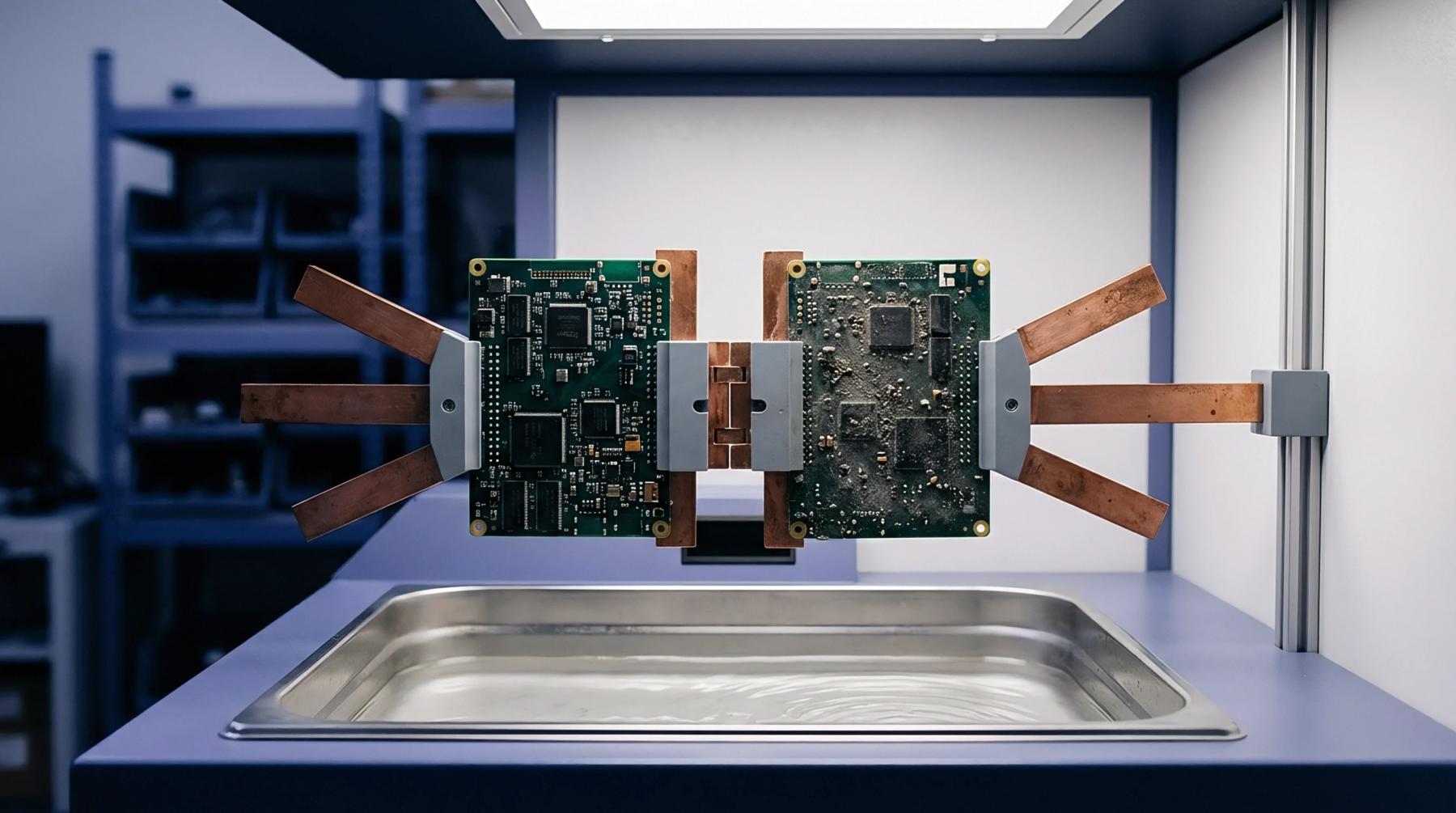
Unprobed netlists drop structural fault coverage, requiring integrated boundary scan vectors and adjusted warranty reserves to cover escape risks.

Attributing intermittent BGA escapes requires pairing boundary scan fault coverage metrics with calibrated nanosecond discontinuity logging during line audits.
Expertise is a utility, not a secret. sentiention™ publishes its working knowledge as open reference: intelligence layer covering the materials it sources, the markets it enters, and the reference that serves both.