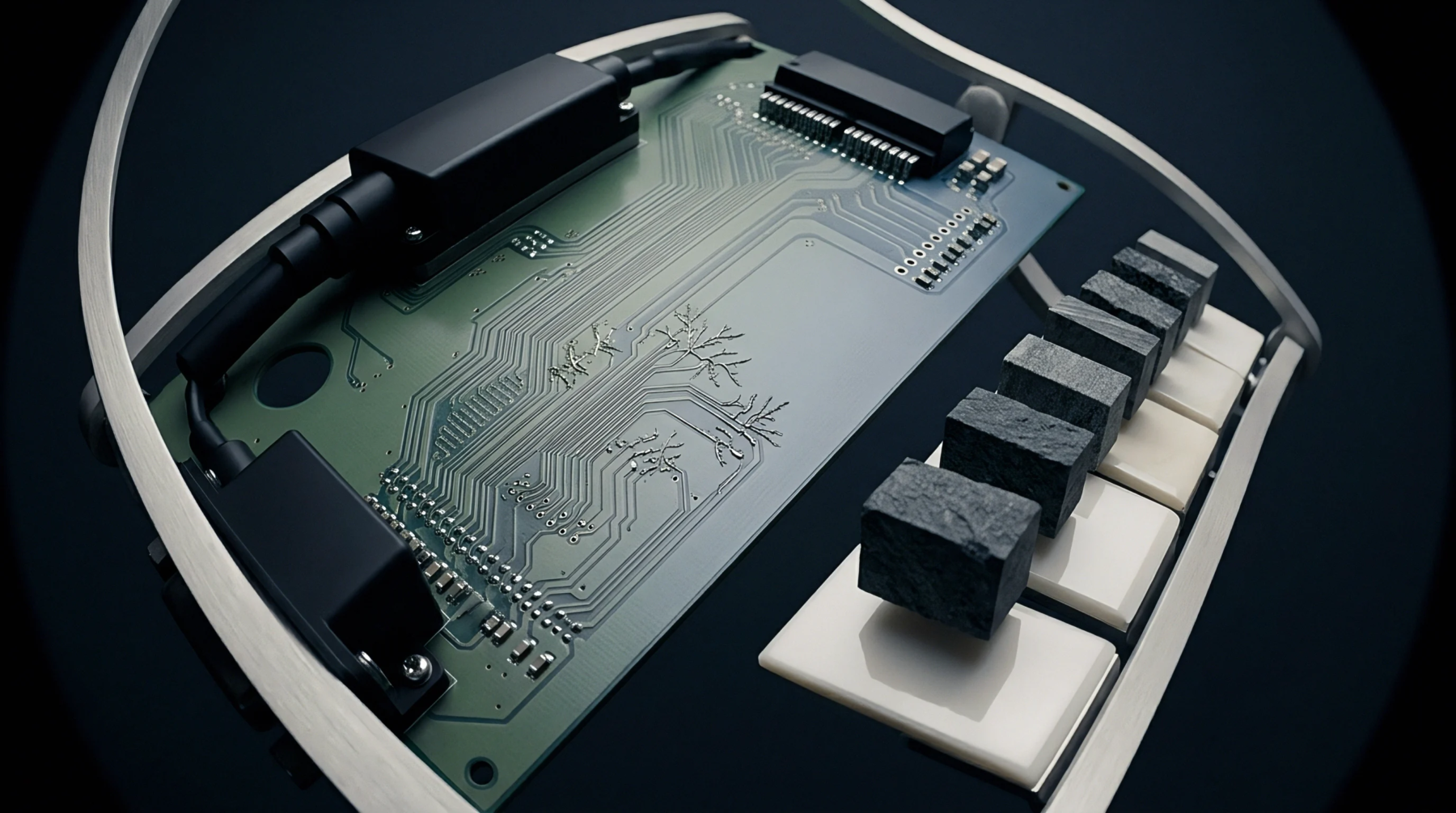
Managing Inner Layer Dimensional Movement in Multilayer Circuit Boards
Managing inner layer dimensional movement relies on compensating for anisotropic glass weave shrinkage, copper pattern stress relief, and lamination thermal expansion.
Managing inner layer dimensional movement relies on compensating for anisotropic glass weave shrinkage, copper pattern stress relief, and lamination thermal expansion.
Clamped stripline resonators extract out-of-plane permittivity and loss tangent up to 10 GHz by measuring resonant modes of unclad dielectric sheets under pressure.
Optimizing inner layer copper thickness and prepreg fill demands matching matrix resin volume to clearance void area while controlling pressed dielectric height.
Boundary slip velocity models replace empirical roughness factors with electron specularity parameters, predicting insertion loss and phase delay up to 110 GHz.
Dynamic thermal gradients alter substrate permittivity, causing severe phase delay skew and PAM4 eye closure unless mitigated by ultra-flat glass and low-drift resins.
Hydraulic press pressure ripples and thermal gradients induce resin thickness shifts that directly alter dielectric constant uniformity and line impedance.
Prepreg viscosity profiles under precise heating rates dictate resin fill, dielectric spacing, and internal layer registration in high frequency stackups.
Routing traces at ten degrees off-axis eliminates fiber weave differential skew without paying panel artwork rotation penalties.
Sequential lamination densifies HDI glass fabric, increasing out-of-plane dielectric constant and driving trace impedance below calculated line targets.
Spread glass prepregs eliminate dielectric permittivity gaps across differential traces, suppressing signal skew below 1 ps/inch in 112G PAM4 stackups.
Calculate usable circuits per master production panel and subtract outer border clearances before negotiating bare board unit prices with fabricators.
Aligning glass yarn warp directions parallel across every stackup layer prevents asymmetric dimensional shrinkage and eliminates structural panel twist during lamination.

Silica-filled resin viscosity minimization requires synchronizing heating ramps with press pressure timing to ensure complete void encapsulation without core shift.
Quantifying phase velocity shift in glass weave substrates requires mapping fiber pitch against trace angle to control differential skew.
Stackup thickness control requires calculating pressed prepreg heights over local copper patterns to hold impedance and microvia drilling tolerances.
Anisotropic permittivity variations in glass filament bundles under thermal cycling and moisture exposure are driven by silane interphase degradation, requiring spread-glass weaves and dynamic tensor modeling to prevent high-speed differential skew.
Multilayer directional permittivity variance causes stripline capacitance shifts that must be corrected by modeling in-plane and out-of-plane dielectric constants separately.
Directional dielectric permittivity variance in multilayer laminates requires evaluating in-plane and out-of-plane Dk tensors to prevent impedance errors.
Sequential lamination registration budgets require root-sum-square alignment modeling of sub-core thermal shrinkage and drill offsets to size microvia lands.
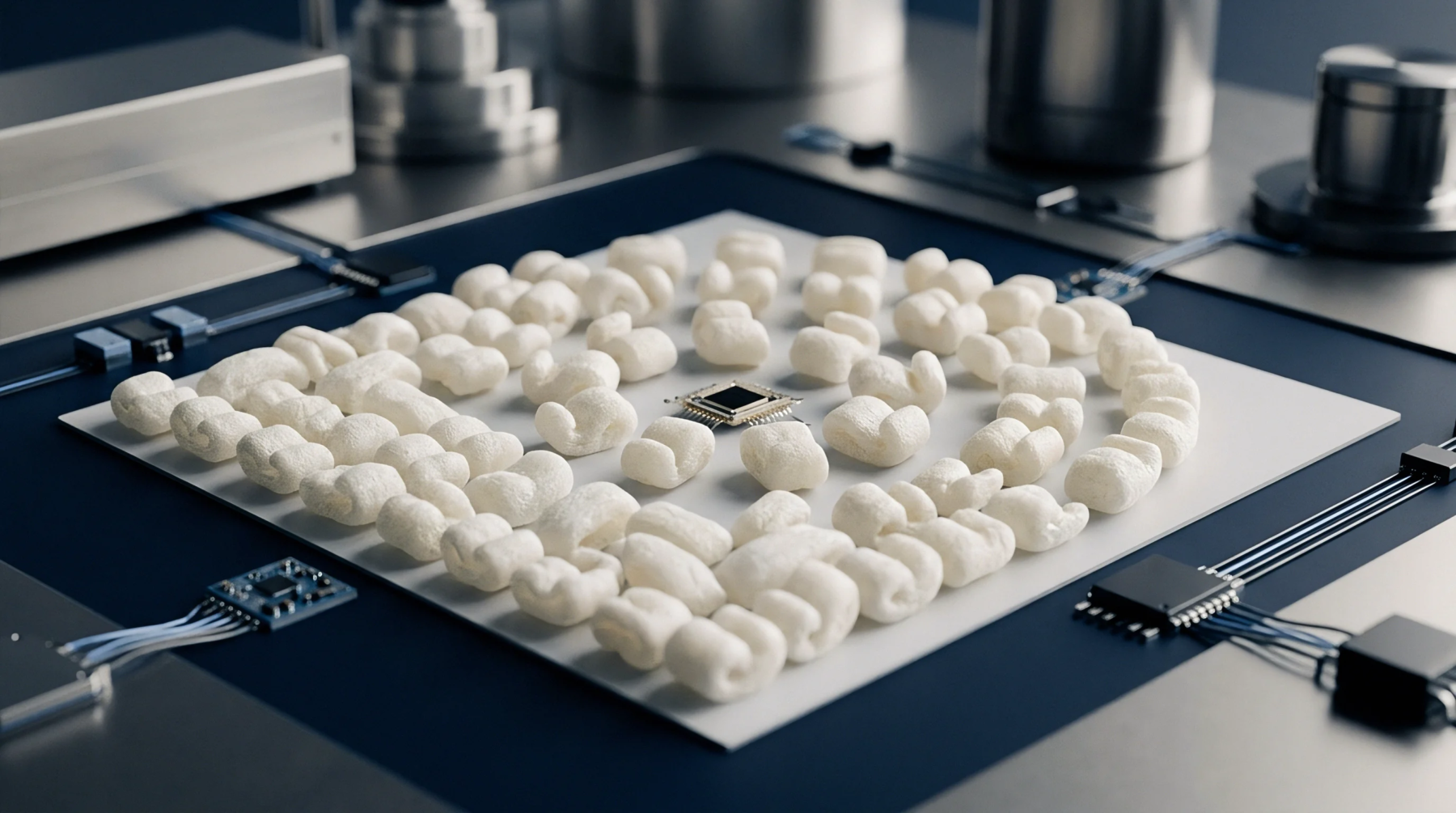
Quantifying stacked microvia thermal fatigue requires matching resin z-axis CTE limits to electrodeposited copper ductility under continuous resistance monitoring.
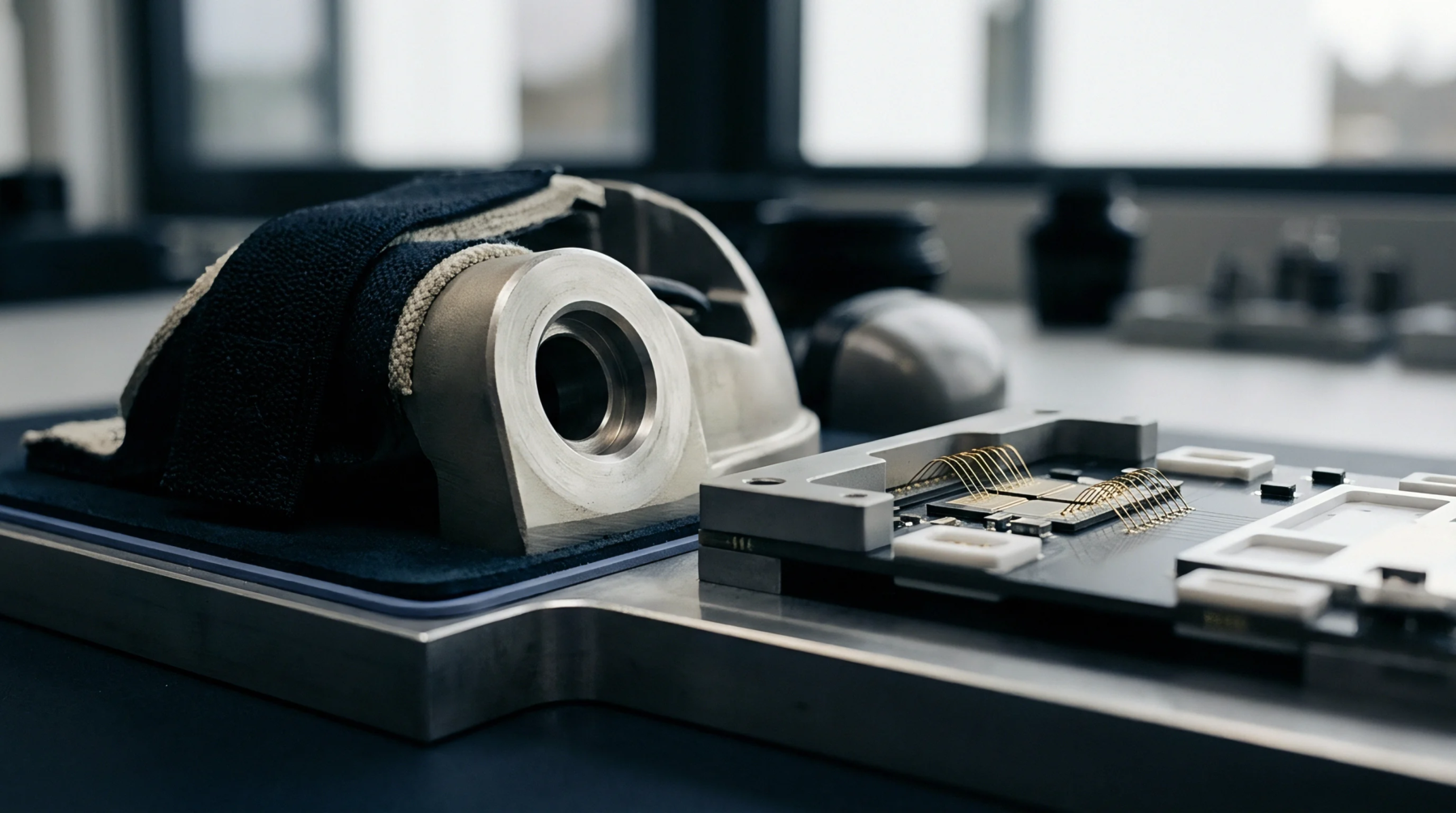
Moving from four to six layers adds 30 to 55 percent to bare board cost through double core usage, lamination press overhead, and tighter registration yields.
Expertise is a utility, not a secret. sentiention™ publishes its working knowledge as open reference: intelligence layer covering the materials it sources, the markets it enters, and the reference that serves both.